
Walter E. Williams: His devotees who destroy property also don’t care about people of color.
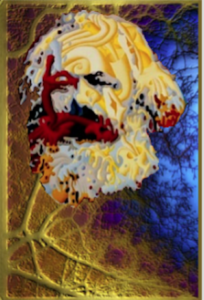 Most people who call themselves Marxists know very little of Karl Marx’s life and have never read his three-volume “Das Kapital.” Volume I was published in 1867, the only volume published before Marx’s death in 1883. Volumes II and III were later edited and published in his name by his friend and collaborator Friedrich Engels. Most people who call themselves Marxist have only read his 1848 pamphlet “The Communist Manifesto,” which was written with Engels.
Marx is a hero to many labor union leaders and civil rights organizations, including leftist groups like Black Lives Matter, Antifa and some Democratic Party leaders. It is easy to be a Marxist if you know little of his life. Marx’s predictions about capitalism and the “withering away of the state” turned out to be grossly wrong. What most people do not know is that Marx was a racist and an anti-Semite. Continue reading
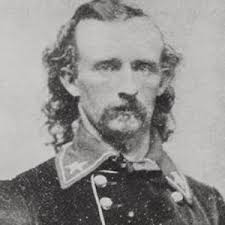 Years ago I saw a bumper sticker for a car that said “Custer died for your sins.” I don’t know who put it out, some Indian group or what, but I felt it was a bit on the blasphemous side. Jesus Christ died to pay for my sins and then He arose from the dead on the first Easter morning. Custer had nothing to do with it, thank heaven! He would have been a pitiful savior.
 Last year, singling out screen legends such as Marilyn Monroe and Marlene Dietrich, who died alone, Bardot told Dalya Alberge: “The majority of great actresses met tragic ends. When I said goodbye to this job, to this life of opulence and glitter, images and adoration, the quest to be desired, I was saving my life.”
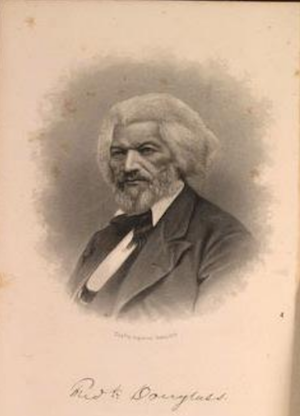 Americans used to have great reverence for the spoken word. Before radio and TV, there were political speeches and the great orators were prized for their ability to move audiences to laughter, to tears, or to rage.
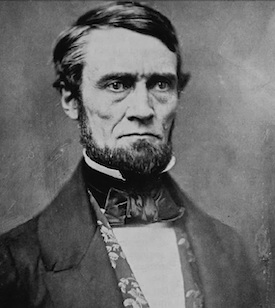
 In 1840, the young Queen of England, Victoria, married her first cousin, Albert of Saxe-Coburg and Gotha, nephew of Leopold of Saxe-Coburg and Gotha, King of the Belgians. Victoria and Albert were of the same age, both born in 1819.
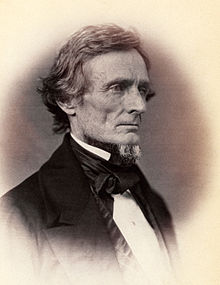 On October 17, 1978, President Jimmy Carter officially restored the full citizenship rights of former Confederate president Jefferson Davis, signing an act from Congress that ended a century-long dispute.
 Neil Compton of Bentonville, Arkansas, my beloved hometown, stands as a paragon of civic virtue. Born in Falling Springs, western Benton County, he lived with his family on Upper Coon Creek until the age of eleven, when he moved to Bentonville upon the election of his father, David, as Benton County Judge. After his undergraduate and medical education at the University of Arkansas, Compton served as a health officer with the State Board of Health, and later served in the Medical Corps of the United States Naval Reserve in the Fiji Islands during the Second World War. His former home, just off of the Bentonville Square, serves as the center of Compton Gardens, comprised of nearly seven acres of walking trails and native woodland plants. Compton Gardens now connects to our world-renowned Crystal Bridges Museum of American Art, as well as the rest of the magnificent Bentonville trail system. I have many a fond memory there, and vividly remember my first visit in the fourth grade. Incidentally, it was this fourth-grade teacher that instilled in me my passion for the natural world.
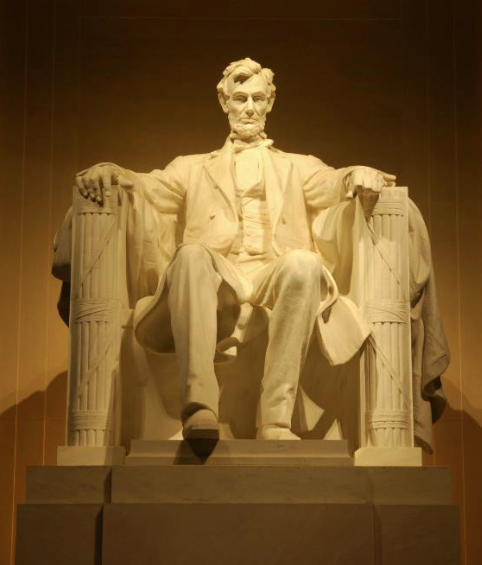 President Lincoln has been all but deified in America, with a god-like giant statue at a Parthenon-like memorial in Washington. Generations of school children have been indoctrinated with the story that “Honest Abe” Lincoln is a national hero who saved the Union and fought a noble war to end slavery, and that the “evil” Southern states seceded from the Union to protect slavery. This is the Yankee myth of history, written and promulgated by Northerners, and it is a complete falsity. It was produced and entrenched in the culture in large part to gloss over the terrible war crimes committed by Union soldiers in the War Between the States, as well as Lincoln’s violations of the law, his shredding of the Constitution, and other reprehensible acts. It has been very effective in keeping the average American ignorant of the real causes of the war, and the real nature, character and record of Lincoln. Let us look at some unpleasant facts.
 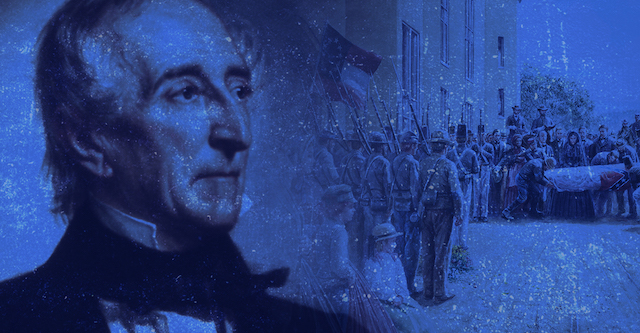 While certainly not one of the best-known presidents, John Tyler holds several incredible distinctions. He inherited the Presidency after being elected Vice-President under William Henry Harrison, who famously died only 32 days after taking office. Tyler’s presidency was full of the turmoil that would split the Union decades later, and while an ardent States’ Rights supporter, he did show a willingness to compromise.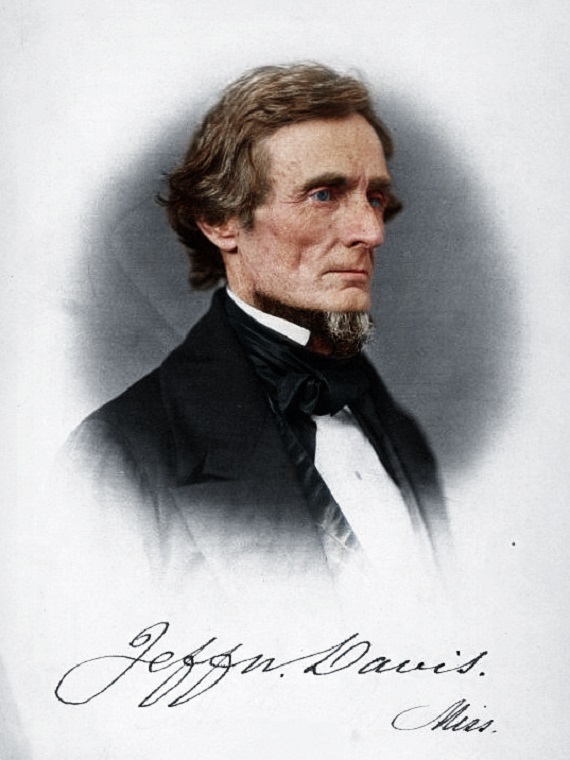
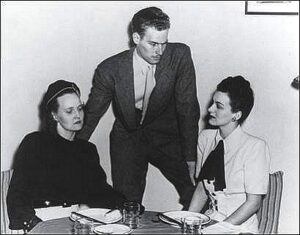
 Charles Dickens (Charles John Huffam Dickens) was born in Landport, Portsmouth, England on February 7, 1812 . Charles was the second of eight children to John Dickens – a clerk in the Navy Pay Office – and his wife Elizabeth Dickens. The Dickens family moved to London in 1814, and two years later to Chatham, Kent, where Charles spent early years of his childhood. However, due to the financial difficulties, they moved back to London in 1822, where they settled in Camden Town, a poor neighborhood of London.
 The Early Years
 ~ Prologue ~
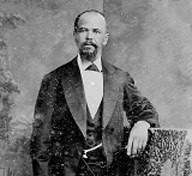 Alexander H. Darnes (c.1840 – February 11, 1894) was an African American who was born into slavery in St. Augustine, Florida and became the first black doctor in Jacksonville, Florida.