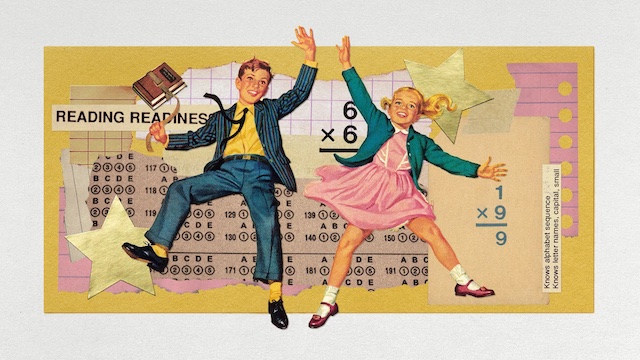
 When schools reward repetition over reasoning, speech is the first casualty.
What “like,” homeschooling, and the loss of rhetoric reveal about modern education.
The overuse of “like” is not lazy speech; it is the sound of thought struggling to keep pace with a culture that rewards reaction over reflection.
The growth of homeschooling makes that question harder to dismiss. Once treated as a marginal alternative, home education has become a serious response among families who no longer trust large institutions to cultivate attention, judgment, and speech with sufficient care. Its rise is not only a story about parental preference or educational politics. It is also a warning. When enough parents begin seeking smaller, slower, more deliberate settings, they are saying something about what the ordinary classroom has struggled to protect.
Homeschooling is not a cure-all, and it should not be romanticized any more than classical education. A home can repeat the same mistakes as a school: memorization without reasoning, reaction without reflection, opinion without discipline. But at its best, homeschooling reveals what education requires at any scale: time for conversation, room for questions, adults who can listen closely, and daily practice turning scattered impressions into ordered thought. That is why it belongs in this argument. The issue is not merely where children are educated, but whether any setting still teaches them to think before they speak.
That question also prevents the homeschooling discussion from becoming merely defensive. The point is not to retreat from public life into private enclaves, nor to pretend that every parent is prepared to provide what every school has failed to give. The deeper point is that education requires an intimacy of attention that bureaucratic systems often struggle to sustain. Someone has to notice when a child is repeating words without understanding them, when fluency masks confusion, when confidence supplants evidence, and when silence would be more honest than performance. Whether that person is a parent at the kitchen table or a teacher in a crowded classroom, the work is the same: to slow the child down long enough for language to become thought rather than noise.
The overuse of “like” is not lazy speech; it is the sound of thought struggling to keep pace with a culture that rewards reaction over reflection. Continue reading
 For busy parents juggling work, school schedules, and household bills, parenting and money education can feel like one more thing to get right. The hard part is that children’s money habits aren’t shaped mainly by “money talks,” but by the quiet, repeated family financial behaviors kids watch at home. Every grocery decision, savings choice, and careful “we can’t afford that” moment turns parents into financial role models, whether or not it’s intentional. With a clearer view of home financial modeling, families can build a money culture kids absorb naturally.
 “Ours may become the first civilization destroyed, not by the power of our enemies, but by the ignorance of our teachers and the dangerous nonsense they are teaching our children”.
 Despite the rapid pace of the digital age, it’s still too soon to toss the paper and pen. Actually, you may never want to stop writing for good as long as you want to further develop your brain.
 Parents of school-age children often see the same puzzle at home and at school: a capable kid hesitates, melts down over mistakes, or waits to be rescued. The tension is real, adult support can steady children’s emotional development, but too much steering can quietly teach doubt. Child self-confidence matters because it becomes the engine behind lifelong success traits like persistence, decision-making, and healthy risk-taking. With the right parental support strategies, confidence grows into everyday independence.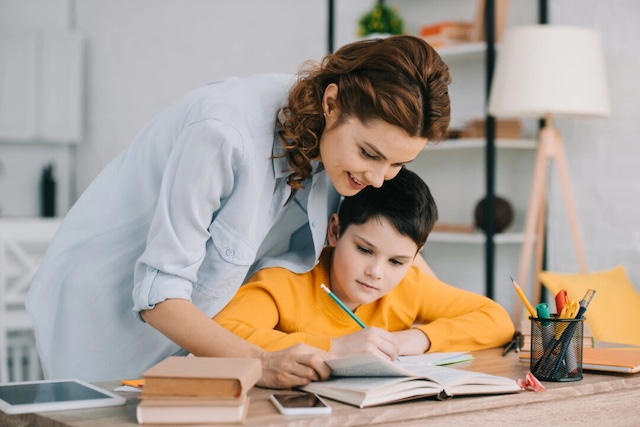
 Once again, a commitment made by President Trump and the congressional candidates who rode his coat tails and campaigned on his MAGA platform has gone unfulfilled. In fact, they’ve done the exact opposite.

 One of my daily challenges as a parent is getting my fourth grader to read for 30 minutes as part of her homework.
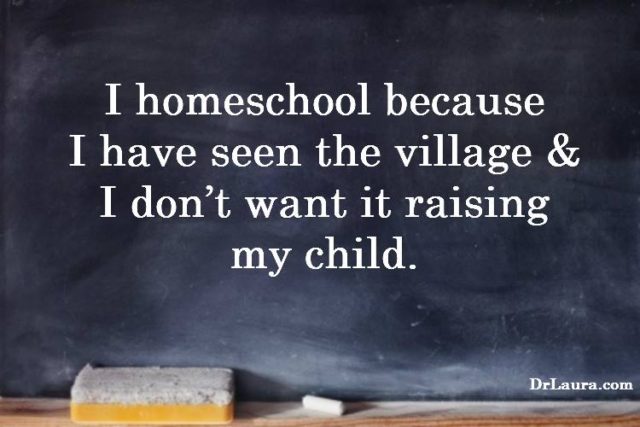
 Homeschooling has exploded in popularity in recent years, particularly since the pandemic. But researchers are still exploring why parents choose to homeschool their children.