Category Archives: Annie’s Classroom

Annie is a longtime contributor to Intellectual Takeout, in addition to her own new Blog – Annie’s Attic. Her work also appears on a series of other sites as well – and we are so glad to have her join us. Metropolis.Cafe published our first column by Annie on January 30, 2017.

Annie received a B.A. in Biblical Studies from the University of Northwestern-St. Paul. She also brings 20+ years of experience as a music educator and a volunteer teacher – particularly with inner city children – to the table in her research and writing.

In her spare time Annie enjoys the outdoors, gardening, reading, and events with family and friends.

Teaching History Without Identity Politics

“Our children need to learn more history and civics!” is a regular rallying cry for those who want to see America returned to its moral and common sense roots.

That a greater emphasis on history and civics is needed is evident from The Nation’s Report Card, which finds only 24 percent of American high school seniors proficient in civics, while only 12 percent of them are proficient in American history. Continue reading
Five Ways to Avoid the ‘Planned Mediocrity’ in Schools

It’s been one short year since parents suddenly found themselves the chief overseers of their children’s education due to the pandemic.

“Short” isn’t the word to describe it, I can almost hear many parents retort, relief in their voices as they realize that soon they will be off the hook, for the responsibility of their child’s education will be back in the hands of the experts at school.

But before you rejoice, let me suggest that things have changed in the past year. No longer are parents clueless about what their children are learning, how they are learning it, or what approaches to learning work best for each child. Parents have seen it all, and therefore have little excuse to go back to the autopilot mode of pre-pandemic days. They are now the experts who have even more awareness of what’s best for their children. Continue reading

Recognizing Three Elements of True Learning

A smile came to my face as I drove past a school this morning. No longer was it a desolate ghost town; instead, I had to navigate a long line of cars and buses waiting to turn into the parking lot to drop children off.

While it’s good to see kids going back to school, I can’t help but wonder what type of things those little ones will learn as they sit in class. How can parents who faithfully bring their children to school recognize whether a child is being educated and working toward becoming a successful adult, or is simply being steadily propagandized instead? Continue reading

Thinking Students Rank Last on the Government School Agenda

One of my favorite field trips as a child was my annual summer visit to a one-room schoolhouse where I spent the day dressed in an old-fashioned dress and bonnet, scratching away on a slate and learning lessons out of old McGuffey Readers.

At the time, my delight in the McGuffey Readers stemmed from the fact that I was reading something that Laura Ingalls likely read, and the romance of the situation enthralled me. I am still fascinated by McGuffey Readers, but not because of their connection to Laura. Rather, I find them fascinating because of the lessons and values they imparted on generations of American children, lessons in stark contrast to those received in today’s government schools. Continue reading

The Herd of Sheep in American Schools

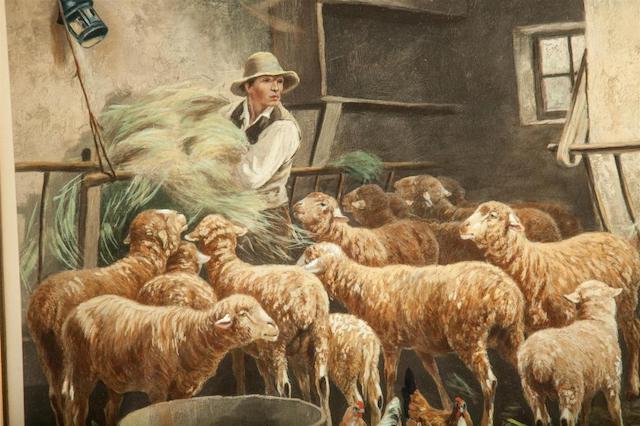
BARNYARD WITH SHEEP (AMERICAN SCHOOL, EARLY 20TH CENTURY)

By now you’ve probably heard of Harvard Professor Elizabeth Bartholet, whose name catapulted into the public’s view when she called for a “presumtive ban” on homeschooling. Ironically, her call for a homeschooling ban came right when the entire nation was forced to homeschool due to the COVID-19 outbreak. Continue reading

3 Reasons One Public School Advocate is Giving Up on the System

When it comes to discussion of public schools, all too often battle lines seem to be drawn between those on the inside and outside of the system: the teachers and the parents. The teachers understandably want to defend the job they do, while the parents want to ensure that their child doesn’t become another dismal statistic.
But every once in a while an individual comes along with credentials to look at the issue of public education from both viewpoints. Such is the case with Erin Brighton, who recently wrote an op-ed for the Huffington Post entitled, “Goodbye, Public School. It’s Not Me, It’s You” Brighton starts out by saying: Continue reading

Attacks on Homeschooling Suggest Nervous Government Schools

It’s funny how homeschooling – that once-upon-a-time fringe movement of education – has now become the norm. Everyone’s doing it out of sheer necessity.

For some, it’s going great! What was at first a stressful and uncertain task is now becoming routine. In fact, a recent poll conducted by EdChoice found that over half of respondents hold a more favorable view of homeschooling as a result of the coronavirus. Continue reading

What the Homeschooling Surge Reveals About Compulsory Education

My sixth-grade visit to the Pavek Museum of broadcasting was the most memorable field trip of elementary school. The live radio broadcast my fellow students and I produced while there was probably why.

As part of the broadcast, several students were instructed to write a news bulletin. The gist of it? The governor of Minnesota had decreed that schools would close and everyone would be homeschooled the following week. Parents who couldn’t manage it on their own could send their kids to the governor’s mansion for help. Continue reading

Are Computers Contributing to the Decline of Writing Skills?

Image Credit: Wordserve Water Cooler

According to new research from the Department of Education, the switch to computer-based writing tests shows a decided decline in the writing ability of fourth–grade students, particularly for low or average performing students. As Jill Barshay from the Hechinger Report explains,

“Last year, more than half of U.S. states gave computer-based writing tests to children as young as third-graders. Some wrote their paragraphs with a pencil and paper; the majority used a computer.
Continue reading

Professor: Our ‘Inventory of Knowledge’ is Being Lost

Have you ever wondered how the American Founders were able to spew forth such wisdom and establish a new country at such young ages? I have. The mere fact that 10 of the signers of the Declaration of Independence were under the age of 35 blows my mind.
But as I learned recently, these men did not create the Declaration and the Constitution out of the brilliance of their own minds. In fact, their brilliance hinged on one fact: they were imitators. Continue reading

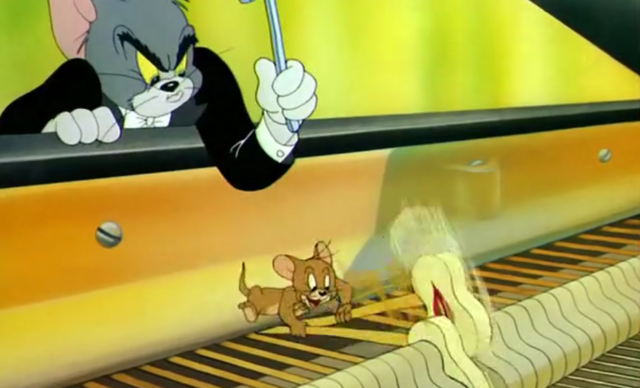
How Classic Cartoons Created a Culturally Literate Generation

There are times that bringing a column back to the forefront is worth it – and this is such. ~ Ed.

July 26, 2017 ~ I recently picked up Mark Twain’s A Connecticut Yankee in King Arthur’s Court for the first time. Finding the plot rather amusing, I began relaying it to my father over the weekend. Because he had never read the book, I was rather surprised when he began asking informed questions about the story. In no time at all, he was the one schooling me on plot elements I had not yet reached. Continue reading

Two-Parent Households at an All-Time Low

Editor’s NOTE: The following was written and published during the Christmas season of 2015 and therefore it begins with that reference, but think beyond this… and think of how all of this affects our children in the public school system. Things need to change. ~ Ed.

In addition to being viewed as a season of religious devotion, Christmas has also become a time of family traditions and togetherness.
But will those traditions and togetherness continue if the American family disappears? Continue reading

More Americans Today Really Need to Read the Federalist Papers

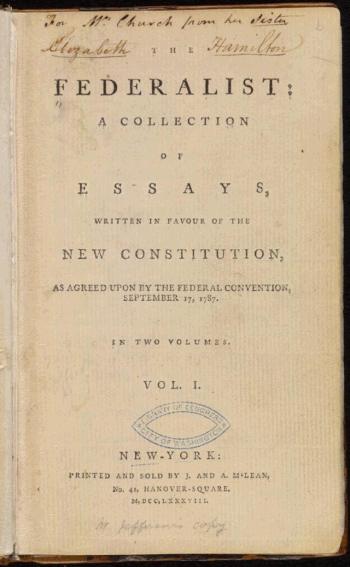
Federalist Papers, T. Jefferson’s copy

In order to have a good grasp on the founding of America, it is often said that one should read the Declaration of Independence, the U.S. Constitution, and the Federalist Papers.

It’s easy to see why the Declaration and the Constitution make the list of must-reads, but why the Federalist Papers?

According to Gregory Maggs, law professor at George Washington University Law School, the Federalist Papers should be read because they provide “an extremely important source of evidence of the original meaning of the Constitution.” Maggs goes on to say:

“In the aggregate, academic writers and jurists have cited the Federalist Papers as evidence of the original meaning of the Constitution more than any other historical source except the text of the Constitution itself.”
Continue reading

Homeschoolers Creaming Other Students on the SAT

It appears that getting your children OUT of the Public Fool System would be advised!

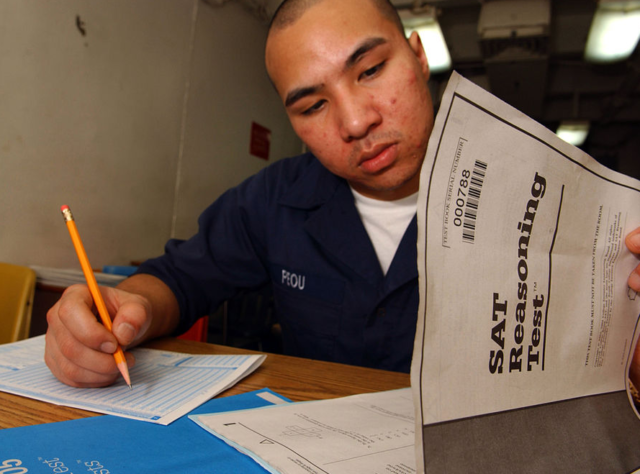
Last summer (2015), George Washington University announced that it would no longer require students to submit their SAT or ACT scores as incoming freshmen. This move was made because the university “had concerns that students who could be successful at GW felt discouraged from applying if their scores were not as strong as their high school performance.”

Some students, however, did not get off so easy. Homeschoolers, the college noted, would still have to submit their SAT scores before they could be admitted. Continue reading

The Difference Between Classical and Traditional Education

Several years ago I got into a conversation about classical education in which my conversation partner asked, “Isn’t that the kind of education that all those overachieving homeschoolers are into?”

I had to laugh. Yes, classical education has that reputation.

But the high-achieving nature of classical education hasn’t deterred interest. In fact, classical curricula are proliferating in homeschools, private schools, and charter schools. Continue reading

Teacher: “Stop Being Your Child’s Friend

I was at a public park this weekend when I noticed a family preparing for a photo shoot. This family caught the attention of everyone else in the park as well, namely because of the screams emanating from one of its younger members.

The screams continued for the next quarter of an hour and it became apparent that the child’s parents were not fans of authoritative parenting. Instead, they seemed to be trying the mister-nice-guy approach to resolving their child’s tantrum. Continue reading

The Main Goal of Schools is Not Education, It’s Conformity

Over the weekend, I had an interesting chat with a friend about her daughter’s preschool program. She confessed to me that she couldn’t wait until the school year was over, for the preschool program dominated their lives. The schedule, she explained, interfered with other outside learning opportunities. At the same time, one of the main things her daughter was learning in the program was how to line up – perfect for fostering an environment of compulsion, but not for encouraging creativity or an enthusiasm for learning. Continue reading

Why Are So Many ‘Whiz Kids’ Homeschoolers?

It seems like every graduation season has its stories of whiz kids. The kids who are so ambitious and so accomplished that they’re graduating from high school, and even college, before the normal time.

One of the latest is 14-year-old Matthew McKenzie from Georgia, who received his high school diploma and associate degree the same day. And like many other whiz kids, McKenzie was – you guessed it – homeschooled. Matthew’s mother, Monique McCord tells the story:

“We would pull material from different textbooks and different resources so I would pretty much custom create his curriculum.” Continue reading