
Passersby could wander at will into grand public libraries in imperial Rome. Could they trust what they found inside?
 It’s around 200 CE, in Ephesus, an Aegean city of Greek roots, now a major hub of the Roman Empire. Meandering down marble-paved Curetes Street, a dweller is lost in the bustle of the town, procuring produce and wares in shops tucked beneath the colonnades, attending the public baths – even a conveniently placed brothel. It all plays out alongside merchants from across the Mediterranean, who disembark their ships to transport cargos and conduct business in the great depot between West and East. They make their way past the shrine to the emperor Hadrian and the nymphaeum of the emperor Trajan, bold reminders that the Ephesians, in their prosperity, are now part of the realm in faraway Rome. And there, culminating at the end of this lively thoroughfare at a slight angle, as though gradually revealing itself, lies a theatrical marble-clad façade of elegant Corinthian columns, exquisite reliefs and wordy inscriptions.
Up a short flight of stairs, flanked by statues, three large doors offer a glimpse into a single large room, colonnaded and high-ceilinged. Thousands of scrolls are carefully stacked into rectangular recesses in the walls. The doors to the towering Library of Celsus are flung wide open: anyone can enter this shrine to the written word. Continue reading
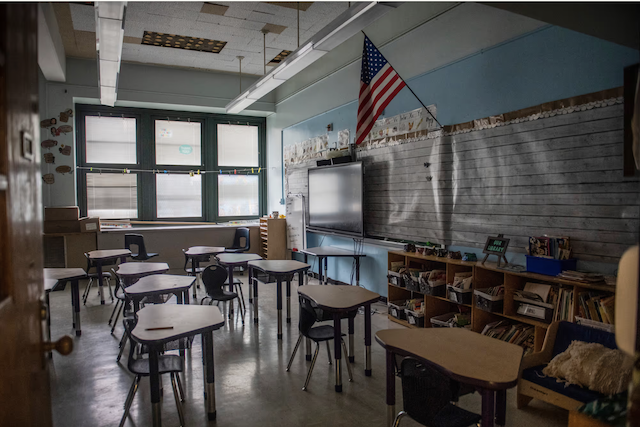 When in-person school resumed after pandemic closures, Rousmery Negrón and her 11-year-old son both noticed a change:
  If you are a parent or a teacher, you most probably read stories to young children. Together, you laugh and point at the pictures. You engage them with a few simple questions. And they respond.
 A resurgence of interest in classical education has been evident in recent years. This has been due, in part, to a number of influential writings on regaining “lost” knowledge in our culture which have, in turn, inspired an increasing number of schools founded on a classical model. When surveying the landscape of classical education, it becomes evident that there is a clear vision available for the purpose of the study of humanities. What does not seem as clear, though, is the nature of mathematics in a classical education.
 In 1930, 3 million American adults could not read. Most of those 1 million white illiterates and 2 million black illiterates were people over age fifty who had never been to school. (Regna Lee Wood)
 My wife and I recently met with the principal of the school our daughter attends to discuss her education future.

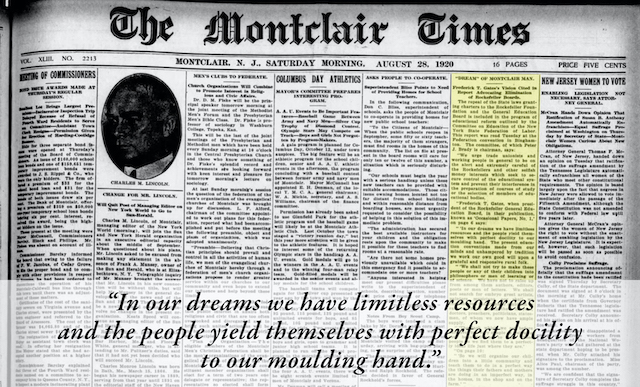 What follows is the transcript of the 1920 newspaper clipping. The actual clip is at the end.
  An article on The Gateway Pundit for May 28th provided some information worth noting on what goes on in public schools and who is doing some of it. If you’ve had problems with Target over their “gay” pride merchandise you may find that is only the tip of the iceberg. The Gateway Pundit article tells us: “Retail giant Target has partnered with GLSEN (Gay, Lesbian, and Straight Education Network) for years… GLSEN is a group that provides sexually explicit books to schools, pushes gender identity throughout public school curricula, and advocates policies that keep parents unaware of their child’s in-school gender transition… It was Barack Obama who first pushed sex education to kindergartners back in 2007 – he even pushed sex education to kiddies legislation… the media mostly hid this from the American public.” Sounds like King Barack the first really did have a plan to “fundamentally transform the United States” but he didn’t want the public to grasp just what it was!
  In his rousing
  We don’t encourage students to ask the same kinds of questions they did when they were younger. Here’s something I wrote recently about the topic for
 If a child lives with criticism, he learns to condemn.
 The National Commission on Excellence in Education’s release of a report titled “A Nation at Risk” in 1983 was a pivotal point in the history of American education. The report used dire language, lamenting that “the educational foundations of our society are presently being eroded by a rising tide of mediocrity that threatens our very future as a Nation and a people.”
 Pharmaceutic