 Although there are countless scourges which in general debilitate kingdoms, principalities, and republics, the four most important (in my judgment) are dissension, [abnormal] mortality, barren soil, and debasement of the currency. The first three are so obvious that nobody is unaware of their existence. But the fourth, which concerns money, is taken into account by few persons and only the most perspicacious. For it undermines states, not by a single attack all at once, but gradually and in a certain covert manner.
Coinage is imprinted gold or silver, by which the prices of things bought and sold are reckoned according to the regulations of any State or its ruler. Therefore money is, as it were, a common measure of values. That which ought to be a measure, however, must always preserve a fixed and constant standard. Otherwise, public order is necessarily disturbed, with buyers and sellers being cheated in many ways, just as if the yard, bushel, or pound did not maintain an invariable magnitude. Hence this measure is in my opinion the coin’s face value. Although this is based on the metal’s purity, nevertheless intrinsic value must be distinguished from face value. For, the denomination of a coin may exceed its metallic content, and the other way around. Continue reading →

 By April of 1775 the tensions between the Colonies and the Crown had reached a breaking point, and when the Kings men arrived at Lexington and Concord to confiscate the arms stored there they were met with locals who had grabbed whatever guns they had and assembled to prevent the Redcoats from taking their cache of arms. So it was that on that early April morning, just as the sun was rising, that America’s War for Independence began. So it was that on that early April morning a ragtag group of farmers, shopkeepers and merchants faced off against 500 of the most well trained and disciplined fighters on the planet. So it was that on this early April morning, that although these men were technically committing treason, they would go down into history books as patriots and heroes.
 Gates announced Thursday that the Bill & Melinda Gates Foundation would spend more than $1.7 billion over the next five years to pay for new initiatives in public education, with all but 15 percent of it going to traditional public school districts and the rest to charter schools. (When he said this, the audience at the 2017 conference of the nonprofit Council of the Great City Schools applauded, perhaps because many education philanthropists direct the bulk of their education giving on charter schools, which are publicly funded but privately operated. Gates supports them as well.)
 As is now well-known, scores on “intelligence” tests rose strongly over the last few generations, world-wide – this is the “Flynn Effect.” One striking anomaly, however, appears in American data: slumping students’ scores on academic achievement tests like the SAT. Notes of the decline starting in the 1960s sparked a lot of concern and hand-wringing. A similar decline is evident among adult respondents to the General Social Survey. The GSS gives interviewees a 10-item, multiple choice vocabulary test. (Practically speaking, vocabulary tests yield pretty much the same results as intelligence tests.) In over 40 years of the survey, a pattern emerged: Correct scores rose from the generations born around 1900 to the generations born around 1950 and then dropped afterwards. Are recently-born cohorts dumber – or, at least, less literate – than their parents and grandparents?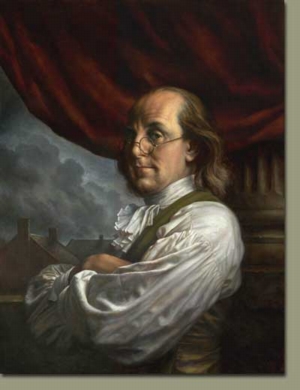
 The United States was brand new. Soldiers who had fought for independence from Great Britain found themselves on opposite sides of a skirmish. Some were having their rights violated practically before the ink was dry on the Bill of Rights. Other Veterans of the Revolution were doing the oppressing at Alexander Hamilton’s behest.
 House Speaker Jeremy Gillam (R) Judsonia, AR and Committee Chair Bruce Cozart (R) Hot Springs and their gang of 15.
 The total number of teachers in America is on the decline, as many teachers are underpaid and overworked and don’t receive adequate resources or funding from their schools or governments. The Wall Street Journal reports that since 2005, all 50 states and Washington, D.C. have experienced teacher shortages. But some states are really struggling. States like Arizona, which has been at or near the bottom of national education rankings for quite some time, have a dearth of qualified teachers — and are lowering certification standards as a result.
 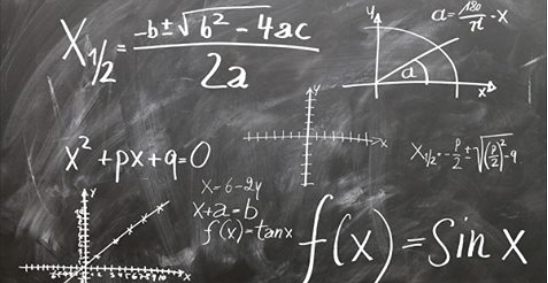 Learning school subjects should be like learning anything else in life. You start at the beginning, proceed step by step, master more difficult aspects, and become skilled. Isn’t that how we learn to drive a car, build a doghouse, play the piano, surf, or operate a computer? Of course. That’s how we humans do it.
  In recent years, many Americans have adopted the idea that public education is neutral ground. Such a mentality has undoubtedly sprung from the fact that the public school is the agent of the government, an entity which strives to keep itself clear from sectarian, political, or other ideological viewpoints.
 Author’s Introduction: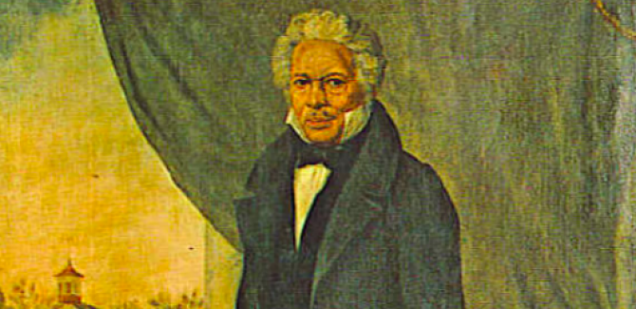
 I knew 20 or 25 years ago when school teachers had to buy school supplies for their students that there was major mismanagement going on in our schools. Most of us have probably been donating school supplies for many years now.
 It’s a common complaint among teachers as well as parents in the U.S. these days: kindergarten has become the new first grade and the unintended casualty of that is preschool, which has consequently become the new kindergarten. Many early childhood experts consider physical activity and unstructured play the two main pillars for learning and a healthy development for preschoolers. Both are often lacking at American preschools, where play is typically directed by the adults and the students are more likely to be found cooped up indoors, filling out worksheets and tracing letters. Not to mention kindergarten, where students are expected to sit still at their desks for the majority of the day.