Author Archives: Jeffrey

How quickly a Nation forgets the importance of Education

From the Father of Education himself,
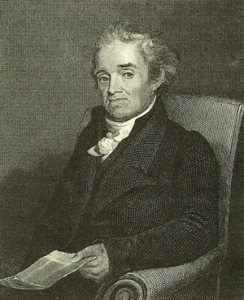
Noah Webster

Noah Webster’s would define the word in his 1828 dictionary For the American Language:

EDUCA’TION, noun [Latin; educatio.] The bringing up, as of a child, instruction; formation of manners. education comprehends all that series of instruction and discipline which is intended to enlighten the understanding, correct the temper, and form the manners and habits of youth, and fit them for usefulness in their future stations. To give children a good education in manners, arts and science, is important; to give them a religious education is indispensable; and an immense responsibility rests on parents and guardians who neglect these duties.” Continue reading
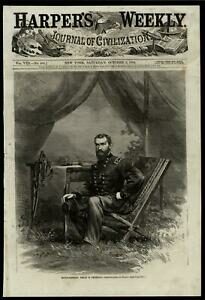
Benson: Sheridan the War Criminal

Clifford Dowdey, in his book The History of the Confederacy 1832-1865, he had some commentary about the subject of this article, Philip H. Sheridan and it was not particularly complementary. Mr. Dowdey noted of Sheridan that he “…was an undersized man (five feet three) with an oversized head, in all ways…But Grant perceived in the man a quality he wanted in his all-out, no-holds-barred war of total conquest. The Sheridans, Milroys, and Hunters had a different kind of arrogance from the neo-princelings of the Cotton South. They had the arrogance of unrestrained might. Without regard for rights–of belligerants or fellow citizens or even of the so-called ‘human rights,’ let alone of the Union–these bully boys had a lust for physical violence and wanton destruction.”


In other words, Sheridan and Sherman and others of their ilk were going to wage total, unrestrained war on the South, both on civilians as well as soldiers, not because it was right, but because they could do it and get away with it. He noted all this on page 321 of the above mentioned book. Continue reading

The Best Way to Teach History to Children

In the mid-1990s, Mrs. Irene Harrison (1890-1999) from Akron, Ohio stayed in my bed-and-breakfast in Western North Carolina. On her last visit, Mrs. Harrison, daughter of famed tire entrepreneur Frank Seiberling, was 105 years old. She was a petite, gracious lady of the old school who proved highly entertaining on some occasions. Once when I was passing through the living room, she was discussing politics with her son. I paused to ask her to name her favorite president… Continue reading

Lawmakers looking to consolidate school districts

A Nationwide effort?

Saying too much money is wasted on duplication, state lawmakers took the first steps earlier this month to force consolidation of the more than 200 school districts in the state – some of which are in the West Valley.

And the combinations could occur without voter approval.

The proposal by Rep. John Fillmore, R-Apache Junction (Arizona), would eliminate any separate elementary and high school districts that now exist. Instead, they automatically would become unified districts no later than July 1, 2024.

But HB 2139, approved by the Senate Appropriations Committee on a 6-3 party-line vote, does not stop there. It would require every school board in the state to annually determine how much money could be saved by not just unification but also with consolidation with other adjacent districts. Continue reading

Defunding Children ~ A National Crisis of the Soul

~ Forewords ~
Who even remembers? After all, it happened in ancient times. November 9, 2016, to be exact, at newly elected president Donald Trump’s victory rally, when he so memorably said, “We are going to fix our inner cities and rebuild our highways, bridges, tunnels, airports. We’re going to rebuild our infrastructure, which will become, by the way, second to none.” During that campaign he had similarly sworn that he would deliver a trillion dollars in infrastructure spending over the decade to come. And when he finally unveiled his vaunted plan, in February 2018, for no less than $1.5 trillion dollars, it promptly disappeared without a trace in a Congress his party still controlled. In its wake, the only infrastructure left obsessively on the president’s mind or on anybody’s table was that “great, great wall” of his (which won’t get built either). Continue reading

The Perfect Plan to Destroy America — NATIONALIZE EDUCATION

A ‘tour de force‘ from this writer. Be prepared… Ed.

Donna Garner

~ Author’s Notes ~
This article was originally published on August 7, 2013, and it has turned out to be very prophetic. Now we are seeing the disastrous results from America’s students having been soaked in Obama’s Common Core for at least nine years.

Obama’s plan was to destroy America as we know it, and we are seeing the “fruits” of his plan all around us. Our culture is now surrounded with Gen X, Gen Y, and Millennials who are spouting ideas that shock those of us who respect and honor America’s historical history and its primary documents such as the U. S. Constitution and the Declaration of Independence. As Puritan John Winthrop so wisely stated on April 4, 1630 as he was on his way to establish the Massachusetts Bay Colony, “We shall be as a city upon a hill, the eyes of all people are upon us.” Continue reading

K–12: Fake, like Adulterated Milk

In the 1800s, adulterated milk was common.. Milk produced by swill herds, as muckraking journalist Robert Hartley wrote in 1842, was “very thin, and of a pale bluish color,” the kind nobody in his right mind would buy. So distillers added flour, starch, chalk, plaster of Paris, or anything else they could get away with to make the milk look healthy. This adulteration only increased the bacteria in milk that we today would consider undrinkable. Continue reading

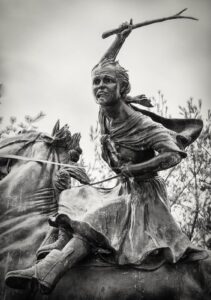
Sybil Ludington

Listen my children and you shall hear
Of the midnight ride of Paul Revere . . .

This month in U.S. history, we remember that famous ride that would warn the colonies that the British were coming.

The Colonel needed someone he could trust, someone brave enough, someone who could ride a long distance, through the darkness, from 9 p.m. to dawn, someone who could fight off enemy combatants, to alert the Colonial militia to the approach of British forces.

So, the Colonel chose the “best man for the job.”

Sybil Ludington was born on this day, April 5, 1761. Continue reading

A Dark Consensus About Screens and Kids Begins to Emerge in Silicon Valley

“I am convinced the devil lives in our phones.”

The people who are closest to a thing are often the most wary of it. Technologists know how phones really work, and many have decided they don’t want their own children anywhere near them.

Photo Illustration by Tracy Ma/The New York Times; Getty Images (woman and child)

A wariness that has been slowly brewing is turning into a regionwide consensus: The benefits of screens as a learning tool are overblown, and the risks for addiction and stunting development seem high. The debate in Silicon Valley now is about how much exposure to phones is O.K. Continue reading

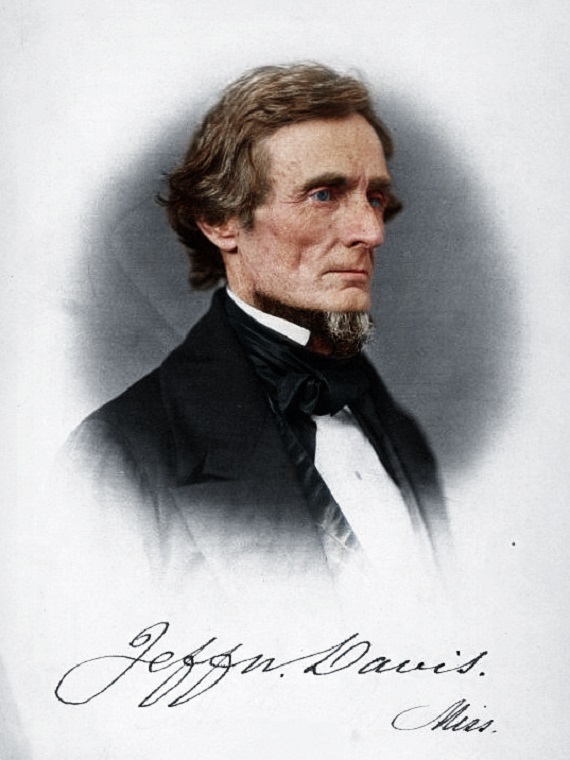
A Postwar Conversation with Mr. Davis

“Mr. Davis once talked to me long and earnestly on the [postwar] condition of the South. Among other things he said:

“There is no question that the white people of the South are better off for the abolition of slavery. It is an equally patent fact that the colored people are not. If the colored people shall develop a proper degree of thrift, and get a degree of education to keep pace with any advancement they may make, they may become a tenantry which will enable the South to rebuild the waste places and become immensely wealthy.

The colored people have many good traits, and many of them are religious. Indeed, the 4,000,000 in the South when the War began were Christianized from barbarism. In that respect the South has been a greater practical missionary than all the society missionaries in the world.” Continue reading

An Image of the South

“It is out of fashion these days to look backward rather than forward,” the poet John Crowe Ransom wrote almost thirty years ago. “About the only American given to it is some unreconstructed Southerner, who persists in his regard for a certain terrain, a certain history, and a certain inherited way of living.”

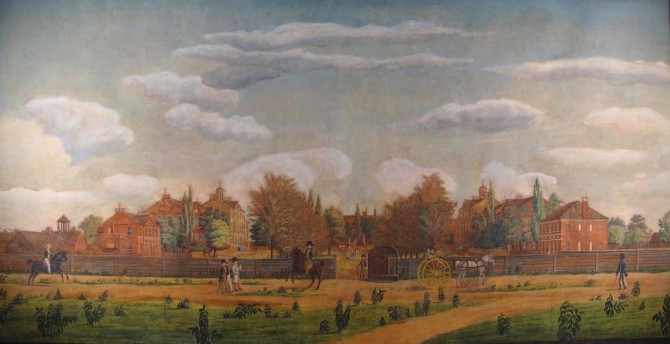
South Carolina College, 1820

Ransom made the remark in an essay composed for a book about the South called I’ll Take My Stand. The backward-looking Southerner, he said, “feels himself in the American scene as an anachronism, and knows he is felt by his neighbors as a reproach.” Continue reading

E.B. White’s Touching Letter to Man Who Lost Hope in Humanity

“What has been will be again, what has been done will be done again; there is nothing new under the sun.”

On March 30, 1973, the ‘Charlotte’s Web‘ author wrote a beautiful note to a dispirited man who had last all faith in humanity.

I’m a longtime fan of E.B. White. Intellectual Takeout readers likely know he wrote a lot more than just Charlotte’s Web. His short story The Door is one of my favorite short stories. (We’ll deconstruct that one another other day; as you can see, it’s quite mad.) Continue reading

Two and Two Now Equal Five

A few years ago, I thought it was time to retire George Orwell’s 1984 to the attic. My years of teaching literature convinced me that Huxley’s Brave New World was more likely to unfold: a world in which an elite might control the rest of us through the erasure of history and literature, but who might also pacify common citizens through the diversions of sex, drugs, and electronic entertainment.
I was dead wrong. Continue reading

The real reason Thomas Jefferson owned a copy of the Qur’an…

A 232 Year History of our fight against Islam & why it is no longer taught in our public schools…

When Thomas Jefferson saw there was no negotiating with Muslims, he formed what is now the Marines (sea going soldiers). These Marines were attached to U. S. Merchant vessels. When the Muslims attacked U.S. merchant vessels they were repulsed by armed soldiers, but there is more.

The Marines followed the Muslims back to their villages and killed every man, woman, and child in the village.

It didn’t take long for the Muslims to leave U.S. Merchant vessels alone.

English and French merchant vessels started running up our flag when entering the Mediterranean to secure safe travel. Continue reading

How the South Won the ‘Civil War

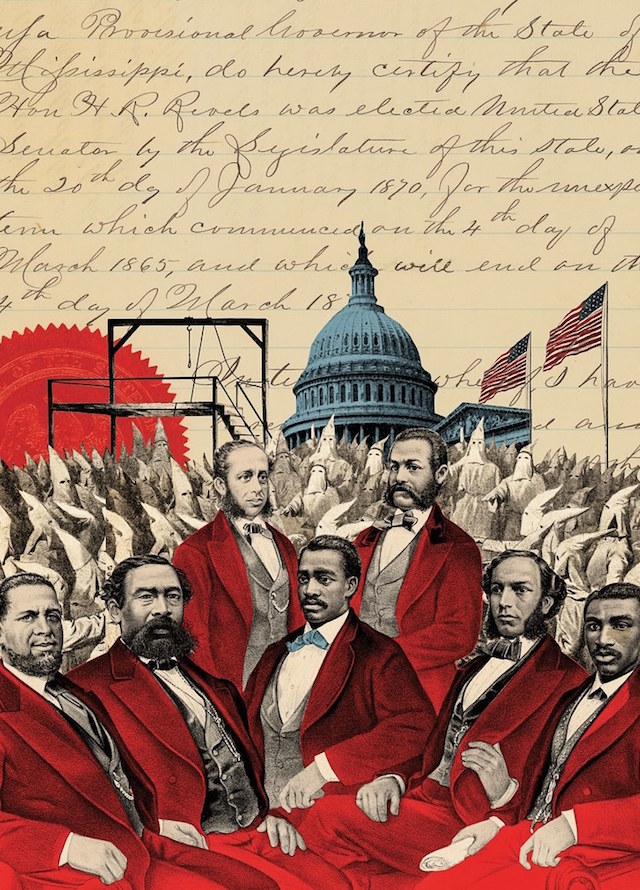
During Reconstruction, true citizenship finally seemed in reach for black Americans. Then their dreams were dismantled.

Black political power during Reconstruction was short-lived—eclipsed, in significant part, by a campaign of terror. Illustration by Cristiana Couceiro. Photographs: Hirarchivum Press / Alamy (Ku Klux Klan); Smith Collection / Gado / Getty (building); Universal History Archive / Getty (flags); Everett / Alamy (gallows)

Not so long ago, the Civil War was taken to be this country’s central moral drama. Now we think that the aftermath—the confrontation not of blue and gray but of white and black, and the reimposition of apartheid through terror—is what has left the deepest mark on American history. Instead of arguing about whether the war could have turned out any other way, we argue about whether the postwar could have turned out any other way. Was there ever a fighting chance for full black citizenship, equality before the law, agrarian reform? Or did the combination of hostility and indifference among white Americans make the disaster inevitable? Continue reading

Indiana school district turns unused cafeteria food into take-home meals for kids

SOUTH BEND, Ind. (WSBT) – An Indiana school district is taking steps to make sure kids have enough to eat.

Elkhart Community Schools students usually get breakfast and lunch at school, but on the weekends at home, they may be without food.
That’s where the South Bend-based non-profit Cultivate Culinary comes in: it provides weekend meals to a small group of students in the elementary school pilot program. Continue reading