Edmund Burke on Revolutionary Armies and Taxes

History – it is in my blood. No matter what country a story comes from, we must realize that THEIR history may well have affected OURS… and how much different is their story from ours? As we near the end of 2018, look to France – What are the people rioting and demonstrating for? In the words of singer Carly Simon – “It’s coming around again!” Yeah – everything old is new again. ~ Ed.
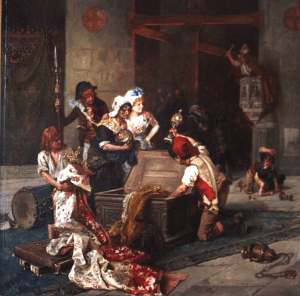
Though a classic in its own right, and arguably the first book on conservatism in the modern world, Edmund Burke’s Reflections on the Revolution in France of 1790 is inconsistent as a coherent work. And, yet, even in its unevenness, it reveals an act of genius. Burke himself points out that the greatest and truest things in life are discovered through trial and error, over time, following the way they already exist in creation.

We can see that the construction of this book follows this path of discovery. In other words, all truth that ever will or ever can exist already does exist. Such truth is for man to discover, uncover, understand, and contemplate, not to create, manipulate, and abuse. Burke approaches the subject of the French Revolution in this manner. He reveals that the French are doing nothing new: their experiments repeat the mistakes of the many others who counter the lessons of history, and of those who counter the very nature and purpose of man. Continue reading →

Not Yet Been Taught To Read

“Research has determined that dyslexia and other reading disabilities stem from a core deficit in phonological awareness, a skill that is needed to associate spoken words with written language.” ~ Spalding Reading International

The underlying meaning of the term ‘dyslexia’ is almost always “has not yet been taught to read.” Traditionally, such poor readers were referred to simply as “bad readers.” It is time for educators to accurately define this overused term so that parents better understand the problems that their children are facing, and make better decisions even if those mean removing children from schools that fail to teach reading to enroll them in schools where full literacy is considered the achievable goal. Spalding Reading International defines the core deficit of such readers as phonological awareness. It is time that all schools employ teachers who know how to teach all children the skills for phonological awareness, then teach all children to read by teaching them to accurately use the complete system of phonics for both receptive and expressive literacy. Phonics is, and always has been, the code in which English speech is recorded for later reading. It is time to let both the students and their parents in on that secret. Continue reading →
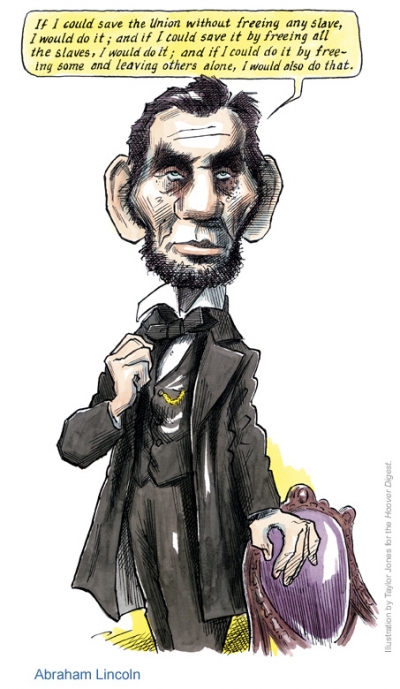
Dispelling The Myths About Abraham Lincoln

Authors Note: Some of the comments found herein may be offensive to some. Know this, if they are found within quotation marks, (” “), they are NOT my thoughts or beliefs; rather they are the thoughts of the person being quoted. ~ N.R.

If you were to ask your friends who the five greatest presidents were, I’m certain you would get a wide range of answers. Some might answer with contemporary presidents; like Obama or Reagan, while others might stick to those that were only names in history books. But I’m almost certain that universally the name Abraham Lincoln would make almost everyone’s list. Why is that? Is it because he saved the Union and freed the slaves?
I find it ironic that people are beginning to accept that the news they see on TV is scripted–fake–yet they won’t accept that what they’ve been taught about men like Lincoln is fake as well. Sure, Lincoln saved the Union, but he did so at the end of a gun and with cannon fire; at the cost of over half a million lives and the destruction of our Republic. As for slavery, people believe that Lincoln was this great humanitarian who freed the slaves. Nothing could be further from the truth; and it is this aspect of the Lincoln myth that I hope to dispel with fact. Continue reading →

USA: from Republic to Democracy

In 1750, the population of the thirteen colonies of England in North America was 2,148,000.

By the 1670’s, collection of taxes owed to the British Crown by settlers in North America had become problematic, as registered in his “Diary” by John Evelyn.

By 1775, the collection of taxes to be paid by the Americans involved resistance by gunfire on their part. Continue reading →

High School Students Claim Ignorance Should Not Be Used Against Them in Exam Scores

“My dog ate my homework” has long been the default excuse for students who miss the mark with their school assignments.

But high school students in New Zealand appear to have moved beyond this tired excuse, for instead of blaming the dog, they are turning their own ignorance into an excuse for victimhood.
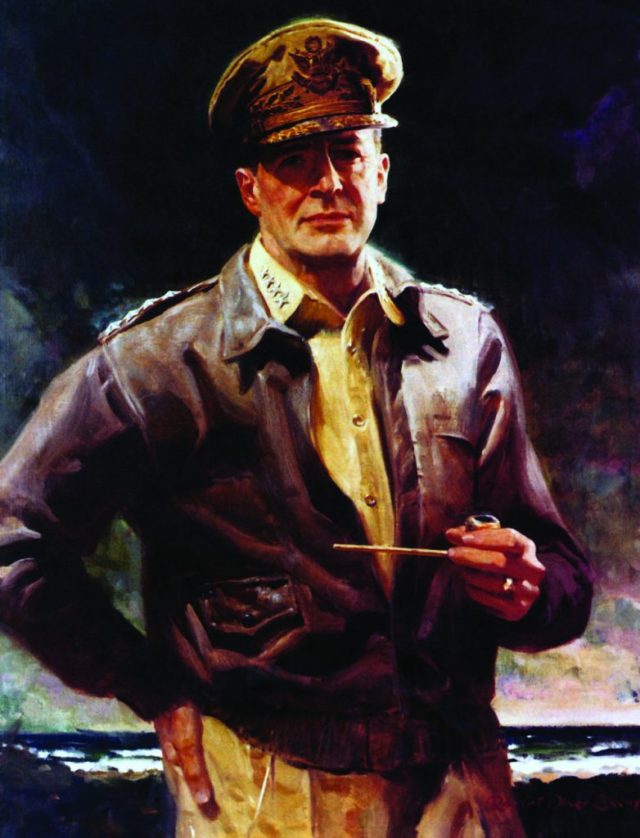
According to The Guardian, New Zealand students in their last year of high school sat for an important history exam in the middle of November. During the exam, students were asked to write an essay on the Julius Caesar quote, “Events of importance are the result of trivial causes.” Continue reading →

Edwin Cole (April 19, 1951)

~ Prologue ~
April 11, 1951; President Harry S. Truman relieves General Douglas MacArthur of his command, ostensibly for ‘insubordination.’ Eight days later, General MacArthur has just concluded his nationally televised Farewell Address to Congress – a speech that was profound in its meaning as well as its nostalgia. The following was carefully written and crafted within minutes of the conclusion of the broadcast. Continue reading →

General Douglas MacArthur ~ Farewell Address to Congress (April 19, 1951)

General of the Army Douglas MacArthur

Douglas MacArthur was born in Little Rock, Arkansas, on 26 January 1880. He graduated first in his class from the United States Military Academy in 1903. Commissioned a second lieutenant, he served in the Philippines for a year. He was promoted to first lieutenant in 1904. From 1904 to 1906, he was an aide to the commander of the Pacific Division, his father Lieutenant General Arthur MacArthur. He next served as an aide to President Theodore Roosevelt and taught at the Army Services School at Fort Leavenworth, from 1908 to 1912. In 1911, he was made a captain and served on the General Staff from 1913 to 1917. In 1915, he was promoted to major and took part in the Vera Cruz operation.

In 1917, he was promoted to colonel and made the chief of staff of the 42d (Rainbow) Division in France. Promoted to brigadier general in the National Army 1918, he fought in the Marne operations, commanded the 84th Infantry Brigade in the St. Mihiel and Meuse-Argonne offensives, and led the 42d Division in the Sedan offensives. Continue reading →

Everything is Downstream from Education

Unless we fix it, our devolution into another failed socialist state—or worse–is virtually assured. Fifty years of carefully orchestrated ignorance and mediocrity is more than enough

[Recently], the American Thinker published a column by Bruce Deitrick Price entitled K-12: Six Steps to Reform Education Right Now. In it he offered up transparently useful reforms regarding the mastering of reading, writing, math, geography, history and science, all of which would lead inexorably to the development of critical thinking skills. “Immediately, we will start having educated children again,” Price asserts. All well and good save for one inconvenient reality: the premise is flawed. Half of America doesn’t want educated children. They want indoctrinated children. Continue reading →

Common Core: The Fundamental Transformation of America

Our children are our most precious resource, our most prominent responsibility and the future of this society, if we fail them … We fail America and humanity itself.
Yet we have allowed corporatist entities of all persuasions, and corrupt and complicit government officials to hijack the most vital aspect of said responsibility … their education.

No longer is free thinking rewarded as a mechanism of success, now being vanilla, blending in, or being a part of the herd is promoted. The intent is to facilitate through Common Core a generation of followers not leaders who would in turn NOT challenge the system, but mindlessly conform to and perpetuate the system. Continue reading →

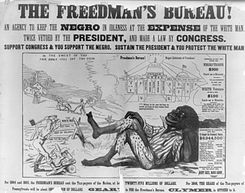
The “Civil Rights” Races ~ March 3, 1865

Claude Bowers in his notable book The Tragic Era that I have mentioned in some of these articles made note of the Union League Clubs.

John Chodes, author of Segregation–Federal Policy or Racism? (Shotwell Publishing, Columbia, South Carolina,) noted the Union League on page 26 of that book. He said: “The Union League began as a political club in New York in 1863 to revive the sagging patriotic spirit of the Northern states during the War for Southern Independence. It’s philosophies were similar to the Radical Republicans so it fused with and became part of Republican vote-building machine for blacks in the post-war South…The Union League’s expenses were covered by the sale of confiscated white Southerners’ property, thus inciting the volunteers to harass the people in time of peace by unlawful seizure to provide the means of paying themselves. This further alienated whites from blacks.” In other words, the Union Leagues were “legal” Yankee/Marxist thieves.” Continue reading →

Reading lessons…

…and do NOT let them use the cell phones, computers or pads as an excuse that they are “reading.” But on the other hand – if you are watching the news… those who do the caption work for television can’t spell – so just be careful.

Hey – read a book with the kids. Hmmmmmmmm….

Grandchildren of Low-Skill Immigrants Have Lagging Education and Earnings

Although the average education level of immigrants to the United States has been rising, the post-1965 immigration wave remains markedly less skilled than the native population. Immigrants currently account for 40 percent of all working-age Americans without a high school diploma, more than double their percentage of the general population. Continue reading →

K-12: Six Steps to Reform Education Right Now

Whenever people gather to discuss problems in education, we hear the same list of issues and solutions.

We hear about poverty and the need for bigger budgets at all levels, more self-esteem, professional teacher corps, charter schools, vouchers, tutoring and remediation, new literacies, better assessment, year-round schools, pre-K, schools that are more permissive or more strict, the effects of drugs, the impact of violent sports, and the perpetual need for more and more money. Continue reading →

Fruits of College Indoctrination

Walter E. Williams, Emeritus Distinguished Professor of Economics, George Mason University.

Much of today’s incivility and contempt for personal liberty has its roots on college campuses, and most of the uncivil and contemptuous are people with college backgrounds. Let’s look at a few highly publicized recent examples of incivility and attacks on free speech.

Senate Majority Leader Mitch McConnell and his wife, Transportation Secretary Elaine Chao, were accosted and harassed by a deranged left-wing mob as they were leaving a dinner at Georgetown University. Sen. McConnell was harassed by protesters at Reagan National Airport, as well as at several venues in Kentucky. Sen. Ted Cruz and his wife were harassed at a Washington, D.C., restaurant. Continue reading →

Assessment

John Taylor Gatto

“Our form of compulsory schooling is an invention of the State of Massachusetts around 1850. It was resisted — sometimes with guns — by an estimated eighty percent of the Massachusetts population, the last outpost in Barnstable on Cape Cod not surrendering its children until the 1880s, when the area was seized by militia and children marched to school under guard.” – John Taylor Gatto, Dumbing Us Down: The Hidden Curriculum of Compulsory Schooling. Continue reading →

His Father’s Hands

A different way of looking at life – the way it used to be. Although the following was written several years ago, I just came across it on Facebook tonight. Learn the lessons of life. pass this along to your children and grandchildren – have them READ it out loud to you, and then talk WITH them about it. ~ Ed.

A young man went to seek an important position at a large printing company. He passed the initial interview and was going to meet the director for the final interview. The director saw his resume, it was excellent. And asked, “Have you received a scholarship for school?”

The boy replied, “No”. Continue reading →