Why Johnny Still Can’t Read…

In 1955, prompted by the reading problems experience by the child of a friend, Rudolf Flesch wrote the book Why Johnny Can’t Read. The book became a huge bestseller and is still in print today.

Flesch realized that the reason many children were not learning to read was because of method of reading instruction they were exposed to in school. Hirsch called the popular method of his time the “look-say” method. The look-say method was just one of many whole word or whole language or word-guessing methods of teaching reading that have plagued students since the early twentieth century. Continue reading →

How Public Schools Suffer from the Tragedy of the Commons

Public schools, despite being collectively owned in theory, are in reality owned by no one.

Politico recently commented on a tweet from President Trump regarding “Bible literacy classes” in public schools. The article notes that several state legislatures have introduced the idea and that such classes would be electives and not part of the core curriculum. Inevitably, many will decry the ostensible conflict of church and state, while defenders of the idea see it as an exercise in state autonomy or a return to America’s so-called Christian past. Gray areas of constitutionality, religion, federalism, and local government make for interesting conversation, but I propose a simpler solution and a simpler way of looking at this. Continue reading →

Public Education ~ The New Marxism For Our Day

Karl Marx

Back during the “conservative” Reagan administration we got the federal Department of Education. Reagan was supposed to kill it, but he didn’t because he realized where his bread was buttered. I wonder if even he realized where the idea for that federal department came from. Most folks don’t have a clue. However the idea of a federal department of education was not new with Reagan, or even with Carter before him.

The idea wasn’t new with either one of them. It goes all the way back to 1932, and possibly before that.

In 1932 American Communist Party leader William Z. Foster wrote a book, Toward Soviet America and in it Comrade Foster listed several objectives to be forwarded to make this country into a Soviet America. Continue reading →

Homeschoolers: Guilty Until Proven Innocent?

My eight-year-old daughter and I recently read about the Salem witch trials. She had heard about Salem from a friend who visited the nearby town during its popular Halloween festivities, and she was curious about the witches. We went to the library to get some books on the topic of how 20 innocent people were put to death for “witchcraft” in 1692, with scores more accused and jailed.
What struck me most about revisiting the Salem Witch Trials with my children was the fact that these English Puritans who had recently settled in Massachusetts Bay Colony had no presumption of innocence. Those accused of a crime at the time, both in the New World and elsewhere, were guilty until proven innocent. The presumption of innocence in trials, with court defenders and impartial juries, would take centuries to catch on. The phrase “innocent until proven guilty” was coined by an English lawyer in 1791, but even then it took a long while to become the legal precedent we all now take for granted. Continue reading →

Thomas Paine ~ Our Hell-Raising Founding Father

“… if the journalistic credos of speaking truth to power, comforting the afflicted, and afflicting the comfortable have a godhead, that would have to be Paine, whose writing was so provocative and so uncompromising that he faced the gibbet and the blade everywhere he published—in England, and in France, and in the United Colonies.” ~ Craig Nelson
Thomas Pain (later changed to Paine) was born on January 29, 1737 in Thetford, England, his 40-year-old Anglican mother the daughter of a popular local lawyer, his 29-year-old Quaker father a destitute master craftsman staymaker. In Thetford the Pains lived within sight of the local hanging ground called Gallows Hill. Paine biographer Craig Nelson tells us… Continue reading →

Kansas State Republican Legislator Introduces Tax Break Bill For Student Textbooks

The Topeka Capital-Journal reports that a Kansas state freshman Republican representative hopes to help struggling college students burdened by the already high cost of textbooks via tax relief. Rep. Rick Hoheisel suggests that Kansas exempt all textbooks from the statewide 6.5% sales tax, thus saving students money each year they buy new books for their curriculum.
Rep. Hoheisel is a recent college graduate and remembers quite well that he would have to shell out big bucks each year simply to afford required reading. While Kansas cannot control the price of textbooks directly, the state government can control the taxes imposed on said products. Continue reading →

What I’ve Learned As A Life-Long Homeschooler

Many people still consider “homeschooling” to be a religious farmstead cult instead of a legitimate form of education. Yet on average, homeschoolers are far out-performing their publicly-educated peers in almost every subject.

According to the Homeschool Legal Defense Association (HSLDA),

In 1990, the National Home Education Research Institute issued a report entitled “A Nationwide Study of Home Education: Family Characteristics, Legal Matters, and Student Achievement.” This was a study of over 2,163 homeschooling families. Continue reading →

1 in 5 Lack Basic Literacy in These 3 States…

Here’s Why That Matters…

Adult illiteracy is one of the most overlooked socio-economic problems in America. Illiteracy can increase unemployment and poverty while lowering family stability and community flourishing. Here are five facts you should know about adult illiteracy in America:

1. Illiteracy is the inability to read or write. While complete illiteracy is relatively rare among native English speakers in the U.S., a significant percentage of Americans are functionally illiterate. A person is considered functionally illiterate when they cannot engage in all those activities in which literacy is required for effective functioning of his group and community and also for enabling him to continue to use reading, writing, and calculation for his own and the community’s development. Continue reading →

America First is based upon Traditional Heritage

Accurate history is the first causality in any establishment account of events and their significance. When the fundamental chronicles of national heritage is purged and supplanted with a total reversal of the nature of America’s essence, the public is browbeaten into adopting a phony and destructive departure from traditional values and purpose. The intense disparaging of the America First Committee and their vigorous defense of the Originalist Perspective for a non-interventionist foreign policy was a profound departure from constitutional restraint and limited Presidential authority. Continue reading →
Dickens: Great Expectations…

…for my friend, Charles Dickens

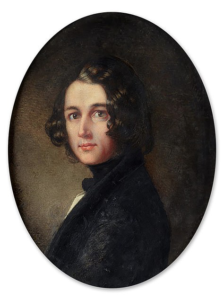
Lost portrait of Charles Dickens

Portrait of a thirty-something Charles Dickens as he looked when he wrote A Christmas Carol was found caked in mould at a South African market 150 years after it vanished

A youthful portrait of British writer Charles Dickens that went missing for 150 years went on display in London in late November, 2018 after being found covered in mould next to a metal lobster at a market in South Africa.

The miniature watercolour and gouache portrait by Margaret Gillies, valued at £220,000 pounds was painted in 1843 as the young Dickens, then in his early 30s, was writing ‘A Christmas Carol’.

The painting shows the Victorian writer clean shaven, with long, wavy hair, looking over his left shoulder, a contrast to the more common image of an ageing Dickens, with long bushy beard and messy, balding hair. Continue reading →

Finley: Higher Ed Getting Lower

I entered Antioch College in 1957 in the tiny village of Yellow Springs, Ohio, which had no stoplights, one flashing light at the railroad tracks, one greasy-spoon diner, one tavern, one pizza place and spartan dormitories.
What Antioch did provide was an outstanding liberal arts education with an excellent faculty. It also prepared generations of graduates for professional and graduate schools.

All of this was before the advent of political correctness, identity politics, “social justice warriors” and “intersectionality hierarchies.” Continue reading →

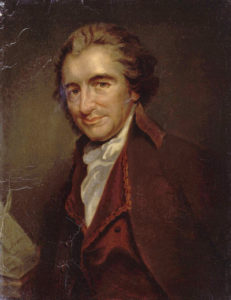
Thomas Paine Blasts Fake Money

The paper money that funded the American Revolution led to post-war grievances, the most well-known of which was Shays’s Rebellion in back-country Massachusetts. For years after the war the Boston legislature imposed taxes, falling mainly on those least able to pay, for the full payment in specie of the highly-depreciated notes issued during the war and held mostly by well-to-do legislators and bankers. As a further aggravation, the war was fought mostly by those on whom the taxes fell, while the elites stayed home. (See the Nobel-worthy Shays’s Rebellion: The American Revolution’s Final Battle by Leonard L. Richards)
Petitions for redress having been ignored by the legislature for several years, town leaders in western Massachusetts organized marches, beginning in August 1786, to shut down the courts, demanding that the state constitution be revised. Eventually, through force of arms, the government put a halt to the uprising while mischaracterizing it as a refusal of the poor to pay their just taxes. Continue reading →

‘College meltdown‘: Small private schools disappear in face of changing educational landscape

Rising expenses and fixed endowments force institutions to make tough choice

Small private colleges across the country are increasingly finding themselves trapped between ever-rising expenses and unchanging endowments, forcing administrators into hard decisions such as canceling courses, merging with other colleges and even closing schools.
“The college meltdown across America has been occurring for at least eight years, and there are few signs that it will slow down in 2019,” said Dahn Shaulis, whose College Meltdown blog monitors concerns in higher education. Continue reading →

In Honor of Thomas Jackson

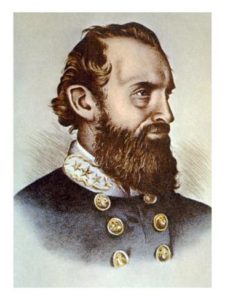
“Stonewall” Jackson

If I were to ask you to name the greatest general who ever served America, who would you name? Would it be Patton, MacArthur, Washington, or maybe perhaps Colin Powell or Norman Schwarzkopf? I would have to answer that the greatest general to ever serve his country would be Thomas Jackson. Never heard of him? Here, maybe if I told you his nickname it might help; Stonewall Jackson.

Thomas Jackson was an instructor at V.M.I., (Virginia Military Institute), when the call came from Abraham Lincoln to supply 3 regiments to support the oppression of the insurrection in the Cotton States. Unlike the tyrant Lincoln, Jackson understood the relationship between the States and the federal authority, and his loyalty was, first and foremost, to his native state of Virginia. When asked whether he would support the secession of Virginia, Jackson stated, “If Virginia adheres to the United States, I adhere. Her determination must control mine. This is my understanding of patriotism. And though I love the Union, I love Virginia more.” Continue reading →

A $20 Gold Coin that Saved a Life

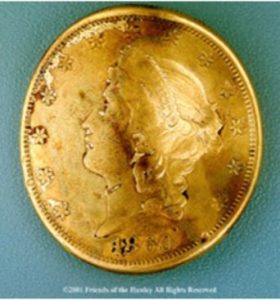
A story that a sweetheart gave a Confederate soldier George Dixon a $20 gold coin dated 1860 as a good luck charm has been validated. The story was that George kept the coin with him always, in his pocket, as good luck. During the Battle of Shiloh, George was shot point blank. The bullet struck in his pocket hitting the center of the gold coin. The impact was said to have left the gold piece bent, with the bullet embedded in it which saved his life.
George’s luck, however, did not last forever. Nearly 150 years ago, the Confederate submarine H.L. Hunley, the first ever in history, failed to return to port after its successful maiden mission. The sunken submarine was discovered in 2015 off the waters of South Carolina where it sunk in 1864. Continue reading →

The Humanity of Huck Finn

Huckleberry Finn and Jim

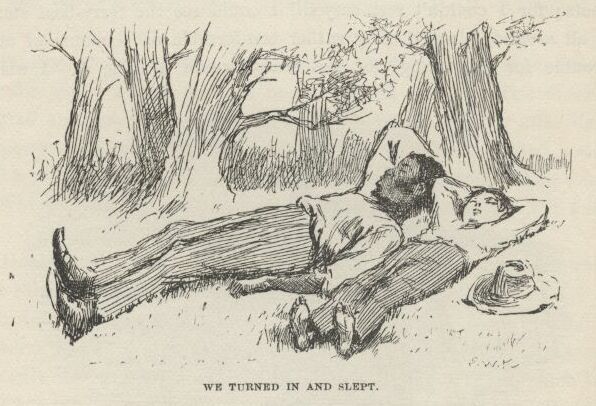
Huckleberry Finn is no hero, though he does symbolize the American conscience at the time Mark Twain wrote, or at least the conscience Twain hoped for. Yes, Huckleberry Finn is a coming-of-age tale and a social criticism and satire, but it also asks crucial questions: Who actually changes? What type of American will change?
Continue reading →