“Two things are infinite: the universe and human stupidity; and I’m not sure about the universe.” ~ Albert Einstein

Erasing History ~ Image: Lance Page
~ Forewords ~
The following is based solely upon my understanding of what I have uncovered so far by a study of history. If any of my facts are incorrect I beg that those more knowledgeable than I please correct me, and I will issue a statement reflecting where I have erred. However, if you disagree with anything I say simply because it is not what you were taught in school, or because it offends you, then I also kindly ask that you keep your comments to yourself. ~ Neal Ross, author and historian Continue reading
 Neil Compton of Bentonville, Arkansas, my beloved hometown, stands as a paragon of civic virtue. Born in Falling Springs, western Benton County, he lived with his family on Upper Coon Creek until the age of eleven, when he moved to Bentonville upon the election of his father, David, as Benton County Judge. After his undergraduate and medical education at the University of Arkansas, Compton served as a health officer with the State Board of Health, and later served in the Medical Corps of the United States Naval Reserve in the Fiji Islands during the Second World War. His former home, just off of the Bentonville Square, serves as the center of Compton Gardens, comprised of nearly seven acres of walking trails and native woodland plants. Compton Gardens now connects to our world-renowned Crystal Bridges Museum of American Art, as well as the rest of the magnificent Bentonville trail system. I have many a fond memory there, and vividly remember my first visit in the fourth grade. Incidentally, it was this fourth-grade teacher that instilled in me my passion for the natural world.
 With most public schools ending the school year in lockdown because of the coronavirus pandemic, Fox News reports that parents in several states want to homeschool now and perhaps in the future. But some school systems are resistant to that.

 On returning from my trip to the West in February, I received a request from The New York Times to write a piece answering the following questions:
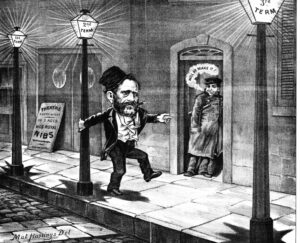
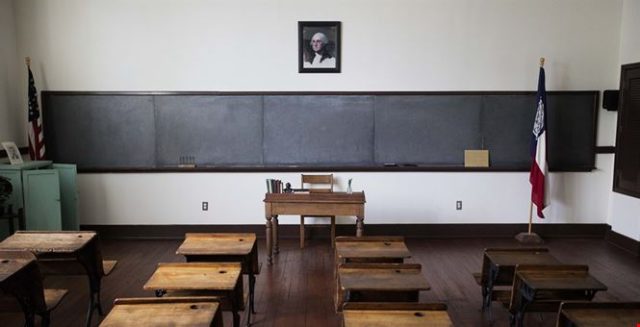

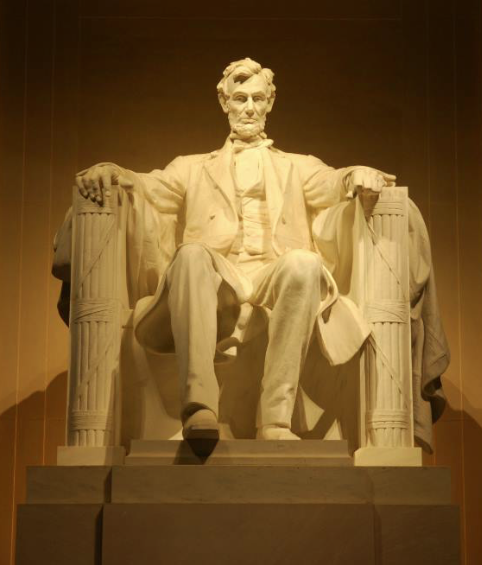 President Lincoln has been all but deified in America, with a god-like giant statue at a Parthenon-like memorial in Washington. Generations of school children have been indoctrinated with the story that “Honest Abe” Lincoln is a national hero who saved the Union and fought a noble war to end slavery, and that the “evil” Southern states seceded from the Union to protect slavery. This is the Yankee myth of history, written and promulgated by Northerners, and it is a complete falsity. It was produced and entrenched in the culture in large part to gloss over the terrible war crimes committed by Union soldiers in the War Between the States, as well as Lincoln’s violations of the law, his shredding of the Constitution, and other reprehensible acts. It has been very effective in keeping the average American ignorant of the real causes of the war, and the real nature, character and record of Lincoln. Let us look at some unpleasant facts.
 When it comes to discussion of public schools, all too often battle lines seem to be drawn between those on the inside and outside of the system: the teachers and the parents. The teachers understandably want to defend the job they do, while the parents want to ensure that their child doesn’t become another dismal statistic.

 As I have examined the phenomenon of government controlled schooling, it has been a continuing mystery to me why this type of totalitarian enterprise could have been imposed on a country that was ostensibly founded on the primacy of individual liberty and freedom of conscience. I can understand why today’s citizens are generally oblivious to freedom of conscience issues due to the indoctrination and psychological conditioning that are essential components of government schooling – but why would such a system be accepted by citizens who had not been programmed to accept it?

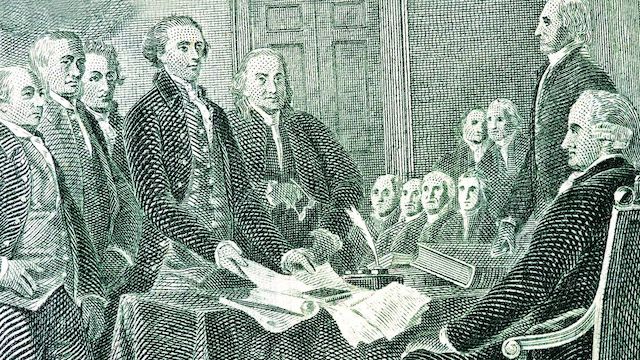
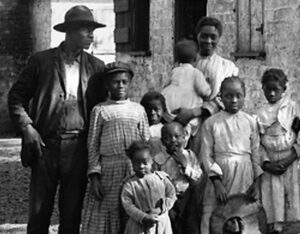 The 13th Amendment to the U.S. Constitution, ratified in 1865 in the aftermath of the Civil War, abolished slavery in the United States. The 13th Amendment states: “Neither slavery nor involuntary servitude, except as a punishment for crime whereof the party shall have been duly convicted, shall exist within the United States, or any place subject to their jurisdiction.”