 WASHINGTON, D. C., March 4, 1801 – Thomas Jefferson took the oath of office as President of the United States in an atmosphere which prompted him to devote all of his eloquence to restoring unity among the country’s leaders lest they fall into the divisions of parties against which President Washington warned.
The words of his Inaugural Address were hopeful expressions of unity. The facts were greatly different, for John Adams today sulked in anger against the open revolt led by Mr. Jefferson himself which started the movement called popularly the Republicans, that won the majority of the electoral vote for Mr. Jefferson and lobbed Mr. Adams of a second term.
In fact, until the very hour of the clock arrived last night that ended the administration of President Adams, he occupied himself in filling vacancies in public offices with hard-shell Federalists who might be expected to thwart the more radical tendencies of the new men following Mr. Jefferson under the Republican banner.
Chief among these appointees is Mr. John Marshall, who within the past twenty-four hours was named Chief Justice of the Supreme Court-a conservative Virginian counted upon to check, at the bench of ultimate appeal for all laws, such radicalism as may be written by the new Administration into the country’s laws.
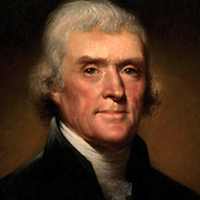
President Thomas Jefferson
During the contest of opinion through which we have passed, the animation of discussions and of exertions has sometimes worn an aspect which might impose on strangers unused to think freely, and to speak and to write what they think; but this being now decided by the voice of the nation, announced according to the rules of the Constitution, all will of course arrange themselves under the will of the law, and unite in common efforts for the common good. All too will bear in mind this sacred principle, that though the will of the majority is in all cases to prevail, that will, to be rightful, must be reasonable; that the minority possess their equal rights, which equal laws must protect, and to violate which would be oppression.
Let us then, fellow-citizens, unite with one heart and one mind, let us re- store to social intercourse that harmony and affection without which liberty and even life itself are but dreary things. And let us reflect, that having banished from our land that religious intolerance under which mankind so long bled and suffered, we have yet gained little, if we countenance a political intolerance, as despotic, as wicked, and as capable of as bitter and bloody persecutions. During the throes and convulsions of the ancient world, during the agonizing spasms of infuriated man, seeking through blood and slaughter his long-lost liberty, it was not wonderful that the agitation of the billows should reach even this distant and peaceful shore; that this should be more felt and feared by some, and less by others, and should divide opinions as to measures of safety; but every difference of opinion is not a difference of principle. We have called by different names, brethren of the same principle. We are all Republicans; we are all Federalists. If there be any among us who wish to dissolve this Union, or to change its republican form, let them stand undisturbed as monuments of the safety I with which error of opinion may be tolerated, where reason is left free to combat it. I know, indeed, that some honest men fear that a republican government cannot be strong; that this government is not strong enough. But would the honest patriot, in the full tide of successful experiment, abandon a government which has so far kept us free and firm, on the theoretic and visionary fear, that this government, the world’s best hope, may, by possibility, want energy to preserve itself? I trust not. I believe this, on the contrary, the strongest government on earth. I believe it the only one where every man, at the call of the law, would fly to the standard of the law, and would meet invasions of the public order as his own personal concern. Sometimes it is said that man cannot be trusted with the government of himself. Can he then be trusted with the government of others? Or, have we found angels in the form of kings, to govern him? Let history answer this question.
Let us then, with courage and confidence, pursue our own federal and republican principles; our attachment to union and representative government. Kindly separated by nature and a wide ocean from the exterminating havoc of one quarter of the globe; too high-minded to endure the degradation of the others, possessing a chosen country, with room enough for our descendants to the thousandth and thousandth generation, entertaining a due sense of our equal right to the use of our own faculties, to the acquisition of our own industry, to honor and confidence from our fellow-citizens, resulting not from birth, but from our actions and their sense of them, enlightened by a benign religion, professed in deed and practised in various forms, yet all of them inculcating honesty, truth, temperance, gratitude, and the love of man, acknowledging and adoring an overruling Providence, which, by all its dispensations, proves that it delights in the happiness of man here, and his greater happiness hereafter; with all these blessings, what more is necessary to make us a happy and prosperous people? Still one thing more, fellow-citizens, a wise and frugal government, which shall restrain men from injuring one another, shall leave them otherwise free to regulate their own pursuits of industry and improvement, and shall not take from the mouth of labor the bread it has earned. This is the sum of good government; and this is necessary to close the circle of our felicities.
Postlogue:
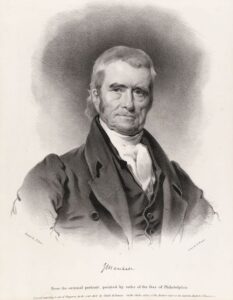
Chief Justice John Marshall
This Inaugural Address by President Jefferson did not close the gap in political ranks. In fact, his election I marked the birth of the two-party system which, while he could not know it and despite Washington’s warnings, against such a decision, has become one of the great strengths of the American form of politics. For more than a century and a half, American politics have been planted upon the basic idea of responsible leadership by a majority party and the exercise of checks and balances by a responsible minority party; never a pluralty of parties that make possible grasp of leadership by a minority spokesman on the basis of deals with a host of minor parties. Such a system wrecked the French Fourth Republic.
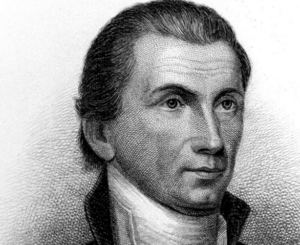
As an echo of the Adams – Jefferson division, the United States won the service of John Marshall as Chief Justice for 35 years, in which time he made the reputation of probably the greatest man to hold that office.
His appointment as a result of John Adams temporary spite became perhaps the most notable action by that stern old New Englander.
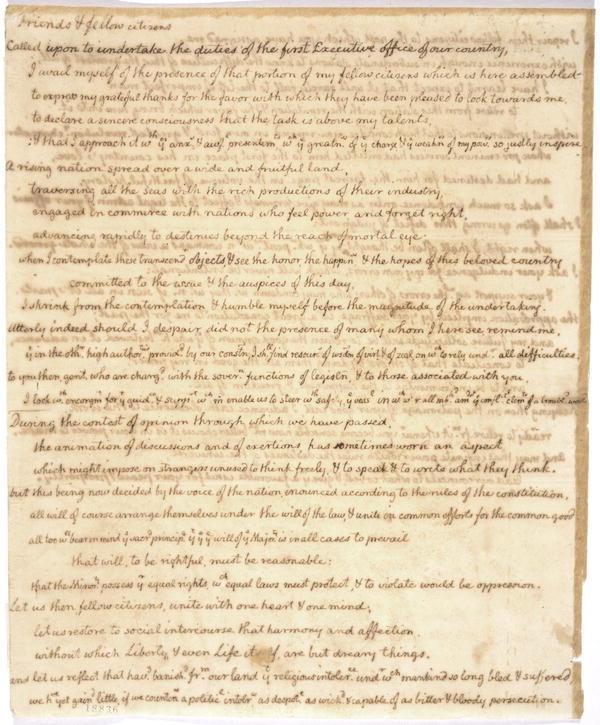
Inaugural Address, [March 4, 1801], reading copy, in Jefferson’s hand. | Library of Congress

 ~ Prologue ~
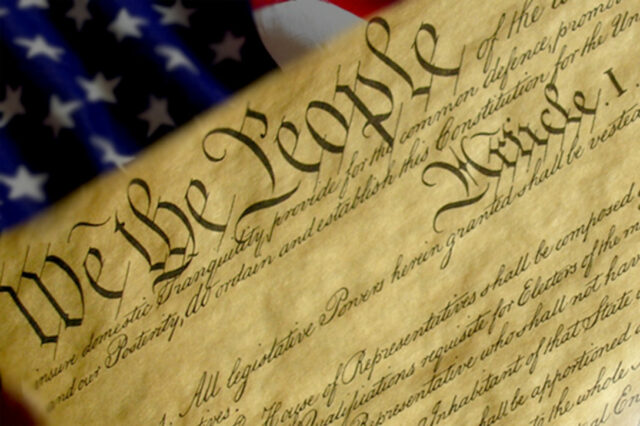
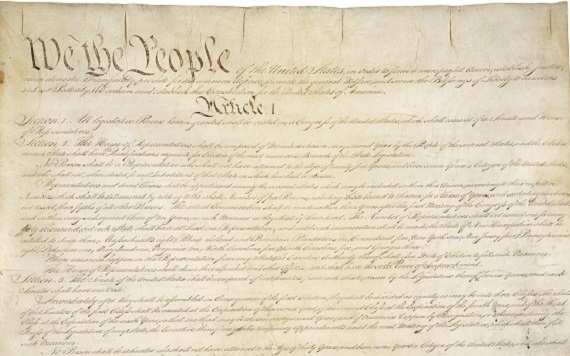 “Their revolution (the South in 1861) … was in fact an act of restoration, for the constitution drawn up in Montgomery in 1861 for the Confederate States of America was a virtual duplicate of the United States Constitution.” John McCardell in his Introduction to Jesse T. Carpenter’s “The South as a Conscious Minority, 1789 – 1861”, re-published by the University of South Carolina Press, 1990, p. xiv-xv (emphasis added)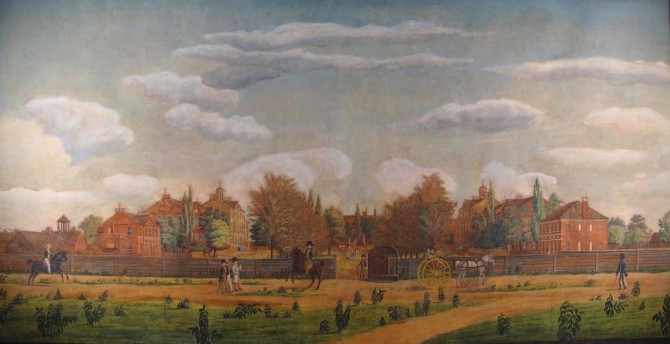
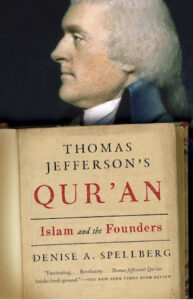 A 232 Year History of our fight against Islam & why it is no longer taught in our public schools…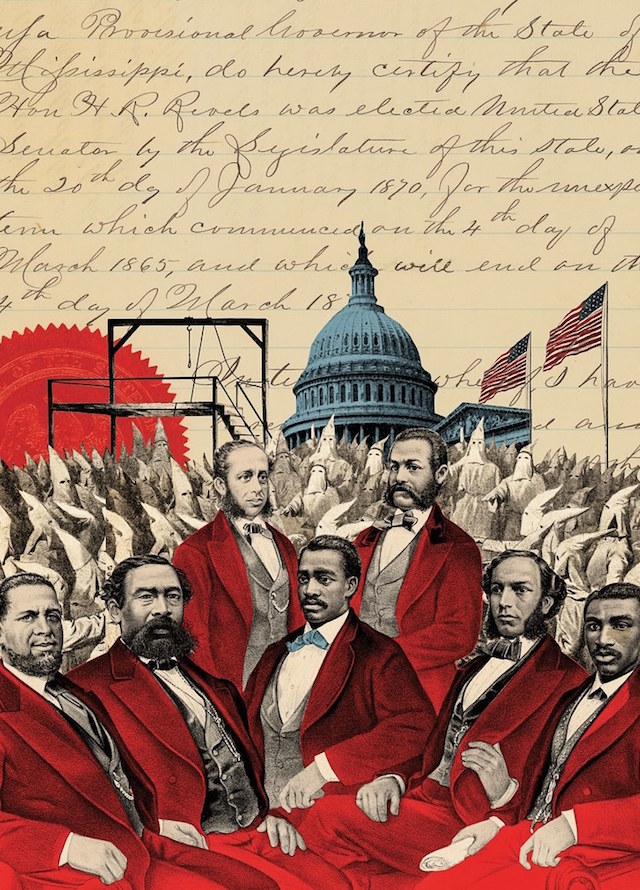
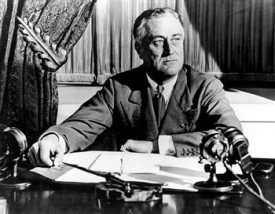 By virtue of the authority vested in me by Section 5(b) of the Act of October 6, 1917, as amended by Section 2 of the Act of March 9, 1933, entitled “An Act to Provide relief in the existing national emergency in banking, and for other purposes,” in which amendatory Act Congress declared that a serious emergency exists, I, Franklin D. Roosevelt, President of the United States of America, do declare that said national emergency still continues to exist and pursuant to said section do hereby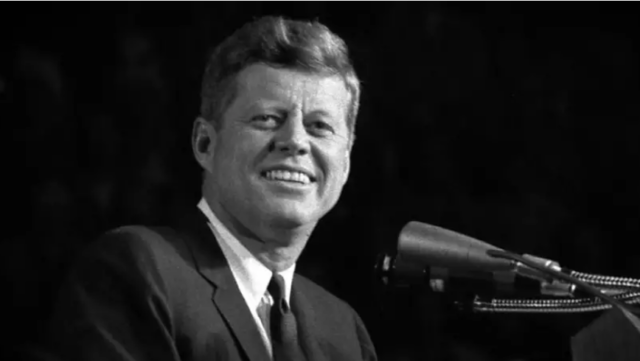
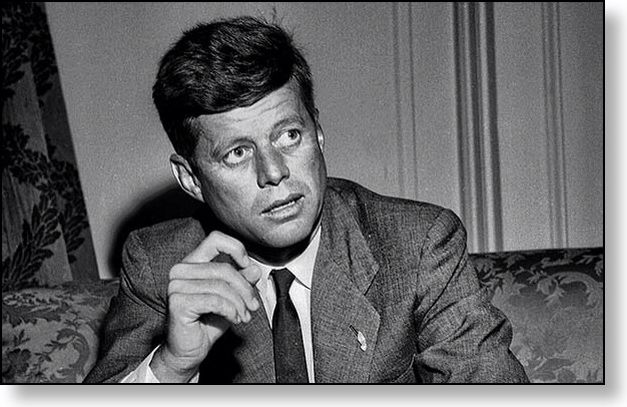 Calls to abolish the electoral college are all the rage these days, but they aren’t new. One such attempt in 1956 was thwarted with the help of a Democratic senator from Massachusetts — a young John F. Kennedy.
 Hillary Clinton blamed the Electoral College for her stunning defeat in the 2016 presidential election in her latest memoirs, “What Happened.”
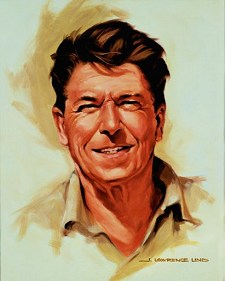 January 22, 1983 ~ The 10th anniversary of the Supreme Court decision in Roe vs. Wade is a good time for us to pause and reflect. Our nationwide policy of abortion-on-demand through all nine months of pregnancy was neither voted for by our people nor enacted by our legislators – not a single state had such unrestricted abortion before the Supreme Court decreed it to be national policy in 1973. But the consequences of this judicial decision are now obvious: since 1973, more than 15 million unborn children have had their lives snuffed out by legalized abortions. That is over ten times the number of Americans lost in all our nation’s wars.
 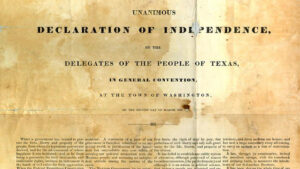 On March 2, 1836, Texas formally declared its independence from Mexico. The Texas Declaration of Independence was signed at Washington-on-the-Brazos, now commonly referred to as the “birthplace of Texas.” Similar to the United States Declaration of Independence, this document focused on the rights of citizens to “life” and “liberty” but with an emphasis on the “property of the citizen.”
 Accurate history is the first causality in any establishment account of events and their significance. When the fundamental chronicles of national heritage is purged and supplanted with a total reversal of the nature of America’s essence, the public is browbeaten into adopting a phony and destructive departure from traditional values and purpose. The intense disparaging of the America First Committee and their vigorous defense of the
 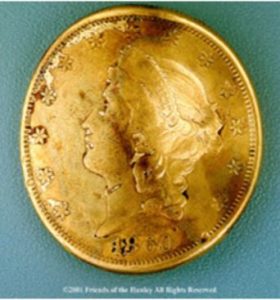 A story that a sweetheart gave a Confederate soldier George Dixon a $20 gold coin dated 1860 as a good luck charm has been validated. The story was that George kept the coin with him always, in his pocket, as good luck. During the Battle of Shiloh, George was shot point blank. The bullet struck in his pocket hitting the center of the gold coin. The impact was said to have left the gold piece bent, with the bullet embedded in it which saved his life.