
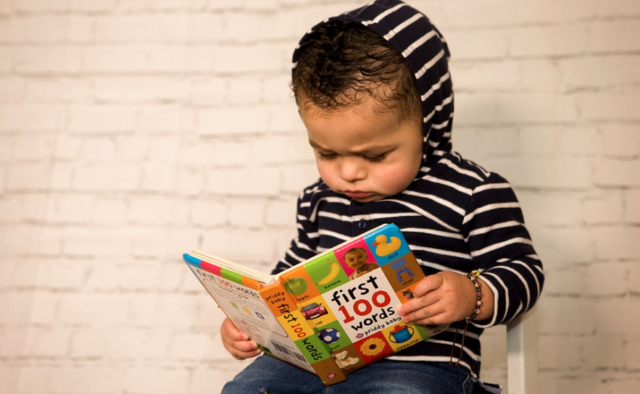
 If you want your child to have a rich and fulfilling life, one of the best things you can do is help build your child’s vocabulary. Research shows strong language ability is associated with a number of positive things, including happiness, friendships, connections with family, academic success and a satisfying career.
Building your child’s language ability is not something you should wait to do until they’re old enough to go to school. Continue reading
 Gillian Lynne. Maybe you’ve heard of her? She’s the choreographer who did Cats and Phantom of the Opera, and she most likely would be diagnosed with ADHD if she was of school age today.
 When I was in high school we had Home Ec and Shop to teach us those daily things. Home Ec also taught us how to care for an ill family member – how to change sheets and make a bed; how to sew things as well as how to keep a house clean and orderly. The shop classes taught woodworking, auto mechanics, etc.
 Soon the first grader would wave good bye to her four year old brother at my classroom door. But now they both sat in a wooded glade on a hot August day listening intently to my story during a home visit, a tradition in our school.
  There’s nothing quite like an old book to gain a snapshot of the linguistics of the day; many words and phrases long ago common and once well understood today are, in some cases, simply baffling, if not comical.

 On March 30, 1973, the ‘Charlotte’s Web‘ author wrote a beautiful note to a dispirited man who had last all faith in humanity.
 Elkhart Community Schools students usually get breakfast and lunch at school, but on the weekends at home, they may be without food.
 A few weeks ago, while lecturing for a Hillsdale College event in Boise, Idaho, I visited the local Barnes and Noble on Milwaukee Street. It had been at least fifteen to twenty years since I’d last visited that particular store. Wave after wave of nostalgia flowed over me as I opened the front door and walked in. I knew the layout immediately, and, even more powerfully, I knew the smells. The scents of slick magazines, pulpy books, and thick coffee. This was, you see, the very first Barnes and Noble bookstore I had ever visited.
  Whatever I teach, I teach storytelling because it is an expression of human creativity that provides perspective. Stories help us understand our world by showing us that random events surrounding our lives only seem random, but are in fact connected. Stories enable us to perceive a higher level of meaning. Fiction such as J.R.R. Tolkien’s The Lord of the Rings and Alex Haley’s Roots explore the role of cultural storytelling in personal formation. Aesop uses “The Tortoise and the Hare” to explain the virtue of diligence, and Ernest Hemingway critiques modernist conventions of storytelling in “Snows of Kilimanjaro.”
  Turn yourself into a bookworm. These techniques will help you read more.
 A California family group says mothers in the state have had enough of public schools exposing their children to radical sex-ed curriculum, and they’re doing something about it.

 The Topeka Capital-Journal reports that a Kansas state freshman Republican representative hopes to help struggling college students burdened by the already high cost of textbooks via tax relief. Rep. Rick Hoheisel suggests that Kansas exempt all textbooks from the statewide 6.5% sales tax, thus saving students money each year they buy new books for their curriculum.