From evolution to anti-racism, parents and progressives have clashed for a century over who gets to tell our origin stories.

A stand in Dayton, Tennessee, during the July, 1925, Scopes trial. Photograph from Getty
In 1925, Lela V. Scopes, twenty-eight, was turned down for a job teaching mathematics at a high school in Paducah, Kentucky, her home town. She had taught in the Paducah schools before going to Lexington to finish college at the University of Kentucky. But that summer her younger brother, John T. Scopes, was set to be tried for the crime of teaching evolution in a high-school biology class in Dayton, Tennessee, in violation of state law, and Lela Scopes had refused to denounce either her kin or Charles Darwin. It didn’t matter that evolution doesn’t ordinarily come up in an algebra class. And it didn’t matter that Kentucky’s own anti-evolution law had been defeated. “Miss Scopes loses her post because she is in sympathy with her brother’s stand,” the Times reported. Continue reading
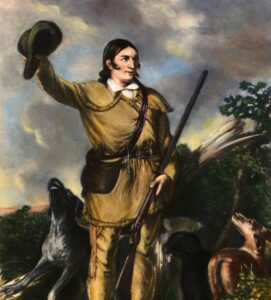 Mr. Speaker — I have as much respect for the memory of the deceased, and as much sympathy for the suffering of the living, if suffering there be, as any man in this house, but we must not permit our respect for the dead or our sympathy for a part of the living to lead us into an act of injustice to the balance of the living. I will not go into an argument to prove that Congress has no power to appropriate this money as an act of charity. Every member upon this floor knows it. We have the right, as individuals, to give away as much of our own money as we please in charity; but as members of Congress we have no right so to appropriate a dollar of the public money. Some eloquent appeals have been made to us upon the ground that it is a debt due the deceased. Mr. Speaker, the deceased lived long after the close of the war; he was in office to the day of his death, and I have never heard that the government was in arrears to him.
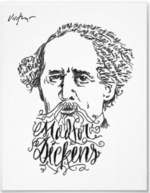 “It was the best of times, it was the worst of times, it was the age of wisdom, it was the age of foolishness, it was the epoch of belief, it was the epoch of incredulity, it was the season of Light, it was the season of Darkness, it was the spring of hope, it was the winter of despair, we had everything before us, we had nothing before us, we were all going direct to Heaven, we were all going direct the other way—in short, the period was so far like the present period, that some of its noisiest authorities insisted on its being received, for good or for evil, in the superlative degree of comparison only…”
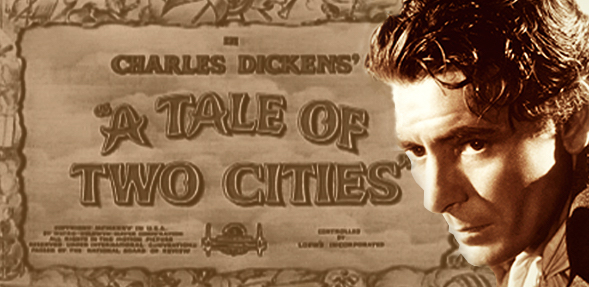 It is the year 1775, and France, as well as England, are awash with social ills. Jerry cruncher delivers an urgent message to Jarvis Lorry vie the Dover mail-coach. In the message, he gets instruction to wait at Dover for Lucie Manette, an orphan whose supposedly dead father is alive in France. They both go to Paris a meet Dr. Manette who is now a mad man who makes shoes. The love between daughter and father recall Manette to sanity.
 Anyone who has read any of my work knows where I stand on the public school system. That is no secret. I remember, many years ago now, one of my main mentors, Rev. Ennio Cugini, made the comment to me that the public school system was a place to keep students up to date on the latest propaganda produced by the communists. When you look at what is being promoted today in these so-called institutions of learning, things like Critical Race Theory and the 1619 Project, it is difficult not to agree with Pastor Cugini’s assessment of public schools.
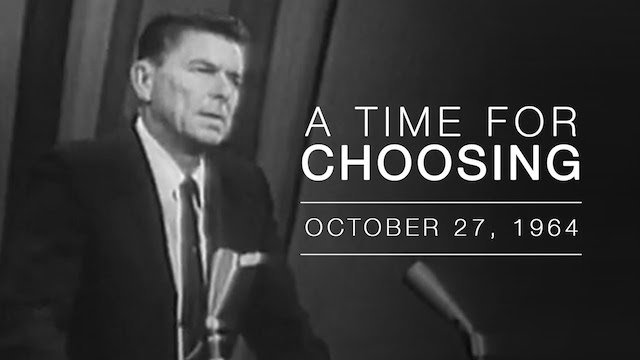
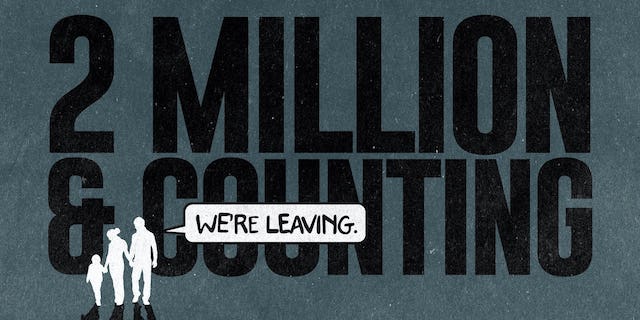 A recent study released from the National Centers for Education Statistics revealed that public schools have been experiencing a decrease in enrollment. Almost 4% of students were pulled out of public schools in the 2020-2021 school year. This was especially evident in the younger grades. According to the report, “Preschool enrollment dropped by 22 percent, and enrollment of kindergarteners fell by 9 percent.”
  Thirty-odd years ago, I taught adult basic education two nights a week in a minimum-security prison in Hazelwood, North Carolina.
 In 1690, Massachusetts Bay Colony embarked upon a short-lived experiment in unbacked paper money. It did not go well.
 I have written about Critical Race Theory before, and I probably will again. It is such a pernicious world view that it deserves all the negative publicity possible. At this point, several state legislatures around the country have bills in their legislatures to ban the teaching of this theory in their public schools and, while I have no use for the public school system, I do applaud these efforts. At least some in these state legislatures recognize what a horrendous insult to real education this leftist drivel really is.
 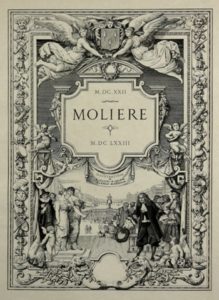 Vive la différence between British and French culture in two of the greatest playwrights in history. Britain has a rich literary heritage, but Shakespeare, “the Bard,” is widely recognized as the greatest writer in the English language. In France, a number of writers — Voltaire, Hugo, Proust, Flaubert — can compete for that title, but Molière is viewed as the most acclaimed writer of French comedy and satires, even more heralded than later satirists like Voltaire and Anatole France.
 According to Tami Forman at
  Researchers at Harvard University just released findings from their new study showing positive outcomes for homeschooled students. Writing in The Wall Street Journal last week, Brendan Case and Ying Chen of the Harvard Human Flourishing Program concluded that public school students “were less forgiving and less apt to volunteer or attend religious services than their home-schooled peers.”
  There is a lot to be frustrated about as 2021 concludes. Some places are back in lockdown over rising coronavirus cases, while others are re-imposing previous restrictions and introducing new ones—including my city.
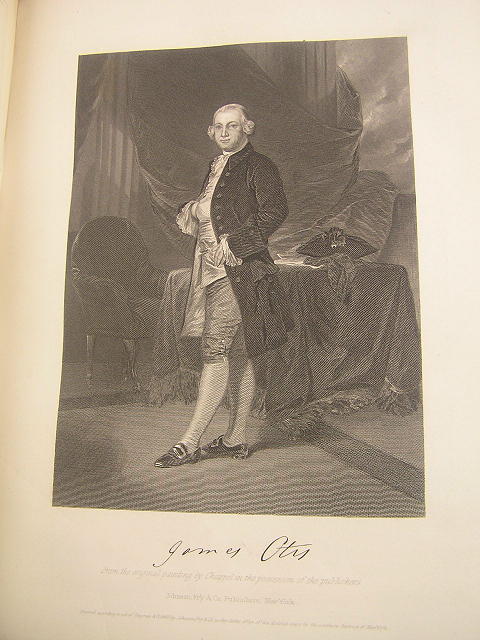 February 5 marks the birth of the American who had the greatest hand in what became the 4th Amendment’s prohibition of unreasonable searches and seizures – James Otis. Unfortunately, “one of the most passionate and effective protectors of American rights” is too-little remembered today.
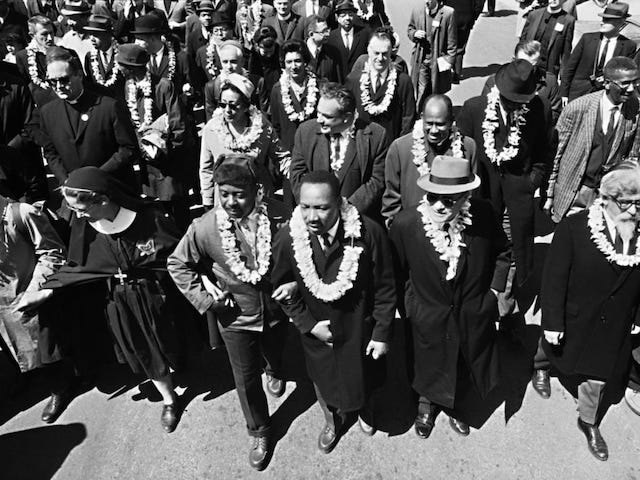 On March 25, 1965, at the conclusion of the brutally consequential march from Selma to Montgomery, Martin Luther King, Jr., delivered a speech titled “Our God Is Marching On!” He spoke to a crowd of twenty-five thousand people on the grounds of the Alabama state capitol, in view of the office window of the segregationist governor George Wallace. The address is not among King’s best-known, but it is among the most revelatory. King argued that, in the decade since the bus boycotts in that city, a new movement had emerged and an older order was starting to fall away.