
Printed in The Public Advertiser, September 11, 1773; incomplete draft and notes
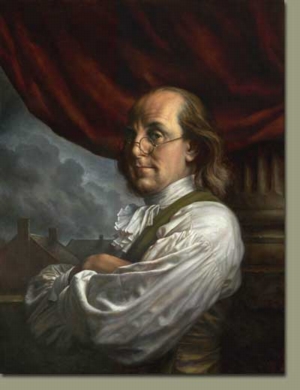
Dr. Benjamin Franklin
Franklin was pleased with this satire, which was a companion piece to “An Edict by the King of Prussia.” Both had the virtues, he believed, of brevity, comprehensiveness, and “out-of-the-way forms” that caught attention; but he preferred the “Rules” to the “Edict” for the breadth and variety of its contents and for “a kind of spirited ending of each paragraph.” His technique in the two was different: in this one he challenged his readers to see their government’s policy through colonial eyes; in the “Edict” he jolted them with the fiction that they were colonists themselves. The two essays had a single purpose, to induce the public to take a fresh look at the American problem. When Parliament reconvened in the autumn, that problem promised to be a major subject of discussion; and the sensational demand from Massachusetts for the removal of Hutchinson and Oliver was sure, when it came before the Privy Council, to provoke a storm. Moderate counsels could never prevail unless the folly of past measures was exposed, and Franklin devoted himself to exposing it. At the top of his satirical bent he could not be ignored, and the initial public reaction to his efforts was gratifying. The issue of the Public Advertiser containing the “Edict” sold out immediately, and both satires were widely reprinted in England and then in America. Continue reading
 The United States was brand new. Soldiers who had fought for independence from Great Britain found themselves on opposite sides of a skirmish. Some were having their rights violated practically before the ink was dry on the Bill of Rights. Other Veterans of the Revolution were doing the oppressing at Alexander Hamilton’s behest.
 House Speaker Jeremy Gillam (R) Judsonia, AR and Committee Chair Bruce Cozart (R) Hot Springs and their gang of 15.
 The total number of teachers in America is on the decline, as many teachers are underpaid and overworked and don’t receive adequate resources or funding from their schools or governments. The Wall Street Journal reports that since 2005, all 50 states and Washington, D.C. have experienced teacher shortages. But some states are really struggling. States like Arizona, which has been at or near the bottom of national education rankings for quite some time, have a dearth of qualified teachers — and are lowering certification standards as a result.
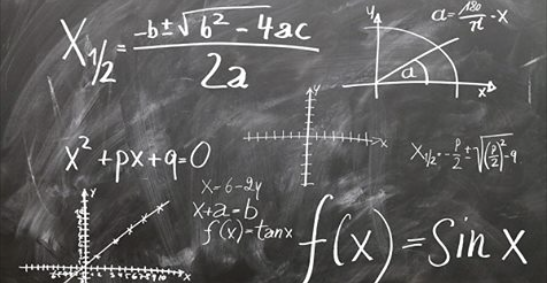 Learning school subjects should be like learning anything else in life. You start at the beginning, proceed step by step, master more difficult aspects, and become skilled. Isn’t that how we learn to drive a car, build a doghouse, play the piano, surf, or operate a computer? Of course. That’s how we humans do it.
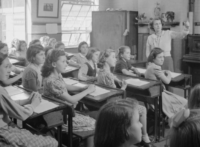 In recent years, many Americans have adopted the idea that public education is neutral ground. Such a mentality has undoubtedly sprung from the fact that the public school is the agent of the government, an entity which strives to keep itself clear from sectarian, political, or other ideological viewpoints.
 Author’s Introduction:
 I knew 20 or 25 years ago when school teachers had to buy school supplies for their students that there was major mismanagement going on in our schools. Most of us have probably been donating school supplies for many years now.
 It’s a common complaint among teachers as well as parents in the U.S. these days: kindergarten has become the new first grade and the unintended casualty of that is preschool, which has consequently become the new kindergarten. Many early childhood experts consider physical activity and unstructured play the two main pillars for learning and a healthy development for preschoolers. Both are often lacking at American preschools, where play is typically directed by the adults and the students are more likely to be found cooped up indoors, filling out worksheets and tracing letters. Not to mention kindergarten, where students are expected to sit still at their desks for the majority of the day.
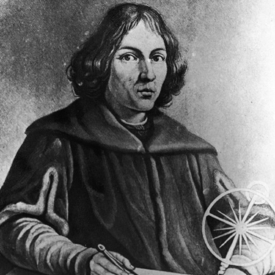 Although there are countless scourges which in general debilitate kingdoms, principalities, and republics, the four most important (in my judgment) are dissension, [abnormal] mortality, barren soil, and debasement of the currency. The first three are so obvious that nobody is unaware of their existence. But the fourth, which concerns money, is taken into account by few persons and only the most perspicacious. For it undermines states, not by a single attack all at once, but gradually and in a certain covert manner.
 Liberal, feminist (in the classic sense), college professor Camille Paglia is at it again, triggering America’s leftwing crybabies with her blunt honesty and her perceptive commentary about the ills in modern America.
 What happened in the unseen labyrinth to which the pneumatic tubes led, he did not know in detail, but he did know in general terms. As soon as all the corrections which happened to be necessary in any particular number of ‘The Times’ had been assembled and collated, that number would be reprinted, the original copy destroyed, and the corrected copy placed on the files in its stead. This process of continuous alteration was applied not only to newspapers, but to books, periodicals, pamphlets, posters, leaflets, films, sound-tracks, cartoons, photographs — to every kind of literature or documentation which might conceivably hold any political or ideological significance. Day by day and almost minute by minute the past was brought up to date. In this way every prediction made by the Party could be shown by documentary evidence to have been correct, nor was any item of news, or any expression of opinion, which conflicted with the needs of the moment, ever allowed to remain on record. All history was a palimpsest, scraped clean and reinscribed exactly as often as was necessary.
 For those of us paying attention to what’s happening in the world around us, the coming collapse is a foregone conclusion. All signs point to the inevitable: that an event, or series of events, will soon lead the world into what can be described as a modern period of the Dark Ages. Food will become scarce, violence will thrive, disease will spread, governments will turn on their people, and the fragile social fabric that has maintained relative peace throughout the Western world will unravel.
 A Mississippi school district will resume teaching ‘To Kill A Mockingbird‘ after the book was pulled from a junior high reading list.