Charles Dickens’s Daily Routine: Cold Plunges, Long Walks, and Set Hours

Instead of waiting for inspiration to strike, Charles Dickens used discipline, exercise, and structure to produce genius.

“Dickens’s Dream” by Robert William Buss, 1875.

The much-beloved writer Charles Dickens has been widely hailed as the greatest Victorian novelist. He was the Victorian equivalent of a rock star, going on tour around England and internationally, enjoying greater popularity during his earthly years than any prior writer had.

But like many other great artists, Dickens did not stumble into his fame and success by accident. It was the result of conscious effort, discipline, and a well-balanced daily routine – combined, of course, with once-in-a-generation genius and native talent. The results were awe-inspiring and continue to captivate readers in all the 150 languages into which his work has been translated. Continue reading

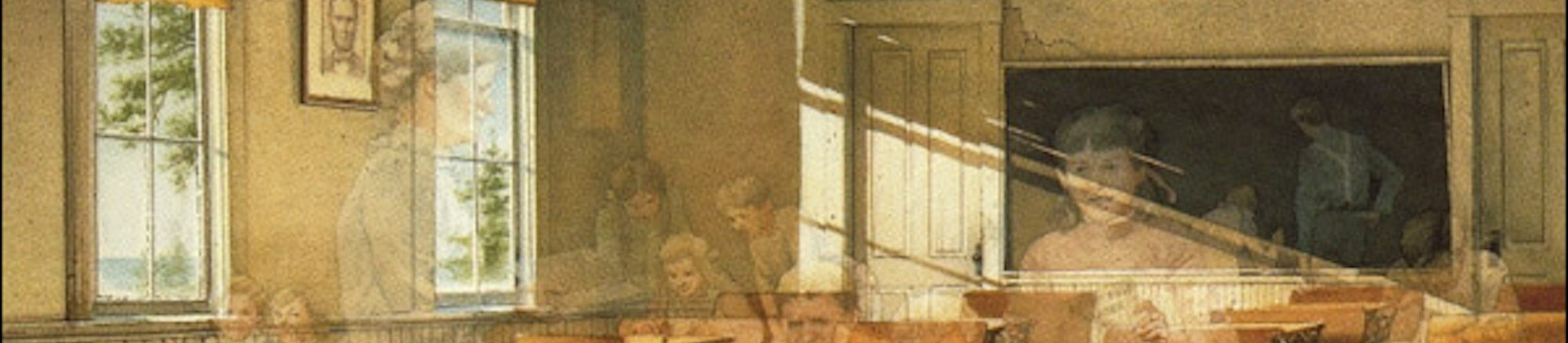
Annie: 4 Surprising Things the Founders Intended to Include in American Education

Benjamin Franklin, Thomas Jefferson and John Adams

One of the childhood stories in my father’s arsenal is set at lunchtime in his local public school. Although he went home for lunch, he often heard his teacher leading the classroom in a group rendition of “Come Lord Jesus, be our guest,” as he gathered his things before walking across the street. A few short years later, the winds changed, and he was bawled out in class for disagreeing with a lesson due to his Christian beliefs.

His experience prompts an important question: Should Christian prayers take place in public schools?
Continue reading

Sir Isaac Newton Wrote a Letter in 1704 Predicting the Year The World Would End

Sir Isaac Newton’s prediction of doomsday was scribbled below a series of mathematical calculations, revealing his multidisciplinary interests.

A signature of Isaac Newton (L), Image of Isaac Newton (R). (Representative Cover Image Source: Getty Images | Photo by Peter Macdiarmid (L), GeorgiosArt (R))

One of the greatest scientific minds in history, Sir Isaac Newton, is most popularly known for his foundation of gravity. Not to mention his work in science and mathematics, particularly the laws of motion and the basis of calculus. However, recently found 18th-century scribblings were reflective of his ponderings over the end of the world, according to the New York Post. A letter that he wrote in 1704 predicted the world to come to an end in 2060. The predictions were based on extensive biblical texts on the world resetting after plagues, war, and “the ruin of the wicked nations.” It was reflective of Newton being a devoted practitioner of natural philosophy. Continue reading

New Jersey Bill Could Force Homeschool Curriculums to Include Climate Change, DEI and More

New Jersey is considering a number of bills that would heavily regulate homeschooling.

Will Estrada is Senior Counsel with Homeschool Legal Defense Association (HSLDA) speaks about the introduced bills. He tells AFN that, right now, New Jersey enjoys a lot of homeschooling freedom.
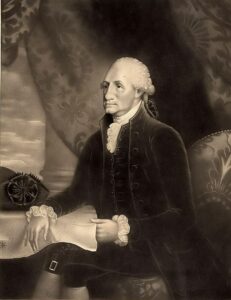
“So, the context is that New Jersey is one of 12 states in the United States where there is no requirement that homeschool families get permission from the government in order to home school. They don’t have to file with the local school district. They don’t have to notify the local school district. They are free to homeschool their kids,” Estrada explains.

He said there are still educational neglect laws where they still have to make sure they are providing a rigorous education to their children, but Estrada explained they do not have to file with the local school district to do that. Continue reading

George Washington, The Constitution & Sanctuary States

Ben Franklin warned us about how corruption brings tyranny, but I remain hopeful that Abe Lincoln’s Better Angels will arrive in time to save the Union once again

In 1783 at the end of George Washington’s tenure as Commander and Chief of the Continental Army, he penned a letter to the governors of each of the States. It was 7 years after the Declaration of Independence and the thirteen former colonies remained organized under the Articles of Confederation, the nation’s first frame of government. Washington’s letter gives every indication he was looking forward to retirement at his Mt. Vernon home with no thought of further service as the first American President.

As I read this letter I was struck by the prescient thoughts it offered. One section highlighted below speaks to the importance of recognizing limited federal governance as defined by representative legislation and thus informing the world that the new nation of individual States was united. These thoughts would be fully expressed later in the Constitution of the United States. Continue reading

July 4, 1776: Congress Adopts the Declaration of Independence

The adoption of the Declaration of Independence of “the thirteen united States of America” on July 4, 1776 formally ended a process that had been set in motion almost as soon as colonies were established in what became British North America. The early settlers, once separated physically from the British Isles by an immense ocean, in due course began to separate themselves politically, as well. Barely a decade after Jamestown was founded, the Virginia Company in 1619 acceded to the demands of the residents to form a local assembly, the House of Burgesses, which, together with a governor and council, would oversee local affairs. This arrangement eventually was recognized by the crown after the colony passed from the insolvent Virginia Company to become part of the royal domain. This structure then became the model of colonial government followed in all other colonies. Continue reading
Francis Scott Key and the Battle for FREEDOM

Francis Scott Key (August 1, 1779 – January 11, 1843) was an American lawyer, author, and poet from Frederick, Maryland, best known as the author of the poem “Defence of Fort M’Henry” which was set to a popular British tune and eventually became the American national anthem “The Star-Spangled Banner“. Key observed the British bombardment of Fort McHenry in 1814 during the War of 1812. He was inspired upon seeing an American flag flying over the fort at dawn: his poem was published within a week with the suggested tune of the popular song “To Anacreon in Heaven“. The song with Key’s lyrics became known as “The Star-Spangled Banner” and slowly gained in popularity as an unofficial anthem, finally achieving official status as the national anthem more than a century later under President Herbert Hoover. Continue reading

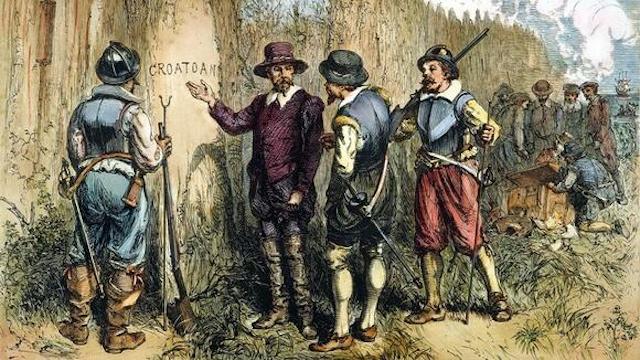
Mystery of America’s ‘Lost Colony’ May Finally Be Solved After 440 Years

Archaeologists discover evidence of Roanoke colonists’ fate after abandoning settlement

Tiny iron fragments in ancient trash heap reveal fate of America’s first English settlers.

A team of researchers believes they may have cracked one of America’s most enduring legends: Where did the settlers of the Roanoke Colony go? Continue reading

Semicolons Are Becoming Increasingly Rare ~ Their Disappearance Should Be Resisted

A recent study has found a 50% decline in the use of semicolons over the last two decades. The decline accelerates a longterm trend:
In 1781, British literature featured a semicolon roughly every 90 words; by 2000, it had fallen to one every 205 words. Today, there’s just one semicolon for every 390 words.

Further research reported that 67% of British students never or rarely use a semicolon; more than 50% did not know how to use it. Just 11% of respondents described themselves as frequent users. Continue reading

Smith: The Failure To Stop Thomas Paine

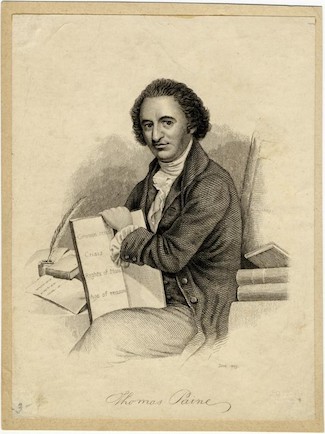
Thomas Paine

The United States, formerly these united colonies, is preparing for its 250th anniversary of its break-up from that era’s Great Satan by reminding us of what brought it about, such as the Battle of Lexington and Concord and subsequent battles of 1775, along with issues that preceded them. In spite of all the bloodshed and fiery tavern rhetoric, most members of the Continental Congress wanted reconciliation from Britain, not independence, even after the publication of Thomas Paine’s Common Sense on January 10, 1776.

“Nobody whose voice counted within the American colonies,” writes John Keane in Tom Paine: A Political Life, “thought outside the existing terms of the British Empire.” At the same time, the colonists’ “fearless love of English liberties [made] them in spirit more English than the English.” Continue reading

Homeschooling Is Our Best Defense Against the State’

There’s a battle going on right now in our neighboring state of Illinois concerning the Illinois Homeschool Act. This Act takes the current minimal oversight of homeschoolers in Illinois and places families at risk of violation by state appointed truant officers right in their homes.
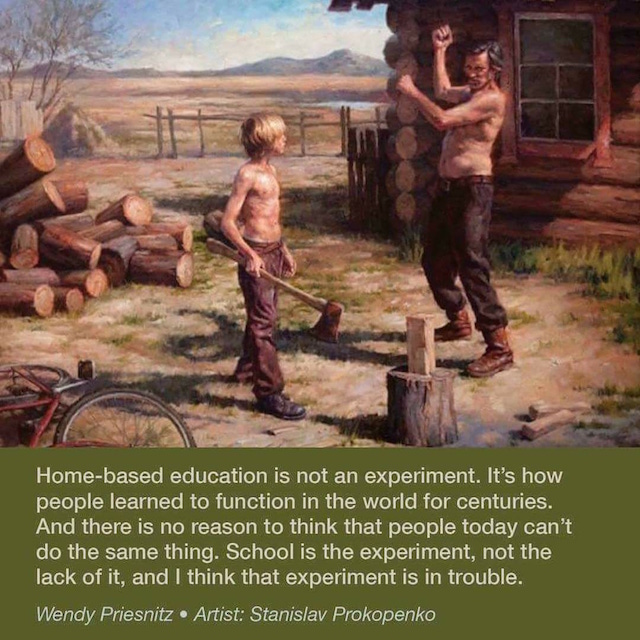
The bill would require parents to file a homeschool declaration form as well as an education portfolio to their local school district effectively putting their children under the jurisdiction of the very system from which many of these parents are trying to get away. Continue reading

Our Friends and Family Discouraged Us From Homeschooling Our Kids

Now grown, one of them is a pilot, and the other went to college on a full scholarship.

When our sons were 3 and 6, my husband and I attended a homeschooling conference led by an expert and author in the field. During one session, the speaker asked the audience to share what traits they hoped their children would develop in school. Integrity, critical thinking, creativity, and curiosity were among the answers. She then posed a thought-provoking question: “How much emphasis do you think public schools place on teaching these values?” She added, “Who here believes that if parents take control of their children’s education, they can instill those traits?Continue reading

Harvard Law School bought a copy of the Magna Carta for $27.00…

It turns out, it’s actually an original!

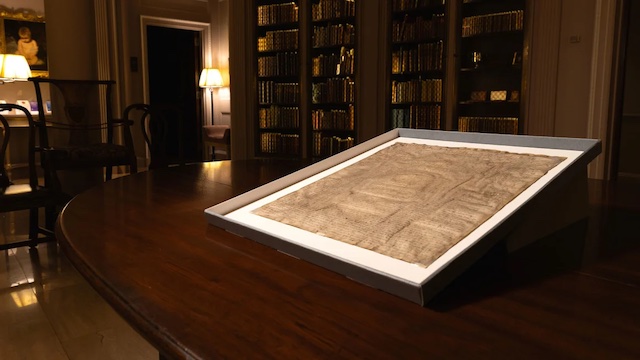
A rare copy of the Magna Carta from 1300 sits in a display case at Harvard Law School in Cambridge, Massachusetts on April 15. Lorin Granger/Harvard Law School

A “copy” of Magna Carta bought decades ago by Harvard Law School for just $27.50 is now understood to be an extremely rare original from 1300, according to new research.

British historians were able to verify the document’s true authenticity after an academic stumbled across the item while looking through Harvard Law School’s online archives. Continue reading

Congress Honors All-Black Female Battalion Crucial to World War II Efforts

The 855-women crew was responsible for clearing out a 3-year mail backlog to boost morale among U.S. troops by working around the clock in harsh conditions

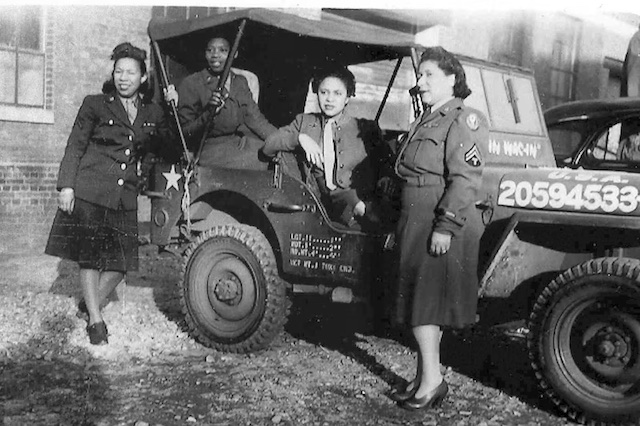
In this image provided by the National Archives, members of the 6888th Central Postal Directory Battalion, an all-female, all-Black unit formed during World War II, are shown in an undated Department of Defense photo. National Archives

Congressional leaders honored members of the all-female 6888th Central Postal Directory Battalion with the Congressional Gold Medal, the highest civilian honor one can receive from Congress.

The medal was bestowed upon all 855 members of the battalion, colloquially known as the Six-Triple-Eight, to pay tribute to their service during World War II when the group was deployed to England to clear a massive backlog of mail that had been stacking up over the course of three years. The backlog hindered troops abroad from receiving letters and packages from their loved ones, resulting in concerning levels of low morale. Continue reading

5 Ways the Ancient Romans Shaped the Modern World

Much can be gained by acknowledging our society’s roots in the classical Roman civilization.

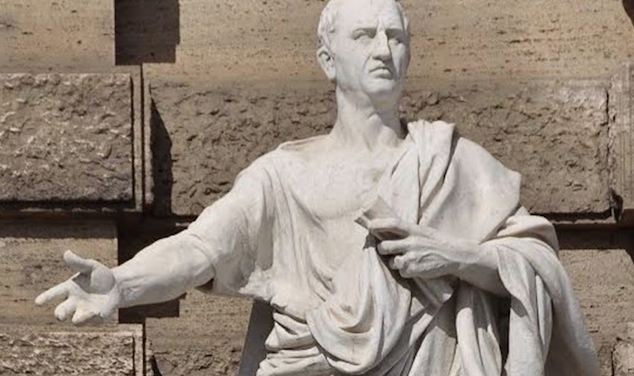
    Sculpture of Cicero. He was a great Roman statesman, who contributed greatly to Western philosophy.

Probably no other civilization has shaped the Western world more than the ancient Romans did.

At the peak of the Roman empire, when its borders stretched from the foggy hills of northern Britain to the winding waterways of the Nile, upwards of 60 million people lived under the sign of the eagle. The Romans left traces of their influence on all the people they ruled and, taken together, had a profound impact on Western culture as a whole. Continue reading

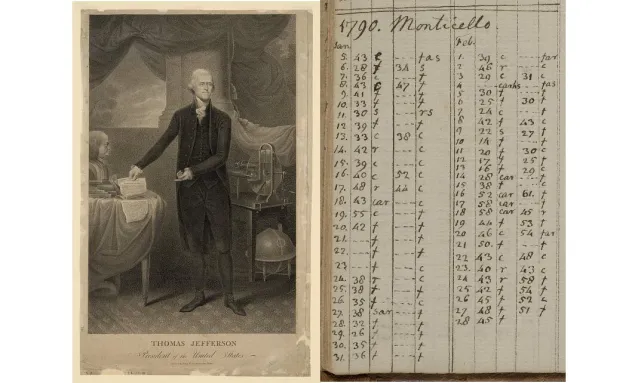
On July 1, 1776, Thomas Jefferson Began Recording the Weather

A photo of Thomas Jefferson (Library of Congress and his weather observation sheet for January and February 1790. (National Archives)

Three days before the Declaration of Independence was signed on July 4, 1776, Thomas Jefferson purchased a thermometer from a local Philadelphia merchant while he was in town for the signing. He also bought a barometer, one of only a handful for sale in America at the time.

Jefferson immediately began recording weather observations and continued, with a few gaps, until a few days before his death in 1826. Jefferson began with an observation in the morning to capture the low temperature and one in the afternoon to record the high temperature, according to Princeton University. Continue reading

Investing in the Heart of the Home: Real Ways Families Can Prioritize Self-Care

Image: Freepik

You’ve probably heard the phrase “you can’t pour from an empty cup.” It’s true for individuals, and it’s doubly true for families. When one person runs low on energy, the rest of the household can feel it like a ripple. But when families intentionally invest in self-care as a collective effort, something really beautiful happens — everyone begins to thrive, not just survive. Self-care doesn’t have to be fancy, expensive, or time-consuming; it just has to be real, intentional, and shared. Continue reading

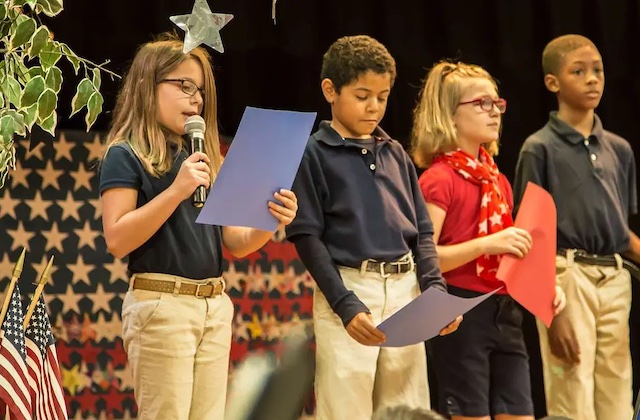
Annie: Teaching the ‘American Creed‘ – not DEI – was the Original Goal for American Schools

(NARA & DVIDS Public Domain Archive)

Randi Weingarten, the head of the American Federation of Teachers, takes her teaching duties seriously it seems, even though she’s no longer in the classroom.

Her expert teacher mentality reared itself in a recent interview with Fox News host Martha McCallum, making headlines when Weingarten referred to McCallum as “sweetheart” a couple times in a condescending tone.

The amusing nature of the exchange – particularly McCallum’s slap down of Weingarten – is undoubtedly why those 10-30 seconds of the interview went viral. Continue reading

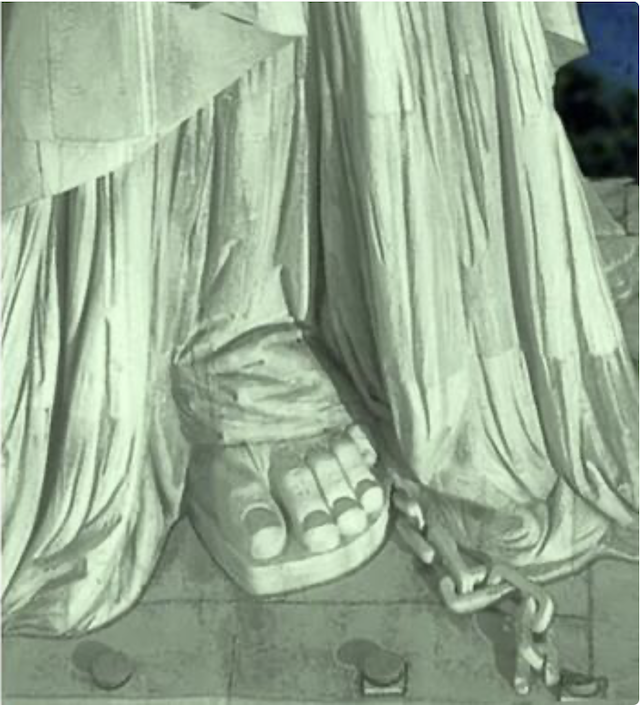
The Statue of Liberty Is a Symbol of Welcoming Immigrants: That WASN’T what she was made for…

With her flowing robes, flaming torch held high, and crown radiating out to the world like a beacon of hope, the Statue of Liberty has stood as an American emblem off the coast of New York for over two centuries.

If you were to ask the average American what they think of when they think of the Statue of Liberty, many would say she’s a symbol of the liberty sought by people around the world who have come to our shores to find it. As the first American sight countless immigrants saw when they arrived at Ellis Island, with her pedestal bearing the words, “Give me your tired, your poor, Your huddled masses yearning to breathe free…Continue reading