
Editor’s NOTE: When I developed this site some years ago – it had always been my intent to share what once took place in the Public School System so many years ago – and yet is completely ignored today.
It is with that thought in mind that I have chosen to publish the following series of columns, which are all related. In many respects – they are also quite timely – given the economic issues that we are dealing with in America today. All of this teaches our history – which seems to be repeating itself – but is for the benefit of our Homeschool students everywhere. Welcome to today’s History Class! I will see you ‘on-the-air’ today! ~ Jeffrey Bennett, Editor
 In his article “Is the Constitution Broken beyond Repair?” David Gordon draws attention to a phenomenon that is often overlooked, namely, the great rejoicing among some constitutional lawyers over the fact that “to establish the new Constitution, Lincoln overthrew the first one… he replaced the old, immoral Constitution with a new one based on equality.” This is indeed one reason why some of Lincoln’s admirers still celebrate the burning of the South by the Union Army – the devastation and destruction of the South symbolizes for them the brave new world of equality and social justice forged by a righteous army through fire and steel.
Most people, if they understood what was really being celebrated here, would be bewildered. Continue reading
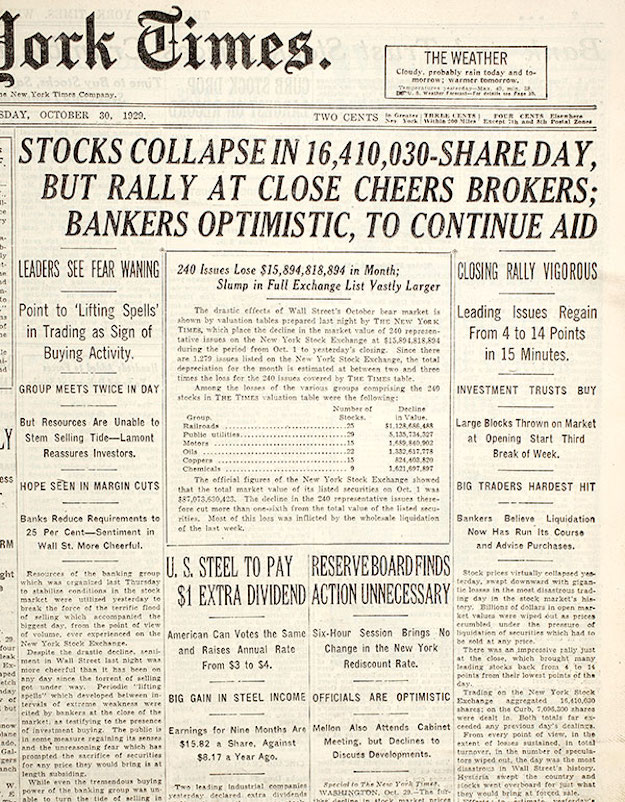 The Great Depression did not arise in a vacuum; it was the result of a confluence of several factors that had been brewing throughout the 1920s. To fully understand the causes of the Great Depression, it is essential to look at the economic environment of the 1920s, commonly referred to as the “Roaring Twenties.” This period was marked by significant economic growth, technological advances, and an unprecedented rise in consumer culture. However, this prosperity was built on shaky foundations, and cracks were starting to appear.
 Over my own lifetime, I have had a huge appreciation for this world we’ve been handed to steward and do with as we wish. And it’s always been my wish that we as humans across the globe always wish and choose wisely, if only that all life survives and thrives.
 I was chatting with the head of a private school last fall when she made an interesting observation. Like many private schools, her school experienced a flood of parents in the wake of Covid who saw what their children were taught during the online public school classroom experience and wanted to give them a far better education.
 A few years ago, I interviewed a married couple for an
  Sometimes kids don’t need a timeout — they need a reset. That’s not the same thing. A true reset helps kids come back to themselves. It gives them access to their own energy again, instead of just pulling away from overstimulation. But what actually works? Not all “self-care” is equal. For children, especially, the best kind involves real movement, tactile stimulation, and a sense of control. When structured right, these small acts can help your child regroup emotionally, physically, and mentally — in ways they don’t have to explain or intellectualize.
 William F. Buckley called him “Mission Control.” National Review publisher Bill Rusher referred to him as “the Master.”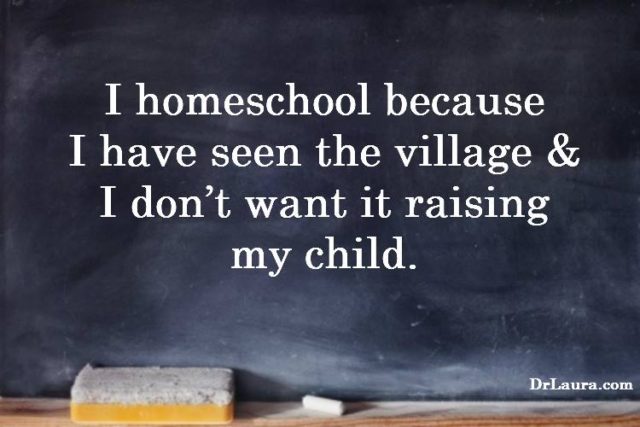


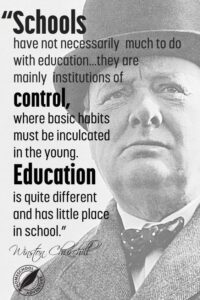 Will Estrada is Senior Counsel with Homeschool Legal Defense Association (HSLDA) speaks about the
 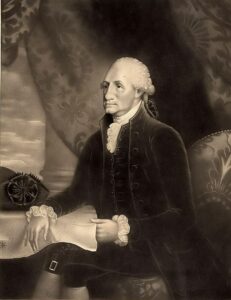 In 1783 at the end of George Washington’s tenure as Commander and Chief of the Continental Army, he penned a letter to the governors of each of the States. It was 7 years after the Declaration of Independence and the thirteen former colonies remained organized under the Articles of Confederation, the nation’s first frame of government. Washington’s letter gives every indication he was looking forward to retirement at his Mt. Vernon home with no thought of further service as the first American President.
 The adoption of the Declaration of Independence of “the thirteen united States of America” on July 4, 1776 formally ended a process that had been set in motion almost as soon as colonies were established in what became British North America. The early settlers, once separated physically from the British Isles by an immense ocean, in due course began to separate themselves politically, as well. Barely a decade after Jamestown was founded, the Virginia Company in 1619 acceded to the demands of the residents to form a local assembly, the House of Burgesses, which, together with a governor and council, would oversee local affairs. This arrangement eventually was recognized by the crown after the colony passed from the insolvent Virginia Company to become part of the royal domain. This structure then became the model of colonial government followed in all other colonies.