Smith: In Defense of General Lee

Let me begin on a personal note. I am a 56-year-old, third-generation, African American Washingtonian who is a graduate of the D.C. public schools and who happens also to be a great admirer of Robert E. Lee.

Today, Lee, who surrendered his troops to Gen. Ulysses S. Grant at Appomattox Court House 134 years ago, is under attack by people – black and white – who have incorrectly characterized him as a traitorous, slaveholding racist. He was recently besieged in Richmond by those opposed to having his portrait displayed prominently in a new park. Continue reading →

Teddy Stoddard ~ A Touching Story

There is a story many years ago of an elementary teacher. Her name was Mrs. Thompson. And as she stood in front of her 5th grade class on the very first day of school, she told the children a lie. Like most teachers, she looked at her students and said that she loved them all the same. But that was impossible, because there in the front row, slumped in his seat, was a little boy named Teddy Stoddard.

Mrs. Thompson had watched Teddy the year before and noticed that he didn’t play well with the other children, that his clothes were messy and that he constantly needed a bath. And Teddy could be unpleasant.

It got to the point where Mrs. Thompson would actually take delight in marking his papers with a broad red pen, making bold X’s and then putting a big F at the top of his papers. Continue reading →

Because you are here

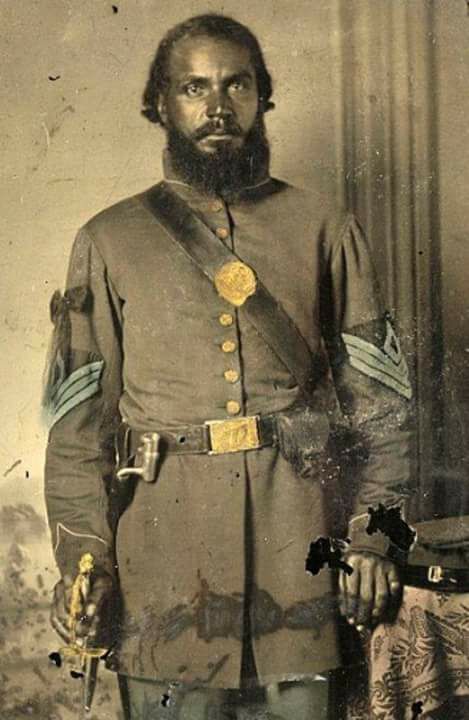
The Confederate First Sergeant…

photo Courtesy of Brandon Anderson Collection

The Union cavalry surrounded a lone Confederate soldier who had no horse and whose clothes were dirty and tattered. A Union officer said to him that it was obvious that he had no wealth and not the means to own slaves. The officer asked: “Why are you fighting this war?”  Continue reading →

The Classroom Flight of The Milkweed Parasols

I followed his astounded gaze back to the high window ledge. The pod had burst wide open into a cumulous, pulsating mass. The slight breeze from the other window tickled the fluff, coaxing bits of down into the air. Suddenly the room was clouded with milkweed down.


Then something happened, something that would happen again and again over my six years with my class, something of gigantic importance, yet imperceptible…. It was a simple, silent shift in the manner of the class prompted by a decision on my part to step back and allow the children to lead the way. I made no pronouncement. My turning the reins over to the class was a silent passing of leadership. Continue reading →

Why Note-Taking by Hand Is Better for Your Brain

In a groundbreaking study, researchers have shown that handwriting is better than typing as a means of retaining information.

We all know Aesop’s fable about the Tortoise and the Hare but few of us really believe, in the real world, that slowcoaches like the tortoise have a cat in hell’s chance of beating those in life’s fast lane. Few really believe, with John Milton, that “they also serve who only stand and wait.” Those who stand and wait get left behind, stupid. You snooze, you lose.

Those of us who believe that time taken is time well spent are in a minority in our frantic and frenetic world. We are an endangered species. Continue reading →

K-12: Your – or Is It You’re?

It’s two lose, Lautrec! ~ (pun intended)

Your Tax Dollars at Work

Yes, of course, it’s the former. Millions of Americans can’t tell, thanks to the public schools and their waste of your money.

So here’s where we end up. Many allegedly educated Americans cannot avoid the simplest grammatical and spelling mistakes. Clearly, they have never been taught right from wrong, linguistically speaking.

Here are the most common examples now disfiguring blogs and comments by the billions: it’s or its? Who’s or whose? Know or no? Your or you’re? Too, to, or two? Their, there, or they’re? Loose or lose? Continue reading →

Confederate “General” Julius Howell Recalls the 1860s

Born on January 17th, 1846 in Nansemond County, Virginia to his parents Rev. Edward Howell and his wife Americus Howell.

Julius grew up on a plantation the youngest of 16 children. He attended school at home and then later was a student at Reynoldson Institute in Gates County, North Carolina. The institute closed with the declaration of war in 1861. At the age of sixteen Howell entered Confederate service and would later become a member of the 24th Virginia Cavalry. Continue reading →

Segregation Was Not Southern Racism – It Was Federal Policy

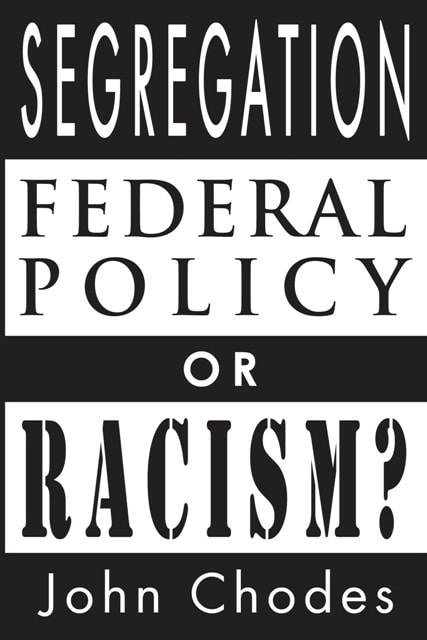
I have just received an informative little book that deals with a lot of material folks will never see in their “history” books, but need to be aware of, especially here in the South. This book was written by John Chodes of New York City and published by Shotwell Publishing in Columbia, South Carolina.

The title of the book is Segregation Federal Policy or Racism? And Mr. Chodes explains why it was federal policy instead of Southern racism. He starts out by dealing with a subject I have written about on and off for years, but which most people simply fail to grasp–that “reconstruction” did not end in the South after the Yankee/Marxist troops departed–it just continued under other names and it continues right down to our day. The current riots in Charlottesville, Virginia are a prime example of how “reconstruction” continues to work in our day. Continue reading →

Williams: Historical Ignorance

Liberals, Progressives, and Socialists are leading America to re-fight the War Between the States. The blood of 600,000 Americans killed in war from 1861 to 1865 is insufficient to cleanse the sin of enslavement. And it is in that context that you should find Mr. Williams comments both highly interesting and instructive:

The victors of war write its history in order to cast themselves in the most favorable light. That explains the considerable historical ignorance about our war of 1861 and panic over the Confederate flag. To create better understanding, we have to start a bit before the 1787 Constitutional Convention in Philadelphia. Continue reading →

The End of Government Schools

When in doubt, cry racism. It’s the left’s go-to weapon when the facts are against them. School choice advocates, then, should be heartened: Progressives lately have had to stoop low, get dirty, and hurl mudballs in our direction, because that’s all they’ve got.

This month progressives let fly three separate volleys, hoping the “racist” argument would somehow find its mark. The New York Times, the Center for American Progress, and the American Federation of Teachers all argued that educational choice is “racist,” rooted in “slavery,” and a cover for “segregation.” (One commentator also blames “anti-Catholic sentiment and a particular form of Christian fundamentalism.”) Worse, they declare authoritatively, “choice” will spell the end of democracy, as we know it. Continue reading →

Why U.S. Schools Don’t Produce Adults ~ and Some Solutions…

One of the hallmarks of modern America is the tendency toward prolonged childhood. While it used to be the norm to enter the adult working world by one’s mid-to-late teens, students now extend their preparation for career well into their twenties (and sometimes beyond), enabled by parents who act as their caretakers, education experts who insist that they get as much classroom education as possible, and a government that encourages them to stay on the family health plan until age 26. Continue reading →
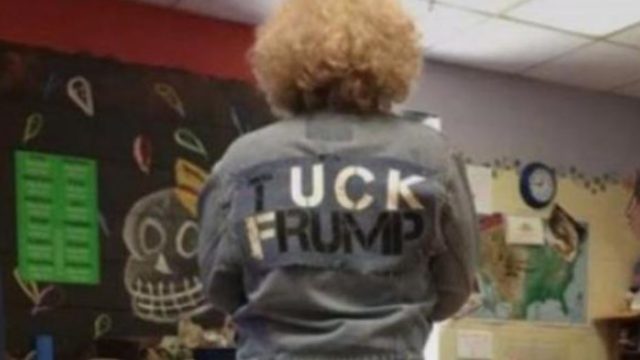
Indoctrination in American Schools: How bad is it?

We were warned over 175 years ago that education could become a tool of indoctrination. Now it is undeniably being used as such.

The above image is that of a jacket worn by a teacher in a West Virginia public school

The father of America’s public education system, Horace Mann, famously quipped: “Men are cast-iron, but children are wax.”

Mann knew that education was never a “value-neutral” proposition. It has always been and always will be a process that shapes not only a child’s abilities, but more importantly, the child’s worldview based upon the values of the educator. It was for this reason that many Americans pushed back, though unsuccessfully, against the kind of public, compulsory education Mann was championing in the early and mid-1800s. Continue reading →

Where it Begins: The Art of Teaching the Youngest Students

A Denver child-care provider hopes an in-house training initiative will better prepare educators for a uniquely difficult field.

Photo: Adrees Latif – Reuters

Scattered around a meeting room in groups of three or four, 13 women bent over laptop computers and smartphones, squinting at Colorado’s hundreds of child-care regulations.

They were child-care and preschool employees from all over Denver on a scavenger hunt of sorts, searching for answers to worksheet questions such as how quickly child-care workers must be trained on child-abuse reporting and which eight kinds of toys and equipment classrooms are required to have. Continue reading →

Why Americans Are Such Suckers for Propaganda

To many Americans, high school seems like a normal part of life. To not attend is unheard of; to fail to graduate is a death sentence for one’s future.

But what we often forget is that the modern high school is a relatively new concept. As Paul Beston notes in a recent article for City Journal, a hundred years ago America was in the early stages of a high school boom, with 2 million students attending classes. That number rose to 6.6 million by the start of World War II. Today, the number of public high school students measures at 15 million.

But as Beston goes on to explain, the high school as we know it now isn’t the one America knew in its earlier years. That school was far more rigorous. Today’s high schools are the result of several decades of the gradual dumbing down of curriculum.

This dumbing down began in earnest during the Depression years, but as Beston notes, had been encouraged as early as 1912: Continue reading →

Dorothy Sayers: The Lost Tools of Learning

In this essay, Miss Sayers suggests that we presently teach our children everything but how to learn. She proposes that we adopt a suitably modified version of the medieval scholastic curriculum for methodological reasons.

Dorothy Leigh Sayers

That I, whose experience of teaching is extremely limited, should presume to discuss education is a matter, surely, that calls for no apology. It is a kind of behavior to which the present climate of opinion is wholly favorable. Bishops air their opinions about economics; biologists, about metaphysics; inorganic chemists, about theology; the most irrelevant people are appointed to highly technical ministries; and plain, blunt men write to the papers to say that Epstein and Picasso do not know how to draw. Up to a certain point, and provided the criticisms are made with a reasonable modesty, these activities are commendable. Too much specialization is not a good thing. There is also one excellent reason why the veriest amateur may feel entitled to have an opinion about education. For if we are not all professional teachers, we have all, at some time or another, been taught. Even if we learnt nothing – perhaps in particular if we learnt nothing – our contribution to the discussion may have a potential value. Continue reading →

University of Georgia professor creates ‘stress reduction policy‘…

… so students can change their grades, opt out of group work and only hear positive reinforcement when doing in-class presentations

Professor ‘Satisfier’

A University of Georgia professor has enacted a ‘stress reduction policy’ aimed at allowing students to choose their own grades in hopes of soothing those who ‘feel unduly stressed’ by their earned ones.

Professor Dr. Richard Watson is teaching two fall business courses and has introduced the policy because ’emotional reactions to stressful situation scan have profound consequences for all involved.’

In an emailed response, Dr. Watson who said that his syllabus haven’t been solidified so the policy isn’t currently listed. ‘There is no such policy on the current web site,’ he said in the email. Continue reading →

The iPad is a Far Bigger Threat to Our Children Than Anyone Realizes

Ten years ago, psychologist Sue Palmer predicted the toxic effects of social media. Now she sees a worrying new danger…

When the little girl pointed at the sweets at the checkout, her mother said: ‘No, they’re bad for your teeth.’ So her daughter, who was no more than two, did what small children often do at such times. She threw a tantrum.

What happened next horrified me. The embarrassed mother found her iPad in her bag and thrust it into her daughter’s hands. Peace was restored immediately.

This incident, which happened three years ago, was the first time I saw a tablet computer used as a pacifier. It certainly wasn’t the last. Since then, I’ve seen many tiny children barely able to toddle yet expertly swiping an iPad – not to mention countless teenagers, smartphone in hand, lost to the real world as they tap out texts. Continue reading →

N.H. Takes Action to End Common Core Mandate, But Feds Still a Threat

Common Core took a hit in New Hampshire last month.

Although the state adopted the Common Core standards, Republican Governor Chris Sununu signed Senate Bill 44 into law, which “prohibits the department of education and the state board of education” from requiring schools to implement Common Core. The bill will go into effect September 16.

Education Commissioner Frank Edelblut also said he plans an informal review of the Common Core standards, despite the state Board of Education voting against a formal review. Edelblut campaigned against Common Core in his unsuccessful run for governor last year.

Common Core is a set of education standards developed under the auspices of the National Governor’s Association to encourage uniform standards across state lines. It received flack from opponents who say the standards don’t help students and that local schools should be more autonomous. Continue reading →