Middle School Reading Lists 100 Years Ago vs. Today

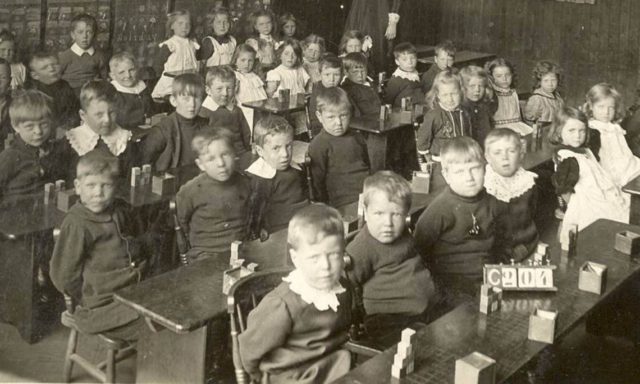
I recently dug up a 1908 curriculum manual in the Minnesota Historical Society archives. It provided instructions on everything from teacher deportment to recommended literature lists for various grades. As a book lover, I was especially interested in the latter!

With the exception of a few textbook-like anthologies, the chart below lists the recommended reading material for Minnesota 7th and 8th graders in 1908: Continue reading →

Anghis: Teaching our Kids our American History

One of the problems we have today is we don’t teach about our government much at all and virtually nothing about the Constitution and the Bill of rights.

These courses, what little that is taught, are taught usually in high school. After the Revolutionary War we began teaching the history of our nation in early elementary school. Noah Webster stated: “Every child in America should be acquainted with his own country. He should read books that furnish him with ideas that will be useful to him in life and practice. As soon as he opens his lips, he should rehearse the history of his own country.” We were teaching catacisims out of the Constitution in 1828 to elemenatary students that Justices on the Supreme Court today couldn’t answer.
Continue reading →

Solway: Why I Quit Teaching

Some years back, I decided I had to quit the teaching profession to which I had dedicated half my life. The modern academy, I felt, was so far gone that restoration was no longer possible. Indeed, I now believe that complete collapse is the only hope for the future, but as Woody Allen said about death, I’d rather not be there when it happens.

Three reasons determined my course of action. For one thing, administration had come to deal less with academic issues and more with rules of conduct and punitive codes of behavior, as if it were a policing body rather than an arm of the teaching profession. Continue reading →

George Mason’s Powerful Words About Liberty

George Mason considered a bill of rights so important that he refused to sign the Constitution and led the opposition to its ratification without one.

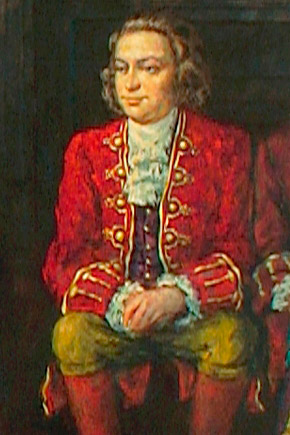
George Mason, “the father of the Bill of Rights.”

Mason wrote the Virginia Declaration of Rights, which Clinton Rossiter called “among the world’s most memorable triumphs in applied political theory,” which The Declaration of Independence echoed a few weeks later. Charles Maynes wrote that,

Mason’s revolutionary step was…reversing, in writing and in a supreme governmental document, the traditional relationship between citizen and state. Throughout history it had been the citizen who owed duties to the state, which in turn might bestow certain rights on the citizen…Mason argued that the state had to observe certain citizens’ rights that could not be violated under any circumstances. Mason thus set the United States apart from past constitutional practices. Continue reading →

Ross: What The Hell Happened To America?

“A nation that is ignorant of its past, is a nation that is ripe for deception and manipulation. Therefore, it is not what happened, but rather what people believe happened which determines the present actions of a nation.” (From the DVD Warriors of Honor)

I know I’ve repeated this quote before, but I’m going to keep repeating it until people take it to heart. In 1822 James Madison wrote the following in a letter to W.T. Barry, “Knowledge will forever govern ignorance: And a people who mean to be their own Governors, must arm themselves with the power which knowledge gives.” However, knowledge alone is not enough if it is not put to use. Is it enough to know that fire is hot if you do not utilize that knowledge by not putting your hand into a fire? As von Goethe said, “Knowing is not enough, we must apply.” Continue reading →

Sponsor a Millennial TODAY!

“44% of Millennials would prefer to live under a socialist system than a capitalist one. This is more than a little puzzling at a time when socialism has proved a catastrophic failure in its remaining strongholds in Venezuela, North Korea and Cuba.“

Continue reading →

The Best Way to Get Boys Reading

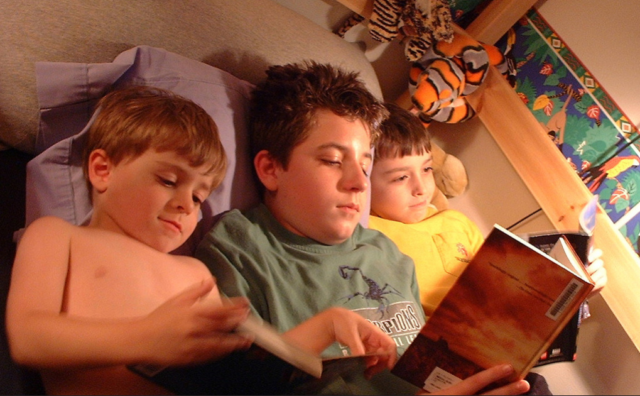
While at a gathering of friends several months ago, I stopped to chat for a few minutes with a twelve-year-old boy whom I’ll call Davy.

Although the youngest in a family of all girls, I knew Davy was all boy. He liked guns and animals and all manner of typical boy subjects. Because of this, I was delighted to see that he was sitting there reading a book, an activity that doesn’t seem to be a popular pastime with most of the male sex. Continue reading →

John Dickinson: This Founding Father Will Renew Your Hope for Liberty

Dickinson recognized that the essential purpose of government was to maintain liberty against others’ predatory acts.

John Dickinson was among America’s most important founders. He was a colonial legislator, member of the Stamp Act, Continental, and Confederation Congresses, chief executive of both Delaware (by a 25 to 1 vote; his being the only opposed) and Pennsylvania, president of the 1786 Annapolis convention that led to the Constitutional Convention, and among the most informed and seasoned statesmen to attend it. Historian Forrest McDonald wrote that, but for Dickinson and a few others, “the resulting constitution would not have been ratified.” Continue reading →

The Death of Academic Rigor

The notion of academic rigor has fallen on evil times. In a typical instance of continuing epistemic degradation, Donna Riley, of Purdue University’s School of Engineering Education, insists that rigor must be eliminated since rigor is a “dirty deed” fraught with “exclusionary implications for marginalized groups and marginalized ways of knowing.” It matters little, apparently, if our bridges collapse so long as “men of color and women, students with disabilities, LGBTQ+ people, first-generation and low-income students” are welcomed into the new holistic community defined by “other ways of knowing” – whatever these may be. Similarly, Rochelle Gutierrez, of the University of Illinois, fears that algebra, geometry, and math perpetuate white male privilege and discriminate against minorities. Indeed, minority under-performance is often disguised as a form of “mismatching” – that is, the fault lies with the institution for being beyond the student’s intellectual means. Clearly, the dire situation we are in can only deteriorate as the concept of excellence bites the dust and students are deliberately coaxed into pre-planned intellectual darkness. Continue reading →

Tennessee voters support school Choice

A poll of Tennessee voters shows overwhelming support for more school choice options in the Volunteer State.

The poll conducted by Mason-Dixon Polling and Strategy asked 625 Tennesseans if they “support or oppose” allowing parents to use their child’s education tax dollars for a public, charter, or private school. A whopping 65 percent support it. Continue reading →

The Intrusion of White Families Into Bilingual Schools

Will the growing demand for multilingual early-childhood programs push out the students these programs were designed to serve?

Lucy Nicholson ~ Reuters

Stephanie Lugardo’s second-grade classroom at Academia Antonia Alonso in Wilmington, Delaware, is bubbling. Students chatter with one another as they work, smiling and joking and wiggling in and out of their chairs. Sure—it’s an elementary-school classroom. It’s expected to exude the earnest joy of children growing into themselves. But this one is different. Smiles break out on an array of faces, and the chatter spills out in English and Spanish.
Continue reading →

Why Everyone Shouldn’t Go to College

I have been in school for more than 40 years. First preschool, kindergarten, elementary school, junior high, and high school. Then a bachelor’s degree at UC Berkeley, followed by a doctoral program at Princeton. The next step was what you could call my first “real” job—as an economics professor at George Mason University.

Thanks to tenure, I have a dream job for life. Personally, I have no reason to lash out at our system of higher education. Yet a lifetime of experience, plus a quarter century of reading and reflection, has convinced me that it is a big waste of time and money. When politicians vow to send more Americans to college, I can’t help gasping, “Why? You want us to waste even more?” Continue reading →

What the Catholic Church Said about the Public Schools in 1852

America is known as the “land of the free.”

Yet, technically, it forces its children to receive some type of formal education.

Compulsory education laws have been a part of the American Republic for a little over 150 years (they also existed in some Puritan settlements in colonial America). In all states, children between the ages of 6-17 (which varies by state) who have not been enrolled in a private school or completed the necessary paperwork and requirements to homeschool must be enrolled in a public school. Continue reading →

New Teacher Academy provides some relief in teacher shortage

Publisher’s NOTE: The following column relates to the High school that my wife teaches for. She has not stopped working since retirement six years ago – or is it seven now? She ris more than familiar with the subject a matter and personal at the heart of what you are about to read. Arizona has a tremendous shortage of teachers – for reasons we have stated here before – maybe the following is part of the answer. ~ J.B.

Adrianne Penullar, photo by Derek Hall

As students file in to Adrianne Penullar’s general chemistry class at Westview High School, their first task is relinquishing their phones. Continue reading →

Children Learn What They’re Taught

Many millennials embrace Marxism. So do their parents and grandparents

                 Karl Marx

From the millennials’ abilities will supposedly flow the wherewithal to fund “needs”: their elders‘ entitlements, debt, and ever-expanding blob of a government. Horror of horrors, polls and studies indicate that many millennials are embracing Marxism: they want somebody to fund their “needs”! Where did they learn this nonsense?

It must be those left-wing, snowflake sanctuary, social justice warrior haven, gender-bending colleges and their washed up Marxist professors. This is America, where everyone stands on their own two feet. That’s not how they were reared! Continue reading →

1 in 4 Teachers Chronically Absent From Classrooms

Problem Is Three Times Worse in Traditional Schools

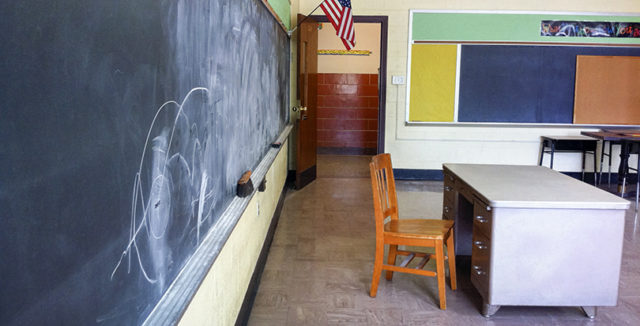
Empty Classroom In Elementary School. (Photo By: Education Images/UIG via Getty Images)

Teachers in traditional district schools are three times as likely to be chronically absent from the classroom as those in charter schools, meaning they are gone for more than 10 days in a typical 180-day school year, a new research paper has found. Continue reading →

5 Ways Adults Can Develop Children With Strong Social and Emotional Skills

“I’m a math teacher, not a counselor. I’m here to teach math,” one teacher recently told a principal I was working with in an afterschool program. The principal recounted this story while reflecting on an effort to infuse more social-emotional learning into her school.

The concept of having to “add one more thing” to overburdened teachers is nothing new. To overcome this resistance, the education field must not view SEL as a separate curriculum but instead as what it is at its core: a set of skills, competencies, and principles that inform and guide how to interact with students. That is, rather than SEL being what educators teach, it is how they teach. Continue reading →

Harvard Students Explain 3 Ways Homeschooling Helped Them Succeed

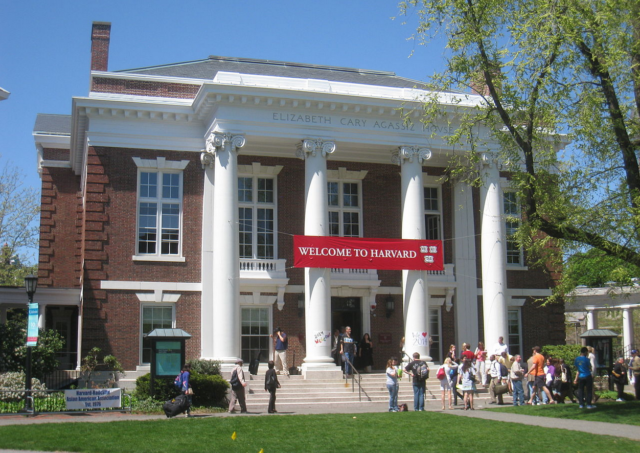
If one was to name a leading institution of higher education in America, Harvard University would definitely be one of the first to come to mind. After all, anyone with the name Harvard on his resume is practically guaranteed an open door to all kinds of profitable careers. The trick, then, is to get into such a prestigious school.

In recent years, various individuals have proclaimed that their entrance into Harvard was paved by homeschooling. But what about after they get in? Are they up to the task and able to succeed? Continue reading →

Bonfire of the academies: Two professors on how leftist intolerance is killing higher education

Evergreen State College’s outcast professors Heather Heying and Bret Weinstein describe how postmodern leftist intolerance is killing higher education.

At colleges and universities all over the country, students are protesting in increasingly virulent and sometimes violent ways. They demand safe spaces and trigger warnings, shouting down those with whom they disagree. It has become rote for outsiders to claim that the inmates are running the asylum; that this is analogous to Mao’s Red Guard, Germany’s brown shirts, the French Revolution’s Jacobins; and, when those being attacked are politically “left” themselves, that the Left is eating its own. These stories seem to validate every fantasy the Right ever had about the Left.

As two professors who recently resigned from positions at a college we loved, and who have always been on the progressive-left end of the political spectrum, we can say that, while none of those characterizations is exactly right, there is truth in each of them. (Continue to Full article >>>)


Oldest surviving photo of a US President is found

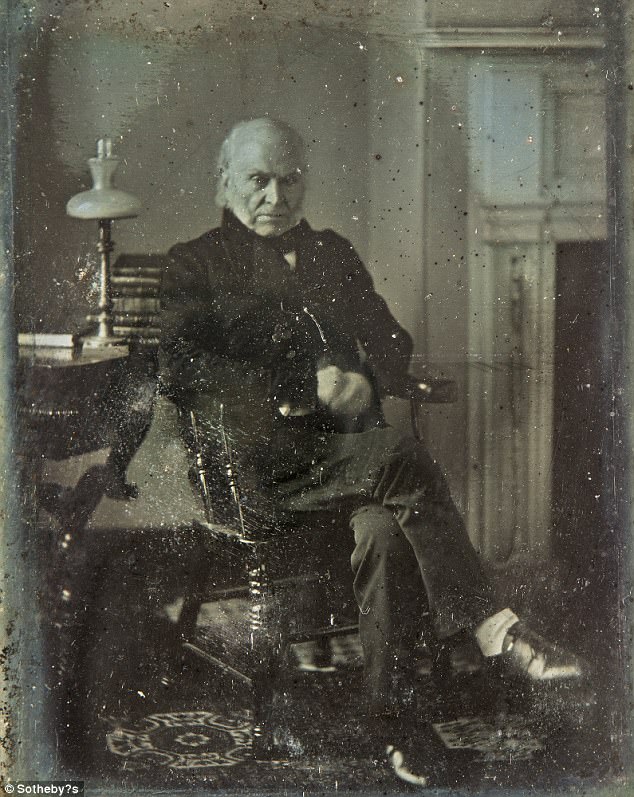
Grainy 1843 image of America’s sixth president, John Quincy Adams was expected to fetch up to $250,000 at auction after it was discovered by descendant of Vermont representative.

A March 1843 image of John Quincy Adams sitting is to be sold at an auction at Sotheby’s in New York, potentially going for $150,000 to $250,000

The photo has even had Emily Bierman, head of the auction house’s photographs department, call it ‘without a doubt the most important historical photo portrait to be offered at auction in the last 20 years.’ Continue reading →