The ‘Confederate Flag‘

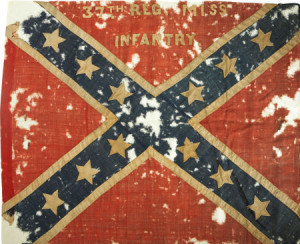
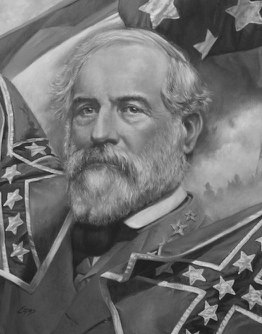
I am the Confederate Battle Flag. My design is based upon the Saint Andrew’s Cross of Scotland. Some prefer to call me the “Rebel Flag”. Either name I will wear with honor. There is certainly no shame in being called Confederate, as the people who bore that same honorable title are remembered for their bravery on the field of battle, a Southern culture built upon hard work, and faith in God. As for the name “Rebel”, it was the Revolutionary War soldier and outstanding pamphleteer, Thomas Paine, in his series “The American Crisis“, said: “Let them call me Rebel and welcome — I feel no concern from it“. Because you see, it was George Washington and his Colonial Army who were the original Rebels. My boys in gray were the second to wear the name. Continue reading →

How John Dewey ‘Deadened the Souls‘ of America’s Children

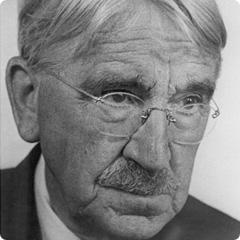
If Horace Mann set out education’s goals, it was John Dewey who provided the progressive methodology.

             John Dewey

The story of American public education begins with Horace Mann. It was Mann who popularized the idea that American schools should teach all students, be non-sectarian, and tax-supported. A little less than a half-century passed between Mann’s death and the advent of John Dewey.

That half-century may well be the most dynamic period of American History. In Horace Mann’s world, schools were small, scattered, and teachers had to teach a small number of widely-varied students in one-room schoolhouses. By 1900, there were still many rural schools, but the United States was quickly becoming an urban nation. Continue reading →

Why America Shouldn’t Make College ‘Free‘

‘FREE’ from Col. Sanders

How often are we told by our friends on the left that America ought to follow the lead of Europe, specifically western Europe, and make college “free”? Pretty often, by my reckoning.

In the waning years of my community college teaching days a student raised that very matter on the first day of class. Obviously, it was much too early in our teacher-student relationship for me to know anything about his politics—or for him to know anything about mine. (Actually, mine were kept as much to myself as possible from the first day of class to the last.) But he soon proved himself to be very much on the left. As time went by, he also demonstrated that he was a very solid student, a polite and engaging young man, and a valuable member of the class.

So just what was his question? Continue reading →

Ross: In Memoriam of All We Have Lost

“A nation is not defined by its borders or the boundaries of its land mass rather, a nation is defined by adverse people who have been unified by a cause and a value system and who are committed to a vision for the type of society they wish to live in and give to the future generations to come.”

September 11, 2017 ~ The above quote was not made by any of our Founding Fathers; it was not made by an American for that matter. The above quote was made by a Nigerian woman; a lawyer and the founder of House of Tara International; a makeup and bridal directory. Yet, although that quote was not made by an American, this woman gets what I’ve been trying to get across to people for quite some time; that America was founded upon certain principles and beliefs, and that unless we return to those principles and beliefs things are not going to improve for the better. Continue reading →

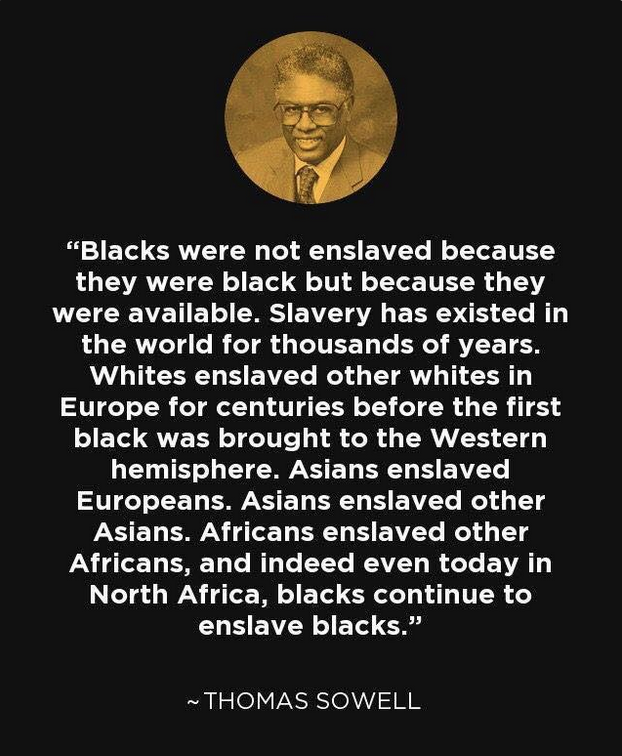
Sowell on Slavery

Thomas Sowell has published numerous books, as well as numerous articles and essays, covering a wide range of topics.

Sowell has taught Economics at Howard University, Cornell University, Brandeis University, and UCLA. Since 1980 he has been a Senior Fellow of the Hoover Institution at Stanford University, where he holds a fellowship named after Rose and Milton Friedman. He retired in January of 2017.

Cleaveland: Why the Civil War didn’t end slavery

February 26, 2012 ~ April 12, 2011 marked the 150th anniversary of the shelling of Fort Sumter in Charleston Harbor. This launched our Civil War, which would kill more than 600,000 on the two sides. More than half the deaths resulted from disease. The death rate was higher in the Confederate States due to more primitive medical care. The war devastated the economy of the South for decades. Political and emotional wounds from the conflict continue to fester.

As this grim anniversary approaches, some commemorations have been launched that portray the Civil War as solely about states’ rights. Last year, secession balls were held in some Southern states to celebrate the splitting of the union. The Civil War was about slavery, the greatest moral blot on our nation’s history. Continue reading →

Ewart: It Would Appear That Representative Government Is Dead

NOTE: Given all that we have been posting under Birth of a Nation (1633 – 1800) these past days, the following by long-time contributor shares with the reader – EXACTLY what the Founding Father’s were attempting to prevent. ~ Ed.

“Experience hath shewn, that even under the best forms of government those entrusted with power have, in time, and by slow operations, perverted it into tyranny.” ~ Thomas Jefferson

While trying to come up with a subject for our weekly column, America’s immigration dilemma started doing ever-tightening circles in our mind. It is a dilemma that has been coming at legal Americans like a slow-moving freight train for several decades and it now may have reached the point where it cannot be fixed politically. The illegal immigration freight train has become a run-away! Continue reading →

Reflections on Robert E. Lee ~ 1878

Did General Lee Violate his Oath in Siding with the Confederacy?

The New York Independent of the 6th of June has a letter from Berlin, written by Dr. Joseph P. Thompson, from which I make the following extract:

During the American war the sympathies of the German people were strongly on the side of the North. They showed their good feeling toward the Union and their confidence in its success by subscribing largely for United States bonds, at a most critical period both for our arms and our finances – a confidence which Congress has abused in a most humiliating way by providing for cheating the bondholders out of eight cents on the dollar. Thus do we ourselves efface the glories of the war and of emancipation.

But while on the question of slavery and the Union the German people were with us, yet from a professional point of view military men in Germany rated the Southern generals, and especially Lee, above the generals of the Union. They do not seem to have mastered the grand strategy of Grant and Sherman, by which Richmond was at last shut up in a vice; the energy with which Grant drove Lee back to Richmond; the patience with which, having shut Lee up in his capital, he held him there, until Sherman’s arrival at Charleston gave the signal for taking Richmond, without giving Lee a single chance of escape. Continue reading →

The Gadsden Flag

The martial banner first used by Brig. General Christopher Gadsden (1724-1805) and the 1st South Carolina Regiment during the First War for Independence, 1775-1783.

Gadsden was a successful and influential Charleston, South Carolina businessman and Statesman. He was an early advocate of Independence and engaged in the creation of the South Carolina Constitution. Elected Governor in 1782 he refused to serve on ground of ill health but remained actively involved in State affairs opposing States consolidation. Continue reading →

Yanks Hustling Slave Trade: The African Slave Trade ~ Profits and Prosperity – 1860

The African Slave Trade ~ Profits and Prosperity

The Evening Post, the New York Tribune, and other anti-slavery journals in this city are discharging themselves of such a mass of special and minute information about the movements of slavers, and the activity of the slave trade in New York, New London, New Bedford and Boston, that it seems highly probable they are stockholders or secret agents in the business.
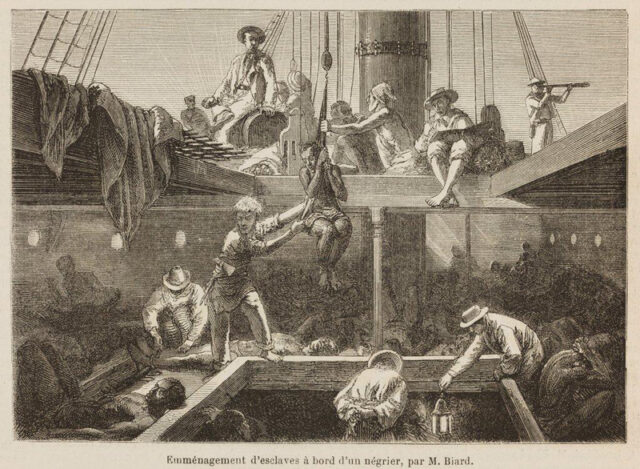
These ports, in which the slavers are fitted out belong to the most rabid anti-slavery States, and there can be no doubt that the vessels are the property of the Republicans in those several places. The profits of the trade are so great that they can well afford to contribute a hundred thousand dollars or more towards the election of an anti-slavery President [Lincoln]. From lists published a short time ago In the Post and Tribune, it appeared that eighty-six* slavers had Sailed from this port and the other ports we have mentioned, and from other cases since reported, the number cannot be now far short of one hundred sail. The net proceeds on a cargo of five hundred slaves are at the lowest estimate $100,000, which is only an average profit of $200 per head. The sum of the profits of the “blackbird fleet” at one hundred vessels would therefore amount to ten millions of dollars, and this estimate makes an allowance of five million for expenses and losses.

From facts and figures it is evident that it is a most profitable, prosperous business, and accordingly we are informed by the Post that steamships are about to give new activity to the traffic, and that they will be packed with some 3,000 negroes, whose aggregate prices would sum up about a million of dollars. One instance is mentioned by both our anti-slavery contemporaries, of 450 negroes being landed on the 30th of June from an American bark, and sold publicly in the streets of Trinidad at an average of $650 each. The gross proceeds of this cargo would be $292,500, which, for one hundred “blackbirds.” Would amount to upwards of twenty-nine millions of dollars, leaving a clear profit of from twenty to twenty-five million. It is added, in the Post, that the Governor of Trinidad received in this transaction $30,000 hush money.

Now, it may be fairly asked, how those who are not implicated or interested in the trade themselves can be so well posted in this matter of bribery, or make up the lists of slavers which have appeared in their journals? How can they be so minutely informed of the names of the vessels, their captains, the ports from which they have sailed, the number of slaves they land, the prices received for them, and the “hush money” to corrupt Governors, unless they are secret partners in the trade? If they are possessed of all this information, they must have known of the fitting out of every vessel before she sailed. Why did they not give information to the authorities before the bird had flown, unless they had an interest in concealing her flight till it was too late. Once these ships bare made their voyages and landed their cargoes, and the owners have realized fortunes, they or their agents may then inform the public that such operations were made, the legal evidence against those concerned being no longer in existence.

They can thus afford to be severe in their denunciations of the slave traffic, and call it “infernal,” having the prices of the Africans in their pockets, or snugly deposited to their credit in banks, and they can also afford to bleed copiously for the purchase of campaign documents to secure the election of Old Abe Lincoln. Like sleek Joseph Surface, in the “School for Scandal,” who zealously preached up sentiments of morality to his wild brother Charles at the very moment that he had Sir Peter Teazle’s wife concealed for a criminal purpose in his room, the anti-slavery loaders are most enthusiastic against the slave traffic at the very time that they are enjoying its profits and doing a thriving business In human flesh.

The New York Herald, August 10, 1860, Page 4
Transcribed by Bobby Edwards, September 19, 2018

Douglas ~ Against the Ghetto Plantation

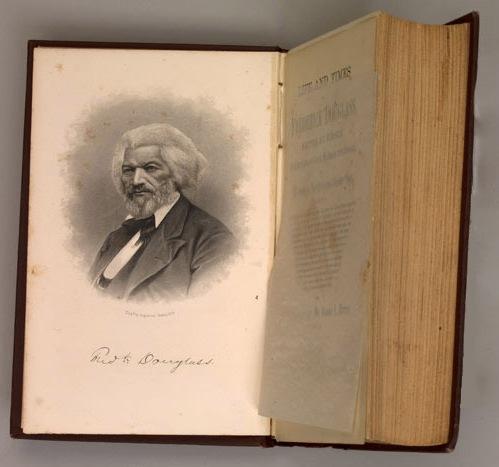
Life and Times of Frederick Douglass, 1882. Courtesy Frederick Douglass National Historic Site

If Frederick Douglass walked today’s ghettos, he would witness a new-age style of slavery, plantations without the lash and chains. He would soon be outraged that government overseers are perpetuating generations of dependency through policies designed to capture the votes of the ignorant. Of the people he would ask, “What have you done with your freedom? Where is your dignity and self-respect?”

Frederick Douglass was born about 1818 on a Maryland plantation. Following common practice, he was taken from his mother to be raised with a brood of other children until he was old enough to work. He did not know his father. At the age of eight or nine, his master sent him to work for the Auld family in the city of Baltimore. Hugh Auld was a shipbuilder. Continue reading →

Heritage: Return school discipline control to local level

An education policy analyst is calling on Education Secretary Betsy DeVos to do away with an Obama-era regulation dealing with school discipline.
The Obama administration issued a controversial “Dear Colleague” letter on school safety and student discipline in 2014, taking most control away from local schools. For those who value local control, it was considered a federal overreach. Now the DOE is reportedly considering a compromise measure proposed by the Thomas B. Fordham Institute. Continue reading →

How to Replicate J.R.R. Tolkien’s Education for Your Child

J. R. R. Tolkien is one of the most famous authors of the 20th century. Known for the mythical worlds and creatures he presented in The Hobbit and The Lord of the Rings, Tolkien is beloved for his way with words and his imaginative genius.

Tolkien’s fame, lovability, and worldwide influence are the types of things most parents dream of seeing flower and bloom in their own children. Unfortunately, there is no set formula that parents can follow to cultivate children who are successful and impactful like Tolkien. However, parents can glean a number of insights from Tolkien’s upbringing in the hopes of awakening some of the same hidden genius in their own offspring. Continue reading →

Conservative Students Feel Pressure To Self-Censor To Succeed On Campus

“Student learning is derailed when students perceive a need to censor their beliefs or write on an exam what they think a professor wants to hear.”

A new study reveals that conservative college students cope with left-leaning professors by self-censoring during class discussions and parroting their professors’ political views on homework assignments.

The study, “Students’ Religiosity and Perceptions of Political Bias: Some Empirical Lessons for Sociology Professors,” was led by Jeremiah Wills, a political science professor at Queens University of Charlotte in North Carolina. Continue reading →

A day in the life of a Read-to-Achiever

Students Caden Ward, Amya Washington, Joshua Gage, Cheyenne Waller and McKenzie Frye engage in a computer activity.

“Some kids are art smart, or music smart, or book smart, and we don’t get to explore enough of that during a traditional school day,” says Kerry Blackwelder, a veteran Read to Achieve third-grade HillRAP instructor. “I get excited for the kids who are coming to camp because this environment helps build their confidence so much and they blossom! They discover how smart they are and what they can accomplish.” Continue reading →

The Truth is in the Past

We have proven in the past, the vast majority of Confederate soldiers were the sons and grandsons of Revolutionary War citizen-soldiers, heroes, statesmen and patriots. They learned the Constitution at home by the ones who won it.

The truth is they knew exactly just what Lincoln and his ilk were up to and simply seceded the voluntary union of their grandfathers. The union was to be an umbrella, not a chain. Not a chain.

But there are so many things you don’t know because you’ve not been told. Telling you the truth is our mission, what you do with the truth we give you is yours.

The truth is, the South only wanted to be left alone. She caused no trouble when she left, she hurt no one and did no damage at all; she just left. It was never her intention to fight, even though liars, deceivers, and clever tricks made her look the aggressor. Continue reading →

Louis L’Amour: Western Writer and Western Principles

Louis L’Amour – famed western writer, penned roughly 130 Western novels, and short stories, to include the old Maverick television series; I have perused as many as 75% of his books – like many a sailor of my era, I became almost addicted to L’Amour in the USN; reading some of his books more than once… His’ Education of a Wandering Man is (an autobiography in which L’Amour not only recounts his life’s sundry diverse experiences which took place before he settled down to write; he details – by year – the hundreds of books which he studied; books of Classical Literature, Philosophy, Law etc.) included in a number of scholar’s recommended books lists, some quite surprising e.g., Father James V. Schall (S.J.) includes L’Amour’ book in his book titled: Another Sort of Learning. Continue reading →