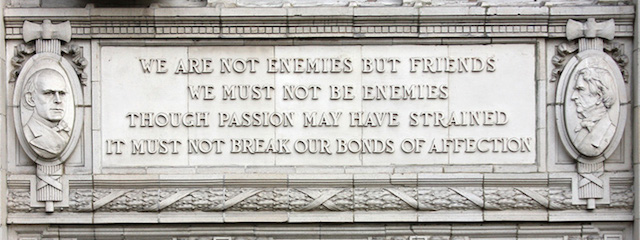
The Next American Civil War

A Commentary by J. D. Longstreet

“Tyrants preserve themselves by sowing fear and mistrust among the citizens by means of spies, by distracting them with foreign wars, by eliminating men of spirit who might lead a revolution, by humbling the people, and making them incapable of decisive action…” – Aristotle
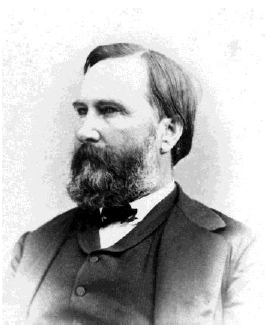
You’d think ole “Ari” might have been peering through some sort of cosmic window into modern day America some 2300 years ago with comments such as those above.

There’s another way to look at it, as well. One can grudgingly admit that the Greeks, of 2300 years ago, were smarter than modern Americans. In my estimation – you’d be right. So, I tend to go with the latter explanation.

See, America is building a head of steam preparing to go to war with itself a second time at this very moment. This is not unusual – not in America. We have already had two revolutions. You may recall the American Revolution against Great Britain and the second – the War for Southern Independence, often erroneously referred to as the American Civil War, or the War Between the States. Continue reading →
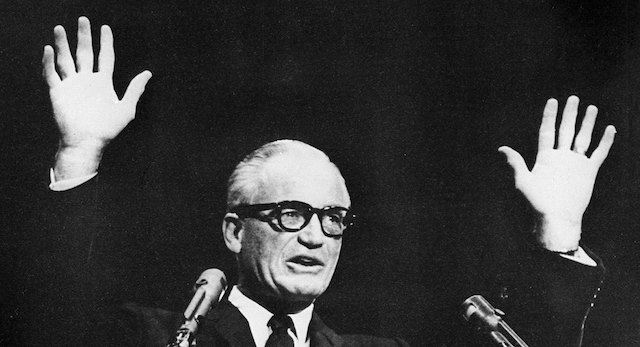
Goldwater’s Acceptance Speech (July 16, 1964)

The 1964 National Convention of the Republican Party of the United States took place in the Cow Palace, Daly City, California, on July 13 to July 16, 1964. Before 1964, there had been only one national Republican convention on the West Coast, the 1956 Republican National Convention, which also took place in the Cow Palace. Many believed that a convention at San Francisco indicated the rising power of the Republican party in the west. Continue reading →

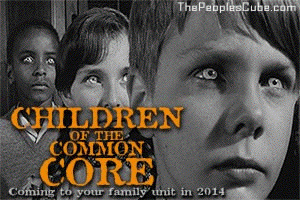
Never has so much attention, funding & emphasis placed For The Children and never have they been in more danger.

The deadly serious decline and fall of U.S. Public Schools got its ‘official’ christening with the advent of the Elementary & Secondary Education Act (ESEA) in 1965. The resulting decline eventually led to the Clinton 1994 Goals 2000, which set the stage for Bush’s nearly complete federal takeover of education with No Child Left Behind. NCLB, among other things, brought on the ‘teaching the test’ frenzy, the teaching U.N principles trump those of the U.S., and a Constitution textbook which left out the 2nd, 9th, & 10th amendments. Now comes the final nail in the coffin for the nationalization of ‘education’, Obama’s Common Core Standards (2010) which is in the process of being implemented in all but 5 states as of this date.
Continue reading →

An Uncommon Approach to Costly Common Core Education Standards

Joseph Califano, secretary of health, education and welfare in the Carter administration declared that “in its most extreme form, national control of curriculum is a form of national control of ideas.” That was in 1977. This month, syndicated columnist George Will cited Califano’s warning in a column bemoaning the Obama administration’s latest education intervention through the Common Core Curriculum State Standards Initiative. Continue reading →

Linderman: The Two Heads of Education

My life began the moment I broke out of my cell of doubt created by the public school system! Every summer vacation I felt like my sentence had ended, and the only sad thought was that it would begin again, in just a few short months, when school started again. Most kids feel the same way; they hate school but they go because they are trained to believe it is the Great American Expectation. Remember, we are told time after time that if we do well in school then we will be successful. So we strive to please our parents, our teachers, the system, and ourselves. This is the secret, cruel pressure that molds our spirits.
The simple question that has followed me around like a pesky fly all of my life has been, “Why did I hate school so much?” Continue reading →

The Issue WAS State’s Rights

The state rights tone was set in the preamble to the Confederate Constitution in the significant phrase, “each State acting in its sovereign and independent character.”

Secession was based on the idea of state rights (or “states rights,” a variant that came into use after the Civil War). This exalted the powers of the individual states as opposed to those of the Federal government. It generally rested on the theory of state sovereignty– that in the United States the ultimate source of political authority lay in the separate states. Associated with the principle of state rights was a sense of state loyalty that could prevail over a feeling of national patriotism. Before the war, the principle found expression in different ways at different times, in the North as well as in the South. During the war it reappeared in the Confederacy. Continue reading →

Mary’s letter to her Science teacher

~ Foreword ~
Thank you, Joel Turtel. This is the finest commentary on the American FED-ucation system I have ever read. Maybe the rest of us should follow this lesson. Do you want better for your children and grandchildren? Then this is one place, that YOU can make a difference! Start by going to the local school board meetings, then run for a seat on that board. Let’s take OUR schools back – then we have a chance with the country. ~ (JB)

“Daddy?,” said the beautiful, ten-year-old girl to her father.
Her father, Josh Hanlan, sat in front of his computer, studying complex engineering designs on the screen. He didn’t seem to hear his daughter.

Mary Hanlan knew how engrossed her father got when he was working, and smiled adoringly at his handsome face peering intently at the computer, clicking his mouse furiously, while his brows furrowed in concentration. She knew she had to use her ingenuity to get his attention, and it had become a game between them on how she did this. She went alongside him and tickled his left ear lightly with the feather. Josh waved his hand next to his ear, as if swatting away an annoying fly. Mary giggled and tickled his ear again while she said “Daddy” again, this time more insistently. Finally, her father turned in his chair and noticed his daughter standing there. Continue reading →

John Brown of Kansas ~ November 2, 1859

“I feel no consciousness of guilt.”

John Brown of Kansas

CHARLES TOWN, Va., November 2, 1859 – What says a man when he has assayed to play the role of liberator outside the law, has finally directed his I handful of followers in combat with uniformed troops of the government, and has lost; when he knows that beyond all appeal he will dangle from a gallows?

John Brown said it here today, in open court, after receiving that sentence which no power on earth could avert. How did he say it? He said it calmly and with great lucidity, as though each syllable were a brick carefully laid in a pillar of argument that was to be his memorial. Continue reading →

Thoreau: A Plea for Captain John Brown ~ October 30, 1859

I should say that he was an old-fashioned man in respect for the Constitution, and his faith in the permanence of this Union.

Read to the citizens of Concord, Massachusetts

I trust that you will pardon me for being here. I do not wish to force my thoughts upon you, but I feel forced myself. Little as I know of Captain Brown, I would fain do my part to correct the tone and the statements of the newspapers, and of my countrymen generally, respecting his character and actions. It costs us nothing to be just. We can at least express our sympathy with, and admiration of, him and his companions, and that is what I now propose to do.

Henry David Thoreau

First, as to his history. I will endeavor to omit, as much as possible, what you have already read. I need not describe his person to you, for probably most of you have seen and will not soon forget him. I am told that his grandfather, John Brown, was an officer in the Revolution; that he himself was born in Connecticut about the beginning of this century, but early went with his father to Ohio. I heard him say that his father was a contractor who furnished beef to the army there, in the war of 1812; that he accompanied him to the camp, and assisted him in that employment, seeing a good deal of military life, – more, perhaps, than if he had been a soldier; for he was often present at the councils of the officers. Especially, he learned by experience how armies are supplied and maintained in the field, – a work which, he observed, requires at least as much experience and skill as to lead them in battle. Continue reading →

William H. Seward ~ The irrepressible conflict (October 25, 1858)

William Seward

ROCHESTER, N. Y., October 25, 1858 – Almost on the eve of this year’s momentous election, when slavery has become virtually the sole issue – and particularly the question of how Kansas and other prospective states are to be admitted into the Union – Senator William Henry Seward challenged here today the very integrity of the Democratic party and its espousal of slavery in those present or future states where it is legal.

The Senator is not a candidate for re-election, as his term has two more years to run. His prestige is so great, beginning with his governorship of this state in 1838 and continuing through a Senate career that began in 1849, that he might well have remained out of this contest. Nevertheless, he has taken such a forceful stand that he maybe counted in the forefront of the fight just as vigorously as, for instance, Mr. Abraham Lincoln, who in Illinois is staking his political future on a campaign for a Senate seat. Continue reading →

The Raid on Harper’s Ferry ~ The Spark That Lit a Bonfire (October 1859)

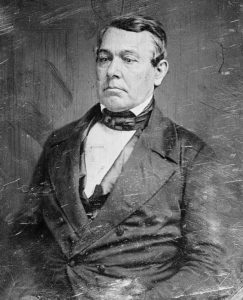
John Brown, 1859

October 16-18, 1859 – John Brown’s plan seemed fairly straightforward: he and his men would establish a base in the Blue Ridge Mountains from which they would assist runaway slaves and launch attacks on slaveholders. At least that was the plan that the militant abolitionist had described to potential funders in 1857. But his plans would change. He had been ready in 1858 to launch his war – he had both the men and the money to proceed. Brown was asked to postpone the launch, though, because one of his followers had threatened to reveal the plan – a threat that the blackmailer did follow through on. So Brown agreed to go into hiding.

The following summer, after a one-year delay, Brown was eager to get underway. He rented a farm in Maryland, across the Potomac River from Harper’s Ferry. Here he assembled his arms and waited for his “army” to arrive. Continue reading →

President Grover Cleveland ~ The Repeal of the Silver Act

Message on the Repeal of the Sherman Silver Purchase Act

President Grover Cleveland

August 8, 1893 ~ The existence of an alarming and extraordinary business situation, involving the welfare and prosperity of all our people, has constrained me to call together in extra session the people’s representatives in Congress, to the end that through a wise and patriotic exercise of the legislative duty, with which they solely are charged, present evils may be mitigated and dangers threatening the future may be averted.

Our unfortunate financial plight is not the result of untoward events nor of conditions related to our natural resources, nor is it traceable to any of the afflictions which frequently check national growth and prosperity. With plenteous crops, with abundant promise of remunerative production and manufacture, with unusual invitation to safe investment, and with satisfactory assurance to business enterprise, suddenly financial distrust and fear have sprung up on every side. . . . Values supposed to be fixed are fast becoming conjectural, and loss and failure have invaded every branch of business. Continue reading →

Lieutenant Colonel Joshua Lawrence Chamberlain ~ July 2, 1863

Hail, Caesar: We who are about to die salute you

~ Prologue ~
Professor Joshua Lawrence Chamberlain from Bowden College in Maine was commissioned a lieutenant colonel in the 20th Maine Volunteer Infantry Regiment in 1862 and fought at the Battle of Fredericksburg.

At the beginning of the American Civil War, Chamberlain believed the Union needed to be supported against the Confederacy by all those willing. On several occasions, Chamberlain spoke freely of his beliefs during his class, urging students to follow their hearts in regards to the war while maintaining that the cause was just. Of his desire to serve in the War, he wrote to Maine’s Governor Israel Washburn, Jr., “I fear, this war, so costly of blood and treasure, will not cease until men of the North are willing to leave good positions, and sacrifice the dearest personal interests, to rescue our country from desolation, and defend the national existence against treachery.” Continue reading →

How To Fix Public Education: GET RID OF IT

June 19, 2011 ~ If you want to fix America, you have to fix America’s broken education system; and you must start by getting rid of the one we have.

I’ve been up in front of too many classrooms in too many different schools, and had lunch in too many different teachers’ lounges, to be wrong about this. I have also sat through more school board meetings, in more towns, and pored over more school budgets, than I care to remember.

Here are a few suggestions for getting out from under the costliest and least effective education establishment in human history. Continue reading →

I Wish I Was in Dixie’s Land (April 4, 1859)

Loved by many, despised by others, “Dixie” is still among the most recognizable of all American songs. Ironically, it was written by a Northerner, Daniel Decatur Emmett. Bryant’s (blackface) Minstrels premiered it in New York City on April 4, 1859. “I Wish I Was in Dixie’s Land” was an instant hit, and its popularity spread quickly. By 1860 it was especially enjoyed in Southern states and soon also among Confederate army bands. However, many Union bands also played Dixie during the war, or versions of it, and President Lincoln included Dixie among his favorites. There are numerous variations and alternative verses. Continue reading →

Juntti: Let’s get back to REAL Education…

Thousands protest at Texas Capitol in opposition to education cuts

March 13, 2011 ~ As I watch and read about the huge protests (led mostly by UNIONS) in the different states that are dealing with massive budget deficits I have this ‘thought’ that keeps running through my head related to the *education* focus. The ‘thought’ is how many of these teachers teach mathematics? How many of these ‘students’ have studied mathematics and passed the grade? How many of these protesters have ever lived within THEIR means, not using CREDIT to live on? How many of them have ever reached into their wallets and find it EMPTY? Finding it EMPTY, do they go into the stores they want things from and DEMAND that they be GIVEN what they want even though they have no money to pay for it? Continue reading →
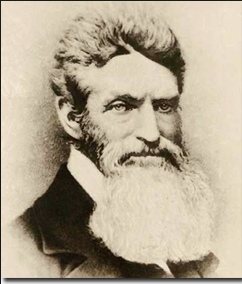
Constitution of the Confederate States of America ~ March 11, 1861

March 11, 1861, The Confederate Constitution is Approved

The Confederate Congress

Delegates from the newly formed Confederate States of America agreed on their own constitution. Here is a look at this little-known third constitution that controlled the lives of about 9 million people for a short period of time.

Much of the Confederate Constitution mirrored the Constitution of the United States as it existed at the time, with bigger differences in the matters of slavery and states’ rights.

In 1860, there were more than 9 million people, including 3 million slaves, living in the states and territories that would leave the Union, compared with 22 million people outside those areas. Continue reading →

President Abraham Lincoln ~ First Inaugural Address (March 4, 1861)

The Capitol, Washington, March 4, 1861 – The national upheaval of secession was a grim reality at Abraham Lincoln’s inauguration. Jefferson Davis had been inaugurated as the President of the Confederacy two weeks earlier. The former Illinois Congressman had arrived in Washington by a secret route to avoid danger, and his movements were guarded by General Winfield Scott’s soldiers. Ignoring advice to the contrary, the President-elect rode with President Buchanan in an open carriage to the Capitol, where he took the oath of office on the East Portico. Chief Justice Roger Taney administered the executive oath for the seventh time.
Fellow-Citizens of the United States…

In compliance with a custom as old as the Government itself, I appear before you to address you briefly and to take in your presence the oath prescribed by the Constitution of the United States to be taken by the President “before he enters on the execution of this office.” Continue reading →

The Last-Minute Attempt to Save the Union ~ The Corwin Amendment (March 4, 1861)

At around 5:20 AM on March 4, 1861 ~ Inauguration Day…

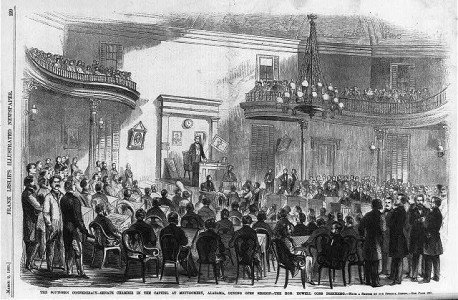
Photo of Congressman Thomas Corwin (R, OH), the chair of the House committee established to develop a way to avert the secession crisis. He introduced the Corwin Amendment in the House, in addition to lending his name to it.

The Senate voted 24-12 to pass a proposed amendment to the Constitution that would permanently preserve slavery in the states where it currently existed. If successfully ratified, it would become the 13th Amendment to the United States Constitution – and hopefully avert the secession crisis and the impending Civil War. However, only six states had ratified the amendment by early 1862, and the amendment died soon after. The last attempt to stop the Civil War, an attempt which had been in the works since shortly after the presidential election, had failed.

Two potential reasons for its failure were the speed with which the secession movement acted and the inability of Southern moderates to realize the threat the movement posed. In the almost immediate aftermath of Lincoln’s election as president in 1860, the secession movement was rapidly gaining steam in the Deep South. Just days after the election, South Carolina’s state legislature called for a state convention. A month later, South Carolinians elected delegates to the convention, and two weeks later – on December 20th – South Carolina seceded from the Union. Many Northerners – convinced most of the pro-Secession voters were being brainwashed by radical politicians – did not take this movement seriously at first and Republicans in particular saw no need to do anything about it, least of all compromise. Continue reading →

The Morrill Tariff of 1861: The True Cause of Secession and the War of Northern Aggression

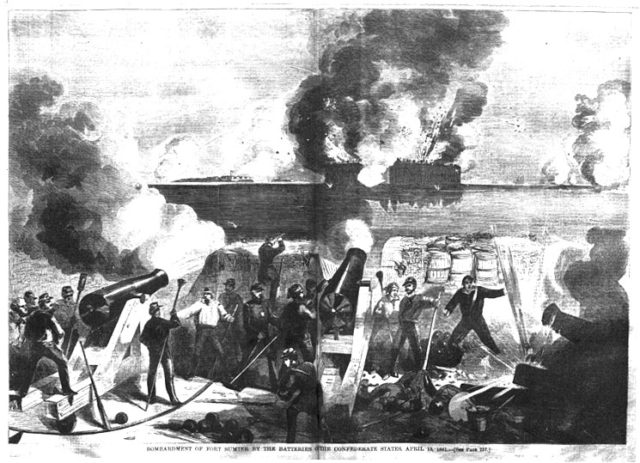
Bombardment of Fort Sumter

At 4:30 a.m. on April 12, 1861, a signal shell fired from a Confederate mortar burst in the sky over the federally occupied island fortress of Fort Sumter in Charleston Harbor, South Carolina. Fifteen minutes later, at 4:45, the Confederate batteries around the harbor opened fire on the fort, with the intention of driving out the eighty-five Union troops garrisoned there. The first battle of Fort Sumter, the first battle in the War of Northern Aggression, a war which was, before its end four years later, to claim the lives of approximately three-quarters of a million Americans, soldiers, civilians, and slaves, men, women, and children, and become the bloodiest conflict in the history of this nation, had begun. Continue reading →