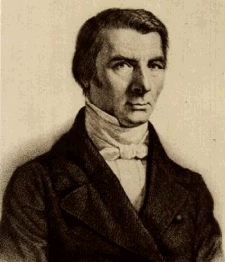
 CLAUDE FREDERIC BASTIAT was a French economist, legislator, and writer who championed private property, free markets, and limited government. Perhaps the main underlying theme of Bastiat’s writings was that the free market was inherently a source of “economic harmony” among individuals, as long as government was restricted to the function of protecting the lives, liberties, and property of citizens from theft or aggression. To Bastiat, governmental coercion was only legitimate if it served “to guarantee security of person, liberty, and property rights, to cause justice to reign over all.”
Bastiat emphasized the plan-coordination function of the free market, a major theme of the Austrian School, because his thinking was influenced by some of Adam Smith’s writings and by the great French free-market economists Jean-Baptiste Say, Francois Quesnay, Destutt de Tracy, Charles Comte, Richard Cantillon (who was born in Ireland and emigrated to France), and Anne Robert Jacques Turgot. These French economists were among the precursors to the modern Austrian School, having first developed such concepts as the market as a dynamic, rivalrous process, the free-market evolution of money, subjective value theory, the laws of diminishing marginal utility and marginal returns, the marginal productivity theory of resource pricing, and the futility of price controls in particular and of the government’s economic interventionism in general. Continue reading →

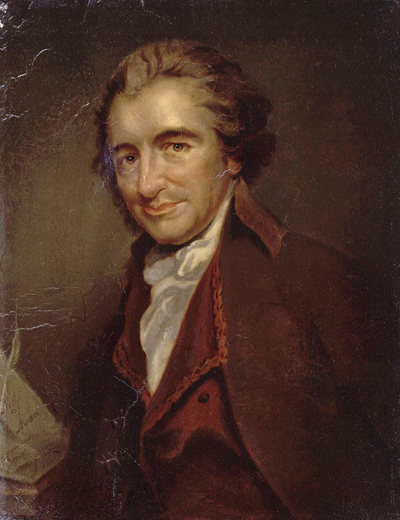 “… if the journalistic credos of speaking truth to power, comforting the afflicted, and afflicting the comfortable have a godhead, that would have to be Paine, whose writing was so provocative and so uncompromising that he faced the gibbet and the blade everywhere he published—in England, and in France, and in the United Colonies.” ~ Craig Nelson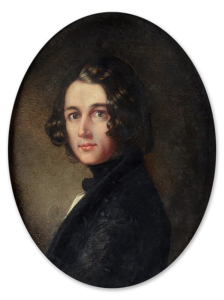
 The paper money that funded the American Revolution led to post-war grievances, the most well-known of which was Shays’s Rebellion in back-country Massachusetts. For years after the war the Boston legislature imposed taxes, falling mainly on those least able to pay, for the full payment in specie of the highly-depreciated notes issued during the war and held mostly by well-to-do legislators and bankers. As a further aggravation, the war was fought mostly by those on whom the taxes fell, while the elites stayed home. (See the Nobel-worthy
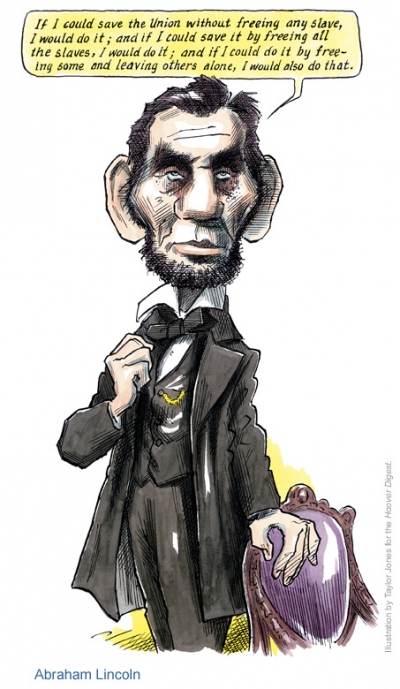 If you were to ask your friends who the five greatest presidents were, I’m certain you would get a wide range of answers. Some might answer with contemporary presidents; like Obama or Reagan, while others might stick to those that were only names in history books. But I’m almost certain that universally the name Abraham Lincoln would make almost everyone’s list. Why is that? Is it because he saved the Union and freed the slaves?
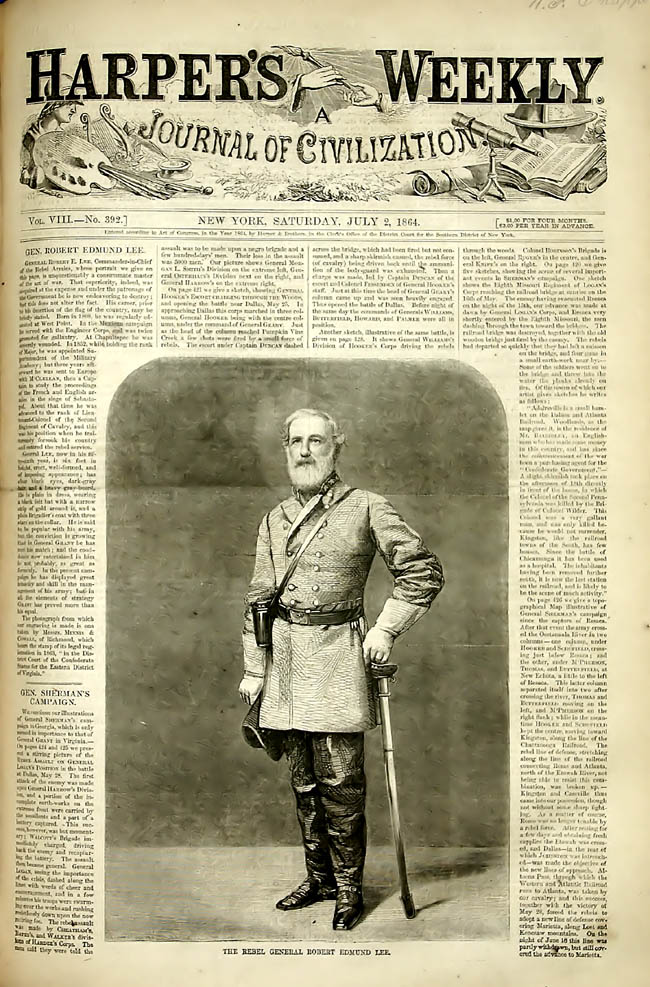
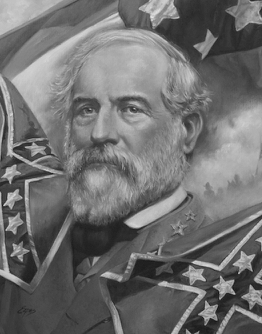
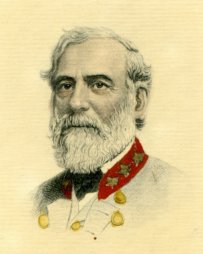 Robert E. Lee was a great American. He was in rebellion against his country for four tortuous, bloody years. At the head of the Army of Northern Virginia, he came darn close to winning Southern independence. Lee was a brilliant field commander, full of audacity. His daring was a gift and a bane. He was a man of integrity. He was a man of his place and time. He deserves our remembrance and respect.
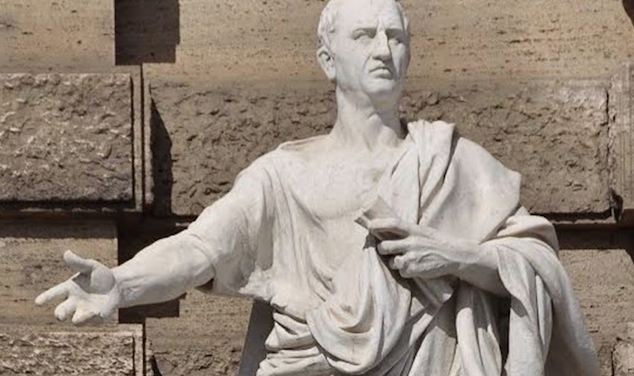 My list isn’t exactly the same from one day to the next, but at least a couple of the same names are always on it, without fail. One of them is Marcus Tullius Cicero. He was the greatest citizen of the greatest ancient civilization, Rome. He was its most eloquent orator and its most distinguished man of letters. He was elected to its highest office as well as most of the lesser ones that were of any importance. More than anyone else, Cicero introduced to Rome the best ideas of the Greeks.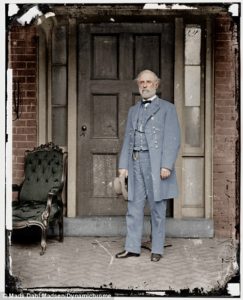
 President Lincoln has been all but deified in America, with a god-like giant statue at a Parthenon-like memorial in Washington. Generations of school children have been indoctrinated with the story that “Honest Abe” Lincoln is a national hero who saved the Union and fought a noble war to end slavery, and that the “evil” Southern states seceded from the Union to protect slavery. This is the Yankee myth of history, written and promulgated by Northerners, and it is a complete falsity. It was produced and entrenched in the culture in large part to gloss over the terrible war crimes committed by Union soldiers in the War Between the States, as well as Lincoln’s violations of the law, his shredding of the Constitution, and other reprehensible acts. It has been very effective in keeping the average American ignorant of the real causes of the war, and the real nature, character and record of Lincoln. Let us look at some unpleasant facts.
  During the American war the sympathies of the German people were strongly on the side of the North. They showed their good feeling toward the Union and their confidence in its success by subscribing largely for United States bonds, at a most critical period both for our arms and our finances – a confidence which Congress has abused in a most humiliating way by providing for cheating the bondholders out of eight cents on the dollar. Thus do we ourselves efface the glories of the war and of emancipation.
 Louis L’Amour – famed western writer, penned roughly 130 Western novels, and short stories, to include the old Maverick television series; I have perused as many as 75% of his books – like many a sailor of my era, I became almost addicted to L’Amour in the USN; reading some of his books more than once… His’ Education of a Wandering Man is (an autobiography in which L’Amour not only recounts his life’s sundry diverse experiences which took place before he settled down to write; he details – by year – the hundreds of books which he studied; books of Classical Literature, Philosophy, Law etc.) included in a number of scholar’s recommended books lists, some quite surprising e.g., Father James V. Schall (S.J.) includes L’Amour’ book in his book titled: Another Sort of Learning.
 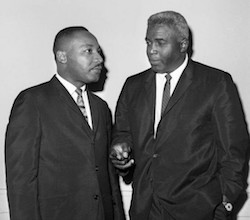 Historical Background
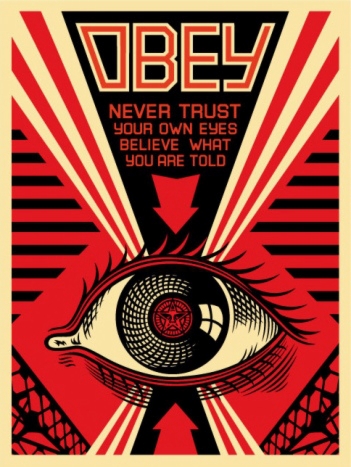 George Orwell’s 1984 was so successful and so influential that he was seen as something of a prophet. This dystopian novel was considered a cautionary prophecy of what would come to pass if future generations ceased to be vigilant in the guarding of their freedom…
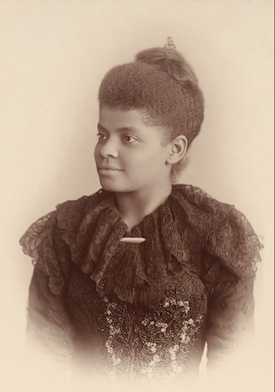 Ida B. Wells-Barnett was a prominent journalist, activist, and researcher, in the late 19th and early 20th centuries. In her lifetime, she battled sexism, racism, and violence. As a skilled writer, Wells-Barnett also used her skills as a journalist to shed light on the conditions of African Americans throughout the South.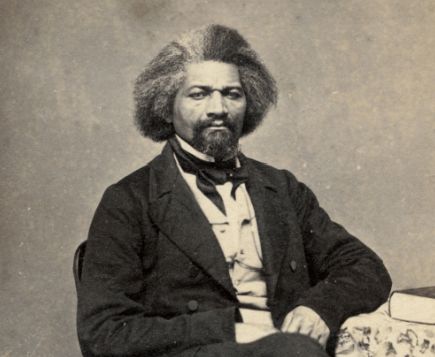
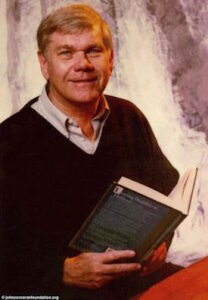 A California man has described how he managed to keep his illiteracy a secret from the world for decades – even when he worked as a teacher for 17 years.