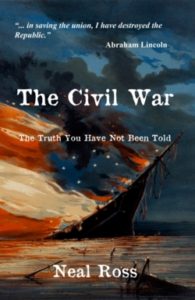
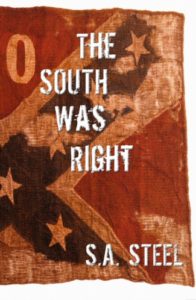
CLICK on Book Cover
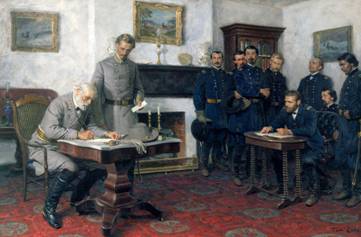
I know it’s not the kind of thing most people think about, but have you ever stopped to look back on our nation’s history and wonder at what point in time we veered off the path our Founders established for us? A case could be made that from the moment our government went into effect in 1789 that it has been seeking to expand its powers beyond those given it by the Constitution; but what I’m talking about is a major turning point after which everything went downhill after that. The War of Northern Aggression or what you call the Civil Was was one such event.
To understand the repercussions of the Civil War you must first understand a few crucial facts. First and foremost is the fact that the federal government is not our master, it is our servant; it has only those powers given it by consent of the people as declared in the Constitution. Any power exercised beyond those specifically granted is usurpation, tyranny, or whatever other word you might choose to describe an unlawful exercise of power and authority over a people. Continue reading
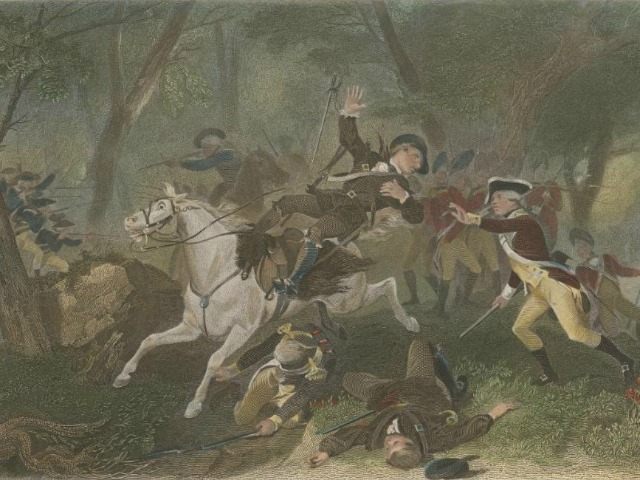 The British seemed unstoppable. Back in May, an army led by Henry Clinton and Charles, Earl Cornwallis had conquered Charleston and captured over 5,000 American soldiers and sailors – the largest haul of American prisoners in the entire war. Then in August they destroyed the “Grand” Army led by General Horatio “Granny” Gates at the Battle of Camden. The Crown was on a roll. The string of Patriot defeats led to the serious possibility that France would recall its troops and end its crucial funding of the war. Even Russia meddled in our affairs, and, along with Austria, proposed a peace conference to find a “political solution” to hostilities.
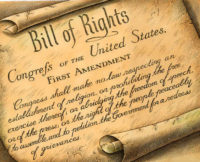 Language is the tool by which human beings communicate with each other. Without language all music would be instrumental pieces. Without language all films would be silent movies. Without language we wouldn’t have amazing literary pieces to read. Without language history would be lost to the ages.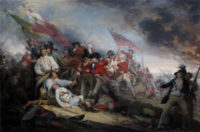
 ~ Foreword ~
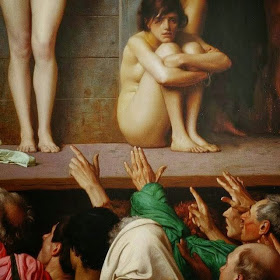 They came as slaves: human cargo transported on British ships bound for the Americas. They were shipped by the hundreds of thousands and included men, women, and even the youngest of children.
 The day was September 17, 1787 and the delegates to the Philadelphia Convention were to gather together one final time to cast their votes for or against the document they had produced. Some had left the convention earlier; stating they felt the convention had overstepped its just authority, while others had pushed on with their plan to scrap the Articles of Confederation and create an entirely new system of government for America.
  Publisher’s NOTE: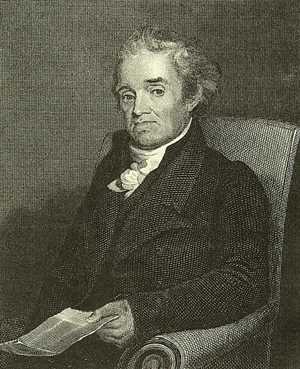
 Aside from parents, those whom we call educators spend the most time with our children, and have the most influence on the things they learn. This is a huge trust and a huge responsibility; to teach our children the things they need to learn before they leave their homes and go out into society on their own.
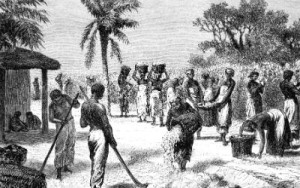 Perhaps you, like me, were raised essentially to think of the slave experience primarily in terms of our black ancestors here in the United States. In other words, slavery was primarily about us, right, from Crispus Attucks and Phillis Wheatley, Benjamin Banneker and Richard Allen, all the way to Harriet Tubman, Sojourner Truth and Frederick Douglass. Think of this as an instance of what we might think of as African-American exceptionalism. (In other words, if it’s in “the black Experience,” it’s got to be about black Americans.) Well, think again…
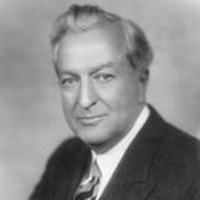
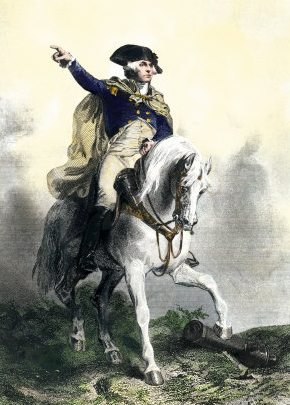 By an anonymous summons, an attempt has been made to convene you together—how inconsistent with the rules of propriety! how unmilitary! and how subversive of all order and discipline—let the good sense of the Army decide.
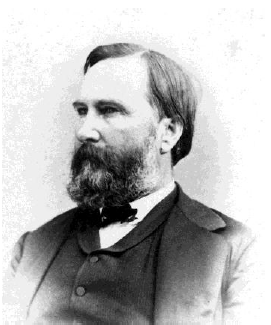 You’d think ole “Ari” might have been peering through some sort of cosmic window into modern day America some 2300 years ago with comments such as those above.
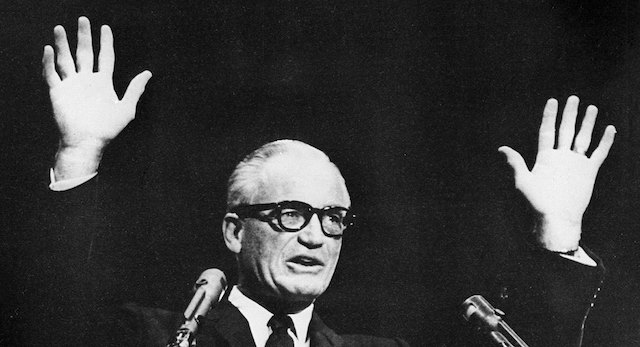 The 1964 National Convention of the Republican Party of the United States took place in the Cow Palace, Daly City, California, on July 13 to July 16, 1964. Before 1964, there had been only one national Republican convention on the West Coast, the 1956 Republican National Convention, which also took place in the Cow Palace. Many believed that a convention at San Francisco indicated the rising power of the Republican party in the west.
 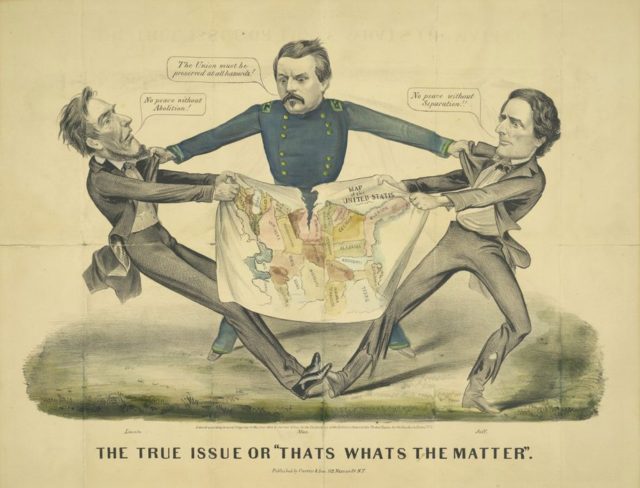 Secession was based on the idea of state rights (or “states rights,” a variant that came into use after the Civil War). This exalted the powers of the individual states as opposed to those of the Federal government. It generally rested on the theory of state sovereignty– that in the United States the ultimate source of political authority lay in the separate states. Associated with the principle of state rights was a sense of state loyalty that could prevail over a feeling of national patriotism. Before the war, the principle found expression in different ways at different times, in the North as well as in the South. During the war it reappeared in the Confederacy.