Author Archives: Jeffrey

Before Charlottesville, Democrats voted for racist policies for more than 100 years

In the aftermath of Charlottesville, an awful lot of awful things have been said about Republicans and race relations – BUT you might wish to reconsider what you have heard.
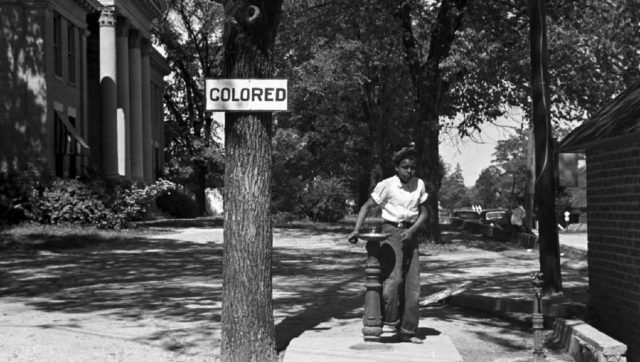
The Democratic Party was responsible for passing Jim Crow laws, in addition to Black Civil Codes that forced Americans to utilize separate drinking fountains, swimming pools, and other facilities in the 20th century. (Wikipedia Commons)

However, the Left’s accusations of racism couldn’t be further from the truth that has played out in the halls of Congress over the last 150 years.

It is shocking that as talk of statues and historical racism is being bandied about, no one has mentioned the Democrats’ utterly shameful treatment of African Americans throughout history.

Over the last 100 years, Republicans have stood up for African Americans while Democrats not only stood on the sidelines, but in fact served as obstructionists to civil liberties.

Here are at least 12 examples in which Democrats voted against African Americans, and Republicans voted to free them: Continue reading
Get Out of My Class and Leave America

College Professor’s Epic Class Introduction Went Viral

Originally published in August of 2015 – but well worth the read. ~ J.B.

Author’s Note: The following column is comprised of excerpts taken from my first lectures on the first day of classes this semester at UNC-Wilmington. I reproduced these remarks with the hope that they would be useful to other professors teaching at public universities all across America. Feel free to use this material if you already have tenure. Continue reading

Education Created and Promoted Progressivism, ANTIFA, and BLM

Brainwashing of Academia, Hollywood, Communist foreign infiltrators, and the mainstream media

As a parent who struggles to pay the tuition for their child at the average university in America, or goes into debt borrowing the money, consider what your child must face in order to finish a four years of college education, which may or may not help them get a job.
The American campus is no longer the place of learning, to discuss and exchange ideas, it has become a place of indoctrination, of fear, a place where your children are further indoctrinated, and are not prepared to deal with or function in real life and in the job world. Continue reading

How we know the so-called ‘Civil War’ was not over slavery

When I read Professor Thomas DiLorenzo’s article, the question that lept to mind was, “How come the South is said to have fought for slavery when the North wasn’t fighting against slavery?”

Two days before Lincoln’s inauguration as the 16th President, Congress, consisting only of the Northern states, passed overwhelmingly on March 2, 1861, the Corwin Amendment that gave constitutional protection to slavery. Lincoln endorsed the amendment in his inaugural address, saying “I have no objection to its being made express and irrevocable.”

Quite clearly, the North was not prepared to go to war in order to end slavery when on the very eve of war the US Congress and incoming president were in the process of making it unconstitutional to abolish slavery. Continue reading

Josey Wales, aka Bushwhacker Bill Wilson

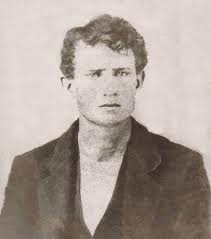
Bushwacker Bill Wilson

The story of Bill Wilson has been told throughout the Ozark Mountains since he began his bloody career in 1861 to the present day. He is a true folk hero. The Ozarks were full of men who took to the bush and waged a single man to a small gang warfare on the union soldiers, red legs, jayhawkers and spies for the Union. Although there were a lot of these men, if someone said, “The Bushwhacker,” “The Great Bushwhacker,” or the “Famous Bushwhacker,” everyone knew that they were talking about Bill Wilson. His daring deeds are still considered miracles due to his never being wounded once. He is remembered for his superior skill with revolvers and clever tactics in surprising his enemies. The writings and movie about Josey Wales are based on the real bushwhacker, Bill Wilson. Continue reading

Does Education Work?

One Room Schoolhouse

Just about everyone from left to right believes in the power of more education for more Americans, that more education for all will open up opportunity, raise standards of living, and reduce economic inequality. Some scholars, however, are skeptical.

They have at least three related arguments. One is that the content of education–perhaps beyond basic literacy and skills– does not matter for individuals’ economic attainment, that what matters is the person’s relative level of education. When few people have graduated high school, doing so will make a big difference, but when most people have a high school diploma, then real success then requires going to college. Employers just up their requirements as educational attainment spreads, so what is important is being ahead of the pack. Continue reading

A. Lincoln ~ Socialist?

A while ago, I was dumbstruck by a comment a Republican party insurgent in Utah made about her former governor, Jon Huntsman, Jr., a Republican politician who received strong kudos from the libertarian Cato Institute. “‘On a good day, a socialist,’ said Darcy Van Orden, a co-founder of Utah Rising . . . . ‘On a bad day, he’s a communist’.” And, of course, people like Ms. Van Orden consider it obvious that Barack Obama is a socialist, if not worse. David Koch, one of the brother team of conservative financial angels, commented, for example, that Obama’s “father was a hard core economic socialist in Kenya . . . [and Obama] was apparently from what I read a great admirer of his father’s points of view.”

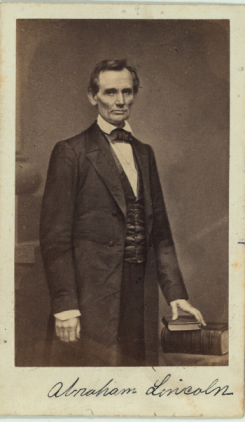
Abraham Lincoln It is striking how the term “socialist” has been redefined so that almost any policy and anyone can get that label. Indeed, many a past president would qualify by these standards ­ surely FDR, Truman, and Democrats through Clinton ­ but so would Republican presidents. By the standards of people such as Ms. Van Orden and David Koch, Abraham Lincoln was surely an out-and-out “socialist-communist.” Continue reading

Smith: In Defense of General Lee

Let me begin on a personal note. I am a 56-year-old, third-generation, African American Washingtonian who is a graduate of the D.C. public schools and who happens also to be a great admirer of Robert E. Lee.

Today, Lee, who surrendered his troops to Gen. Ulysses S. Grant at Appomattox Court House 134 years ago, is under attack by people – black and white – who have incorrectly characterized him as a traitorous, slaveholding racist. He was recently besieged in Richmond by those opposed to having his portrait displayed prominently in a new park. Continue reading

Teddy Stoddard ~ A Touching Story

There is a story many years ago of an elementary teacher. Her name was Mrs. Thompson. And as she stood in front of her 5th grade class on the very first day of school, she told the children a lie. Like most teachers, she looked at her students and said that she loved them all the same. But that was impossible, because there in the front row, slumped in his seat, was a little boy named Teddy Stoddard.

Mrs. Thompson had watched Teddy the year before and noticed that he didn’t play well with the other children, that his clothes were messy and that he constantly needed a bath. And Teddy could be unpleasant.

It got to the point where Mrs. Thompson would actually take delight in marking his papers with a broad red pen, making bold X’s and then putting a big F at the top of his papers. Continue reading

Because you are here

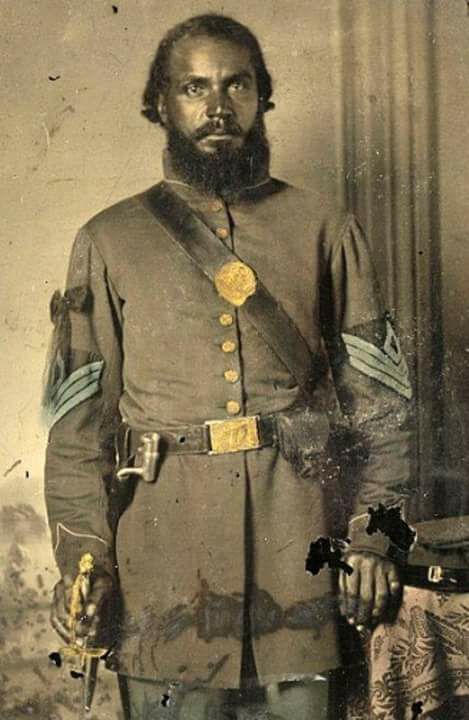
The Confederate First Sergeant…

photo Courtesy of Brandon Anderson Collection

The Union cavalry surrounded a lone Confederate soldier who had no horse and whose clothes were dirty and tattered. A Union officer said to him that it was obvious that he had no wealth and not the means to own slaves. The officer asked: “Why are you fighting this war?”  Continue reading

The Classroom Flight of The Milkweed Parasols

I followed his astounded gaze back to the high window ledge. The pod had burst wide open into a cumulous, pulsating mass. The slight breeze from the other window tickled the fluff, coaxing bits of down into the air. Suddenly the room was clouded with milkweed down.


Then something happened, something that would happen again and again over my six years with my class, something of gigantic importance, yet imperceptible…. It was a simple, silent shift in the manner of the class prompted by a decision on my part to step back and allow the children to lead the way. I made no pronouncement. My turning the reins over to the class was a silent passing of leadership. Continue reading

Why Note-Taking by Hand Is Better for Your Brain

In a groundbreaking study, researchers have shown that handwriting is better than typing as a means of retaining information.

We all know Aesop’s fable about the Tortoise and the Hare but few of us really believe, in the real world, that slowcoaches like the tortoise have a cat in hell’s chance of beating those in life’s fast lane. Few really believe, with John Milton, that “they also serve who only stand and wait.” Those who stand and wait get left behind, stupid. You snooze, you lose.

Those of us who believe that time taken is time well spent are in a minority in our frantic and frenetic world. We are an endangered species. Continue reading

K-12: Your – or Is It You’re?

It’s two lose, Lautrec! ~ (pun intended)

Your Tax Dollars at Work

Yes, of course, it’s the former. Millions of Americans can’t tell, thanks to the public schools and their waste of your money.

So here’s where we end up. Many allegedly educated Americans cannot avoid the simplest grammatical and spelling mistakes. Clearly, they have never been taught right from wrong, linguistically speaking.

Here are the most common examples now disfiguring blogs and comments by the billions: it’s or its? Who’s or whose? Know or no? Your or you’re? Too, to, or two? Their, there, or they’re? Loose or lose? Continue reading

Confederate “General” Julius Howell Recalls the 1860s

Born on January 17th, 1846 in Nansemond County, Virginia to his parents Rev. Edward Howell and his wife Americus Howell.

Julius grew up on a plantation the youngest of 16 children. He attended school at home and then later was a student at Reynoldson Institute in Gates County, North Carolina. The institute closed with the declaration of war in 1861. At the age of sixteen Howell entered Confederate service and would later become a member of the 24th Virginia Cavalry. Continue reading

Segregation Was Not Southern Racism – It Was Federal Policy

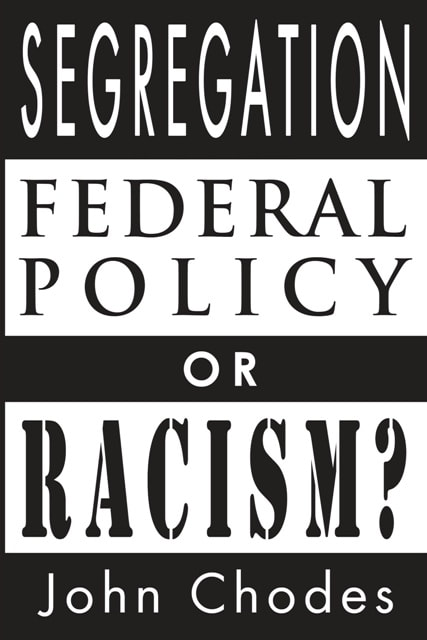
I have just received an informative little book that deals with a lot of material folks will never see in their “history” books, but need to be aware of, especially here in the South. This book was written by John Chodes of New York City and published by Shotwell Publishing in Columbia, South Carolina.
The title of the book is Segregation Federal Policy or Racism? And Mr. Chodes explains why it was federal policy instead of Southern racism. He starts out by dealing with a subject I have written about on and off for years, but which most people simply fail to grasp–that “reconstructiondid not end in the South after the Yankee/Marxist troops departed–it just continued under other names and it continues right down to our day. The current riots in Charlottesville, Virginia are a prime example of how “reconstruction” continues to work in our day. Continue reading

Williams: Historical Ignorance

Liberals, Progressives, and Socialists are leading America to re-fight the War Between the States. The blood of 600,000 Americans killed in war from 1861 to 1865 is insufficient to cleanse the sin of enslavement. And it is in that context that you should find Mr. Williams comments both highly interesting and instructive:

The victors of war write its history in order to cast themselves in the most favorable light. That explains the considerable historical ignorance about our war of 1861 and panic over the Confederate flag. To create better understanding, we have to start a bit before the 1787 Constitutional Convention in Philadelphia. Continue reading

The End of Government Schools

When in doubt, cry racism. It’s the left’s go-to weapon when the facts are against them. School choice advocates, then, should be heartened: Progressives lately have had to stoop low, get dirty, and hurl mudballs in our direction, because that’s all they’ve got.

This month progressives let fly three separate volleys, hoping the “racist” argument would somehow find its mark. The New York Times, the Center for American Progress, and the American Federation of Teachers all argued that educational choice is “racist,” rooted in “slavery,” and a cover for “segregation.” (One commentator also blames “anti-Catholic sentiment and a particular form of Christian fundamentalism.”) Worse, they declare authoritatively, “choice” will spell the end of democracy, as we know it. Continue reading

Why U.S. Schools Don’t Produce Adults ~ and Some Solutions…

One of the hallmarks of modern America is the tendency toward prolonged childhood. While it used to be the norm to enter the adult working world by one’s mid-to-late teens, students now extend their preparation for career well into their twenties (and sometimes beyond), enabled by parents who act as their caretakers, education experts who insist that they get as much classroom education as possible, and a government that encourages them to stay on the family health plan until age 26. Continue reading
Indoctrination in American Schools: How bad is it?

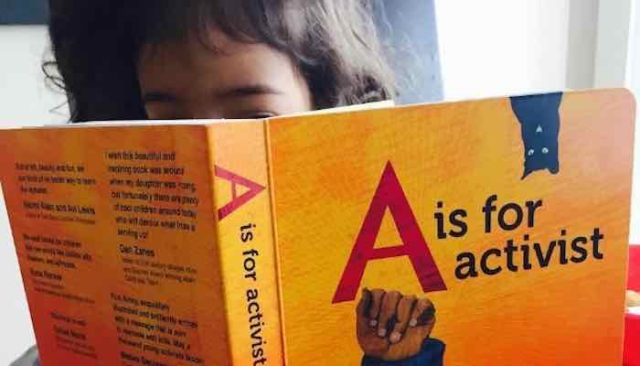
We were warned over 175 years ago that education could become a tool of indoctrination. Now it is undeniably being used as such.

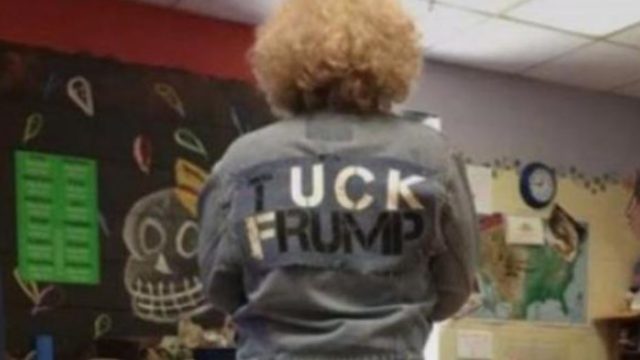
The above image is that of a jacket worn by a teacher in a West Virginia public school

The father of America’s public education system, Horace Mann, famously quipped: “Men are cast-iron, but children are wax.”

Mann knew that education was never a “value-neutral” proposition. It has always been and always will be a process that shapes not only a child’s abilities, but more importantly, the child’s worldview based upon the values of the educator. It was for this reason that many Americans pushed back, though unsuccessfully, against the kind of public, compulsory education Mann was championing in the early and mid-1800s. Continue reading