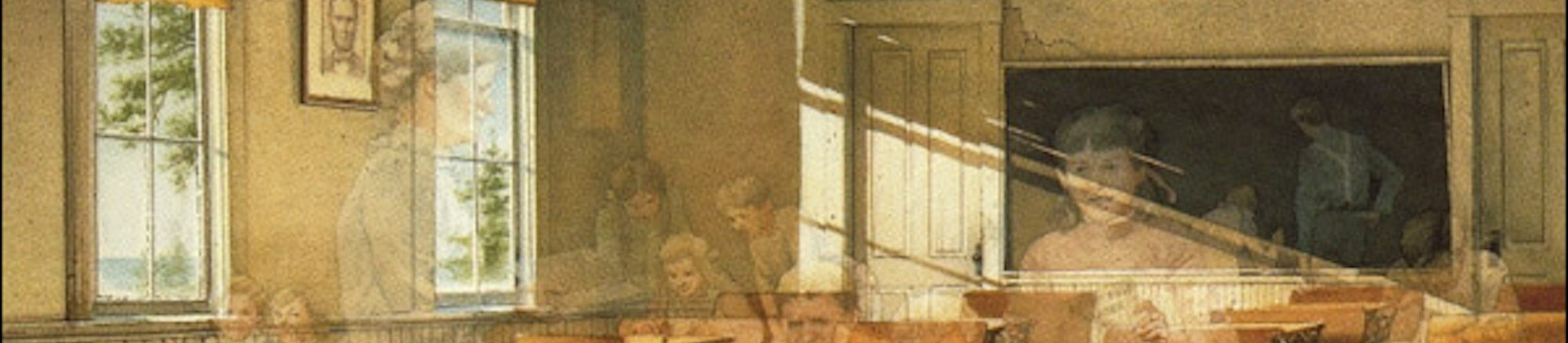
Minnesota public school forcing KINDERGARTEN students to study ‘WHITE privilege’
The city of Edina has changed the way it approaches public education, putting social justice above learning. The results will shock you.
 For decades, the public schools of Edina, Minnesota, were the gold standard among the state’s school districts. Edina is an upscale suburb of Minneapolis, but virtually overnight, its reputation has changed. Academic rigor is unraveling, high school reading and math test scores are sliding, and students increasingly fear bullying and persecution. Continue reading
 Sandwiched between preschool and first grade, kindergarteners often start school at very different stages of development depending on their exposure to preschool, home environments and biology. For states adopting Common Core, the standards apply to kindergarten, laying out what students should be able to do by the end of the grade.* Kindergartners are expected to know basic phonics and word recognition as well as read beginner texts, skills some childhood development experts argue are developmentally inappropriate.
 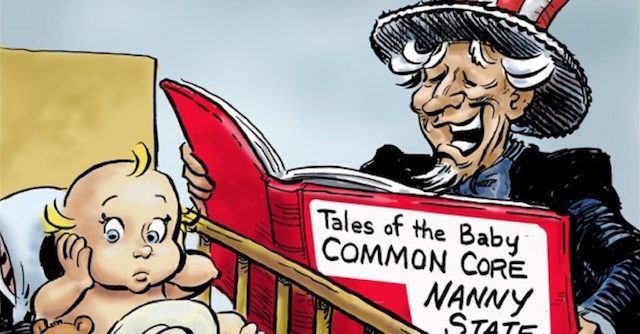 Mary McCarthy and Lillian Hellman, both famous literary left-wingers, had a famous feud. McCarthy dared to proclaim that Hellman was a Truly Big Liar.
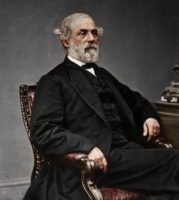 A few years after General Lee accepted the presidency of the then Washington College, I was sent to be entered in the preparatory department, along with an older brother who was to enter college. The morning after we reached Lexington we repaired to the office of General Lee, situated in the college building, for the purpose of matriculation and receiving instructions as to the duties devolving upon us as students. I entered the office with reverential awe, expecting to see the great warrior, whose fame then encircled the civilized globe, as I had pictured him in my own imagination. General Lee was alone, looking over a paper. He arose as we entered, and received us with a quiet, gentlemanly dignity that was so natural and easy and kind that the feeling of awe left me at the threshold of his door. General Lee had but one manner in his intercourse with men. It was the same to the peasant as to the prince, and the student was received with the easy courtliness that would have been bestowed on the greatest imperial dignitary of Europe.
 November 6, 2015 ~ Last week the Nation’s Report Card
 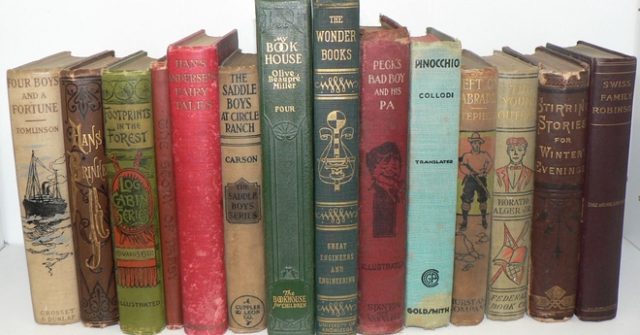 I recently dug up a 1908 curriculum manual in the Minnesota Historical Society archives. It provided instructions on everything from teacher deportment to recommended literature lists for various grades. As a book lover, I was especially interested in the latter!
 These courses, what little that is taught, are taught usually in high school. After the Revolutionary War we began teaching the history of our nation in early elementary school. Noah Webster stated: “Every child in America should be acquainted with his own country. He should read books that furnish him with ideas that will be useful to him in life and practice. As soon as he opens his lips, he should rehearse the history of his own country.” We were teaching catacisims out of the Constitution in 1828 to elemenatary students that Justices on the Supreme Court today couldn’t answer.
 Some years back, I decided I had to quit the teaching profession to which I had dedicated half my life. The modern academy, I felt, was so far gone that restoration was no longer possible. Indeed, I now believe that complete collapse is the only hope for the future, but as Woody Allen said about death, I’d rather not be there when it happens.
 I know I’ve repeated this quote before, but I’m going to keep repeating it until people take it to heart. In 1822 James Madison wrote the following in a letter to W.T. Barry, “Knowledge will forever govern ignorance: And a people who mean to be their own Governors, must arm themselves with the power which knowledge gives.” However, knowledge alone is not enough if it is not put to use. Is it enough to know that fire is hot if you do not utilize that knowledge by not putting your hand into a fire? As von Goethe said, “Knowing is not enough, we must apply.”
  While at a gathering of friends several months ago, I stopped to chat for a few minutes with a twelve-year-old boy whom I’ll call Davy.
 John Dickinson was among America’s most important founders. He was a colonial legislator, member of the Stamp Act, Continental, and Confederation Congresses, chief executive of both Delaware (by a 25 to 1 vote; his being the only opposed) and Pennsylvania, president of the 1786 Annapolis convention that led to the Constitutional Convention, and among the most informed and seasoned statesmen to attend it. Historian Forrest McDonald wrote that, but for Dickinson and a few others, “the resulting constitution would not have been ratified.”
  The notion of academic rigor has fallen on evil times. In a typical instance of continuing epistemic degradation, Donna Riley, of Purdue University’s School of Engineering Education,
  A poll of Tennessee voters shows overwhelming support for more school choice options in the Volunteer State.
 I have been in school for more than 40 years. First preschool, kindergarten, elementary school, junior high, and high school. Then a bachelor’s degree at UC Berkeley, followed by a doctoral program at Princeton. The next step was what you could call my first “real” job—as an economics professor at George Mason University.
 America is known as the “land of the free.”