
The Bonfire Lesson
 The fire had burned down to a bed of glowing coals that night, the way fires do when the wood has settled into embers and the heat rises steady and quiet. My grandkids sat around me in a loose circle, wrapped in blankets, their faces flickering with amber light, their eyes wide the way young eyes get when they sense that the old man is about to say something he’s never said before. The cicadas hummed in the trees, and the air smelled of maple and river birch smoke, and for a moment I felt the years folding in on themselves – all the decades I’ve lived in Murfreesboro, all the changes I’ve watched come and go, all the things I’ve held in my chest because no one seemed to want to hear them.
Nights like this don’t come often anymore – nights when the world slows down long enough for an old man to speak and for children to listen…
And maybe that’s why, when the youngest, the one who still believes the world is simple, looked up at me and asked – “Grandpa, why does everything feel so different now?” – it hit me harder than I expected, cutting straight to the bone. Children don’t ask questions like that unless they’ve already felt the answer in their bones.
I took a long breath, the kind that pulls memories up from places you don’t visit often. “Well,” I said, poking at the coals with a stick, “that’s a story. And not a short one.”
They leaned in, the way children do when they sense the truth is coming.
“When I was your age,” I began, “Murfreesboro was a different place, a town that made sense. Not better in every way – don’t let anyone tell you the past was perfect – but it was coherent and had a rhythm, a center of gravity. It made sense. You could walk down the square and know half the people you passed. People came here from all over the country, sometimes from other parts of the world, but when they arrived, they didn’t just bring their belongings. They brought a willingness to become part of something larger than themselves. And You could hear the courthouse bell and feel anchored to something older than yourself.”
I paused, letting the fire crackle in the silence.
“Back then, when people came here from somewhere else — whether it was Kentucky or Korea — they came with a certain understanding. They came to join something. They came to become part of the American story. They didn’t have to give up who they were, but they did have to add who they were to who we were.”
I looked at the kids, making sure they were following.
“You see, America isn’t held together by totally blood or tribe but from a shared culture we have built together, its virtues and principles, and our traditions, our language and American history. It’s held together by a promise — a civic promise — that anyone who comes here will join the same story. Not erase who they are but add to who we are. That’s what assimilation really means. It’s not about losing your roots. It’s about planting them in new soil.”
“That’s what assimilation really is. It’s not erasing your past. It’s choosing your future.”
I told them about the old neighborhoods — the ones with porches instead of privacy fences, where people sat outside in the evenings and waved at anyone who walked by. I told them about the Fourth of July parades, the county fairs, the way the whole town seemed to breathe in unison during football season.
“Those things weren’t just traditions,” I said. “They were glue. They held us together.”
The kids nodded, though I could tell they were still waiting for the part that explained the unease they felt in their own schools, their own neighborhoods.
So I went on.
“I’ve lived long enough to see what happens when that promise is forgotten,” I said. “When people come to America but don’t come into America. When they settle here but don’t join here. When they build enclaves instead of communities.”
I told them about the first time I noticed the shift, the day the glue holding America together began to loosen — not in a headline, not in a riot, but in a quiet town meeting years ago. A group stood up and demanded that the local schools change their curriculum to match the customs of the place they had come from. Not because the curriculum was unjust. Not because it violated any rights. But because it didn’t mirror their own worldview.
“That was the moment,” I said softly, “when I realized something had changed. Not in them – people have always brought their beliefs with them – but in us. In our leaders. In our willingness to say, ‘This is America. This is how we live together. These are the principles we share.’”
It was a town meeting — nothing dramatic, nothing violent. Just a group of people asking the school board to change the curriculum to match the customs of the place they’d come from. Not because the curriculum was wrong. Not because it violated any rights. But because it didn’t reflect their own worldview.
“I remember sitting there,” I said, “thinking, This is new. This is different. This is not how America works.”
The kids were quiet, listening.
I leaned back in my chair and looked at the stars. “They didn’t say it. They were afraid to.”
The kids shifted closer, the way children do when they sense the story is turning into something important.
“You know,” I said, “people talk about diversity like it’s a magic word. But diversity without unity isn’t strength. It’s strain. It’s pressure. It’s a rope pulled in too many directions.”
I told them how Murfreesboro had grown — new neighborhoods, new languages, new customs — and how much of that was beautiful. How new restaurants opened, new festivals appeared, new faces filled the sidewalks. But I also told them about the other side of it — the side no one likes to talk about.
“The trouble isn’t that people come here,” I said. “The trouble is when they come here and refuse to join the civic compact that makes this place work. When they want the freedoms but not the responsibilities. When they want the benefits but not the identity.”
I tapped the stick against the fire ring.
“And that night, I realized that some people were coming here without any intention of joining that identity.”
The oldest grandchild — the thoughtful one — asked, “But why does that matter so much?”
I smiled at him, because that’s the question every generation has to ask.
“It matters,” I said, “because a nation is like a campfire. It only burns bright when everyone gathers around it. If people start building their own fires off in the dark, the warmth fades. The light fades. The sense of togetherness fades.”
I let that sink in.
“What happens,” I said, “is what you’re seeing now. The country starts to feel like a patchwork of little nations instead of one big one. Schools change their rules to avoid offending this group or that group. City councils bend to the demands of enclaves instead of the needs of the whole community. People stop talking to each other because they don’t share the same civic language anymore.”
I sighed. “And when people stop sharing a civic language, they stop sharing a country.”
The fire popped, sending a shower of sparks into the night. I watched them rise and fade, and I thought about how many small sparks it takes to start a wildfire – and how many small surrenders it takes to unravel a nation.
I told them about neighborhoods where the American flag had quietly disappeared from porches, replaced by symbols of distant homelands. I told them about schools where teachers were pressured to avoid topics that might offend ideological enclaves. I told them about city councils where elected officials represented not the whole community, but the demands of a single bloc.
“These aren’t big explosions,” I said. “They’re small fractures. But enough small fractures can break anything.”
“You know,” I said, “civilizations don’t collapse all at once. They collapse slowly, quietly, politely. They collapse when leaders are too timid to defend the values that hold the place together. They collapse when citizens grow too polite to speak the truth. They collapse when groups refuse to assimilate — not because they’re necessarily all bad people, but because they’re human. People cling to what they know. Assimilation doesn’t happen by accident. It happens because a nation asks for it.”
I looked at each of them in turn.
“And somewhere along the way, America stopped asking.”
“Unity doesn’t mean sameness. It means agreement — agreement on the rules we live by, the rights we protect, the responsibilities we share.”
I leaned forward.
“And that agreement only works when people assimilate into the civic compact.”
The youngest one — the same one who’d asked the first question — tugged at my sleeve. “But Grandpa,” she said, “why does it matter so much?”
I smiled at her, the way you smile at a child who has asked the most important question of all.
“It matters,” I said, “because freedom isn’t automatic. It isn’t inherited like eye color. It isn’t guaranteed by geography. Freedom survives only when people believe in the same rules, the same rights, the same responsibilities. When they agree that no group gets to impose its ideology on everyone else. When they agree that the Constitution and our Founders’ original intent are the final words.”
I leaned forward, elbows on my knees.
“If people come here and refuse to join that agreement, the agreement falls apart. And when the agreement falls apart, the country falls apart.”
The fire had burned down to glowing coals now, steady and warm.
“That’s why assimilation matters,” I said. “Not because we want everyone to be the same. But because we want everyone to be free.”
The youngest tugged at my sleeve again. “But Grandpa,” she said, “why don’t people want to join the American story?”
I sighed, because that’s a question with no easy answer.
“Some do,” I said. “Many do. But some come here carrying the weight of the place they left — its customs, its laws, its ideologies. And they cling to those things because they’re familiar. Because they’re comfortable. Because change is hard.”
I paused.
“And because we stopped asking them to — we stopped demanding it of all the newcomers.”
Their eyes widened.
I shook my head.
“We were wrong.”
The fire was low now, glowing like a heartbeat.
“You see,” I said, “assimilation doesn’t happen by accident. It happens because a nation expects it. Encourages it. Teaches it. But somewhere along the way, America stopped doing that in our schools and in the public square. We told ourselves it was rude to ask newcomers to join our civic identity. We told ourselves it was oppressive to expect unity. We told ourselves that a nation could survive without a shared story.”
I looked at them – really looked.
“And when groups refuse to assimilate into those principles, the principles weaken. And when the principles weaken, the country weakens.”
The kids were quiet for a long time after that. The kind of quiet that means they’re thinking, really thinking.
And I realized, as I sat there watching the embers pulse like a heartbeat, that this was the conversation I’d been waiting decades to have — not with politicians, not with pundits, but with the next generation. The ones who will inherit whatever we leave behind.
“I’m telling you all this,” I said finally, “because you deserve to know what’s at stake. You deserve to know that a nation survives only when its people — all its people — choose to become part of it. You deserve to know that assimilation isn’t a burden. It’s a gift. It’s the thing that turns strangers into neighbors and neighbors into citizens.”
I left them with a stark warning.
“But also understand that a large number of people on our shores seek to use both legal and illegal immigration like a weapon, intending to overrun and overwhelm Her with enemies from abroad who aim to destroy America. And there may come a time when they visit war upon you and your loved ones, and you must fight with all that’s in you – with every means at your disposal — to cast them from your land or kill them where they stand.”
I stood up slowly, my knees protesting the way old knees do.
“And you deserve to know that I still believe in this country. I believe in it enough to tell you the truth. I believe in it enough to hope that you’ll carry the civic compact forward, even if others forget it.”
The fire crackled one last time, as if agreeing.
“America,” I said, “is worth holding together — however you can.”
And the children nodded – not because they understood everything, but because they understood enough.
March 9, 2026
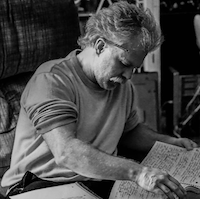
Justin O. Smith ~ Author
~ the Author ~
Justin O. Smith Has Lived in Tennessee Off and on Most of His Adult Life, and Graduated From Middle Tennessee State University in 1980, With a B.S. And a Double Major in International Relations and Cultural Geography – Minors in Military Science and English, for What Its Worth. His Real Education Started From That Point on. Smith Is a Frequent Contributor to the Family of Kettle Moraine Publications.