The African Slave Trade ~ Profits and Prosperity
The Evening Post, the New York Tribune, and other anti-slavery journals in this city are discharging themselves of such a mass of special and minute information about the movements of slavers, and the activity of the slave trade in New York, New London, New Bedford and Boston, that it seems highly probable they are stockholders or secret agents in the business.
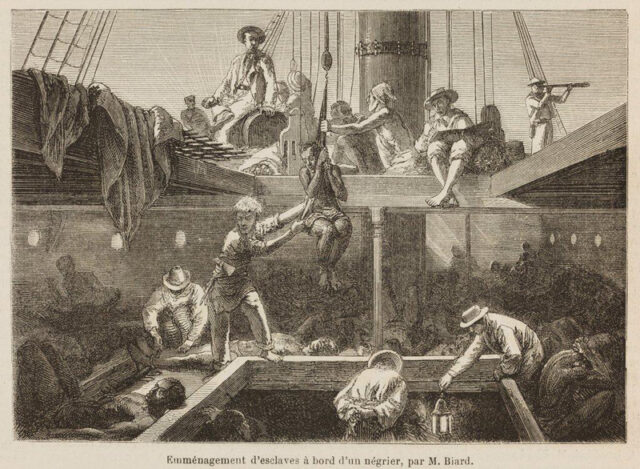
These ports, in which the slavers are fitted out belong to the most rabid anti-slavery States, and there can be no doubt that the vessels are the property of the Republicans in those several places. The profits of the trade are so great that they can well afford to contribute a hundred thousand dollars or more towards the election of an anti-slavery President [Lincoln]. From lists published a short time ago In the Post and Tribune, it appeared that eighty-six* slavers had Sailed from this port and the other ports we have mentioned, and from other cases since reported, the number cannot be now far short of one hundred sail. The net proceeds on a cargo of five hundred slaves are at the lowest estimate $100,000, which is only an average profit of $200 per head. The sum of the profits of the “blackbird fleet” at one hundred vessels would therefore amount to ten millions of dollars, and this estimate makes an allowance of five million for expenses and losses.
From facts and figures it is evident that it is a most profitable, prosperous business, and accordingly we are informed by the Post that steamships are about to give new activity to the traffic, and that they will be packed with some 3,000 negroes, whose aggregate prices would sum up about a million of dollars. One instance is mentioned by both our anti-slavery contemporaries, of 450 negroes being landed on the 30th of June from an American bark, and sold publicly in the streets of Trinidad at an average of $650 each. The gross proceeds of this cargo would be $292,500, which, for one hundred “blackbirds.” Would amount to upwards of twenty-nine millions of dollars, leaving a clear profit of from twenty to twenty-five million. It is added, in the Post, that the Governor of Trinidad received in this transaction $30,000 hush money.
Now, it may be fairly asked, how those who are not implicated or interested in the trade themselves can be so well posted in this matter of bribery, or make up the lists of slavers which have appeared in their journals? How can they be so minutely informed of the names of the vessels, their captains, the ports from which they have sailed, the number of slaves they land, the prices received for them, and the “hush money” to corrupt Governors, unless they are secret partners in the trade? If they are possessed of all this information, they must have known of the fitting out of every vessel before she sailed. Why did they not give information to the authorities before the bird had flown, unless they had an interest in concealing her flight till it was too late. Once these ships bare made their voyages and landed their cargoes, and the owners have realized fortunes, they or their agents may then inform the public that such operations were made, the legal evidence against those concerned being no longer in existence.
They can thus afford to be severe in their denunciations of the slave traffic, and call it “infernal,” having the prices of the Africans in their pockets, or snugly deposited to their credit in banks, and they can also afford to bleed copiously for the purchase of campaign documents to secure the election of Old Abe Lincoln. Like sleek Joseph Surface, in the “School for Scandal,” who zealously preached up sentiments of morality to his wild brother Charles at the very moment that he had Sir Peter Teazle’s wife concealed for a criminal purpose in his room, the anti-slavery loaders are most enthusiastic against the slave traffic at the very time that they are enjoying its profits and doing a thriving business In human flesh.
The New York Herald, August 10, 1860, Page 4
Transcribed by Bobby Edwards, September 19, 2018

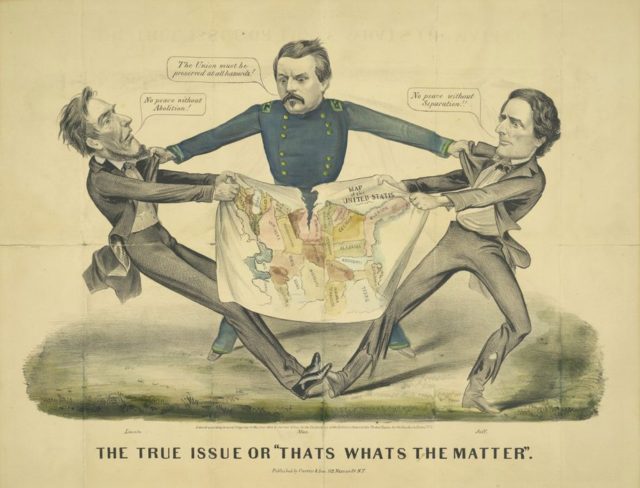 Grant defeated Lee, the Confederacy crumbled, and the idea of secession disappeared forever, or at least that’s what the conventional wisdom says. Secession is no historical irrelevance. Quite the contrary, the topic is integral to classical liberalism. Indeed, the right of secession follows at once from the basic rights defended by classical liberalism. As even Macaulay’s schoolboy knows, classical liberalism begins with the principle of self-ownership: each person is the rightful owner of his or her own body.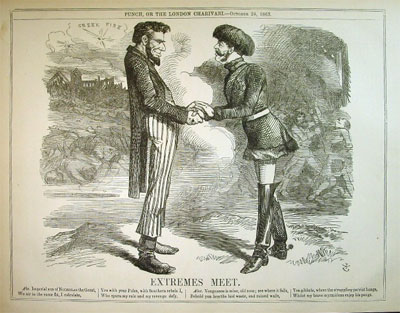
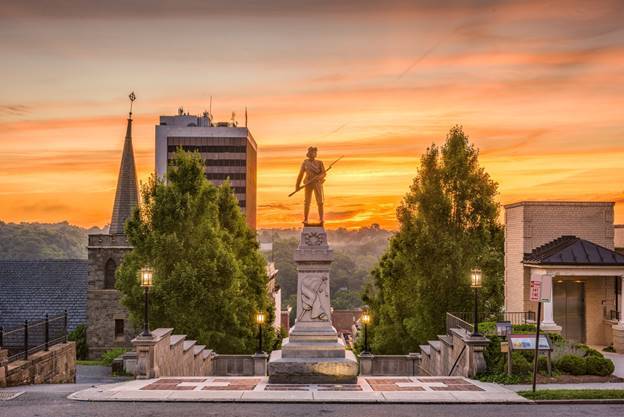 Silent Sam, the statue on the campus of the University of North Carolina, Chapel Hill, was gleefully pulled from its pedestal by a mob, August 20th. Former alumni, as well as citizens across the state, were outraged at the lawless act and the justifications given for it.
 Some of you may get angry at me for what I am about to say. Some of you may feel insulted. I don’t care; if I did, I wouldn’t say it. If you have either reaction and decide, because of your reaction, not to finish reading this article, understand that you will only be proving what I say to be true.
 August 20, 2018
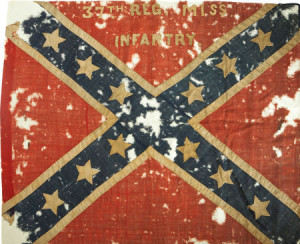 I am the Confederate Battle Flag. My design is based upon the Saint Andrew’s Cross of Scotland. Some prefer to call me the “Rebel Flag”. Either name I will wear with honor. There is certainly no shame in being called Confederate, as the people who bore that same honorable title are remembered for their bravery on the field of battle, a Southern culture built upon hard work, and faith in God. As for the name “Rebel”, it was the Revolutionary War soldier and outstanding pamphleteer, Thomas Paine, in his series “The American Crisis“, said: “Let them call me Rebel and welcome — I feel no concern from it“. Because you see, it was George Washington and his Colonial Army who were the original Rebels. My boys in gray were the second to wear the name.
 February 26, 2012
 Gadsden was a successful and influential Charleston, South Carolina businessman and Statesman. He was an early advocate of Independence and engaged in the creation of the South Carolina Constitution. Elected Governor in 1782 he refused to serve on ground of ill health but remained actively involved in State affairs opposing States consolidation.
 We have proven in the past, the vast majority of Confederate soldiers were the sons and grandsons of Revolutionary War citizen-soldiers, heroes, statesmen and patriots. They learned the Constitution at home by the ones who won it.
 Quite often the “history” books in public schools are “interesting” as much for what they leave out as for what they include.
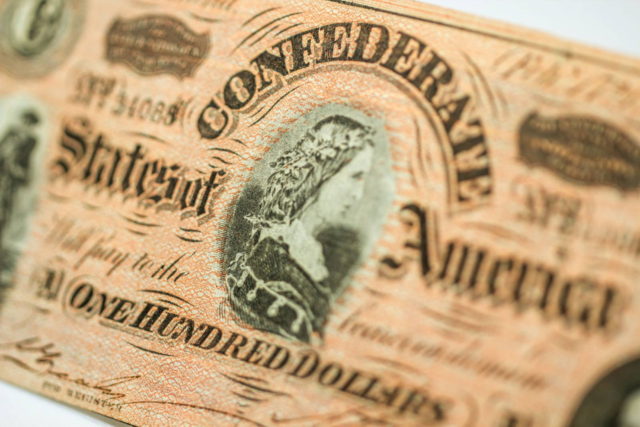 The Chart attached below shows the Annualized Confederate Inflation Rate. The Annual Inflation Rates are calculated from information provided by the Richmond Civil War Centennial
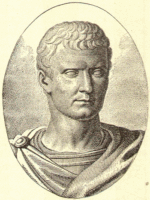 I begin with this remark of the celebrated Roman historian Livy, written 2,000 years ago:
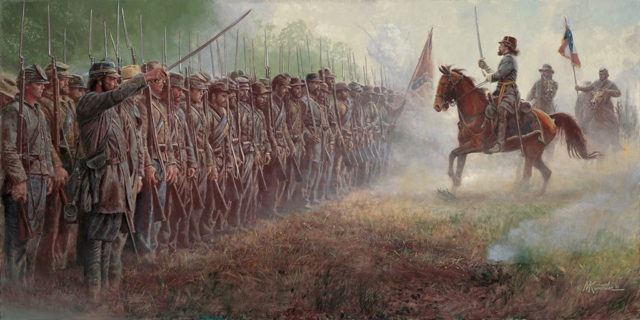 “It’s all now you see. Yesterday won’t be over until tomorrow and tomorrow began ten thousand years ago. For every Southern boy fourteen years old, not once but whenever he wants it, there is the instant when it’s still not yet two o’clock on that July afternoon in 1863, the brigades are in position behind the rail fence, the guns are laid and ready in the woods and the furled flags are already loosened to break out and Pickett himself with his long oiled ringlets and his hat in one hand probably and his sword in the other looking up the hill waiting for Longstreet to give the word and it’s all in the balance, it hasn’t happened yet, it hasn’t even begun yet, it not only hasn’t begun yet but there is still time for it not to begin against that position and those circumstances which made more men than Garnett and Kemper and Armistead and Wilcox look grave yet it’s going to begin, we all know that, we have come too far with too much at stake and that moment doesn’t need even a fourteen-year-old boy to think This time. Maybe this time with all this much to lose than all this much to gain: Pennsylvania, Maryland, the world, the golden dome of Washington itself to crown with desperate and unbelievable victory the desperate gamble, the cast made two years ago; or to anyone who ever sailed a skiff under a quilt sail, the moment in 1492 when somebody thought This is it: the absolute edge of no return, to turn back now and make home or sail irrevocably on and either find land or plunge over the world’s roaring rim.” ~
 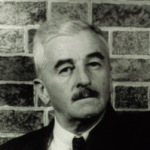 ~ Author ~
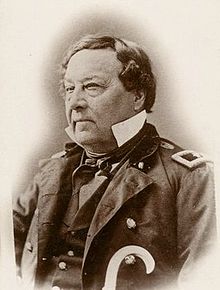 The first place I ever read anything about Benjamin Bonneville was in a historical fiction novel by Janice Hold Giles, published back in 1968, called The Great Adventure.