 When schools reward repetition over reasoning, speech is the first casualty.
What “like,” homeschooling, and the loss of rhetoric reveal about modern education.
The overuse of “like” is not lazy speech; it is the sound of thought struggling to keep pace with a culture that rewards reaction over reflection.
The growth of homeschooling makes that question harder to dismiss. Once treated as a marginal alternative, home education has become a serious response among families who no longer trust large institutions to cultivate attention, judgment, and speech with sufficient care. Its rise is not only a story about parental preference or educational politics. It is also a warning. When enough parents begin seeking smaller, slower, more deliberate settings, they are saying something about what the ordinary classroom has struggled to protect.
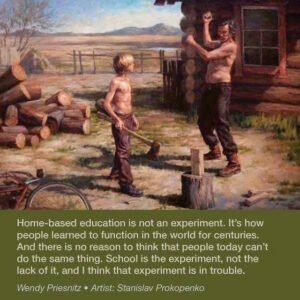
Homeschooling is not a cure-all, and it should not be romanticized any more than classical education. A home can repeat the same mistakes as a school: memorization without reasoning, reaction without reflection, opinion without discipline. But at its best, homeschooling reveals what education requires at any scale: time for conversation, room for questions, adults who can listen closely, and daily practice turning scattered impressions into ordered thought. That is why it belongs in this argument. The issue is not merely where children are educated, but whether any setting still teaches them to think before they speak.
That question also prevents the homeschooling discussion from becoming merely defensive. The point is not to retreat from public life into private enclaves, nor to pretend that every parent is prepared to provide what every school has failed to give. The deeper point is that education requires an intimacy of attention that bureaucratic systems often struggle to sustain. Someone has to notice when a child is repeating words without understanding them, when fluency masks confusion, when confidence supplants evidence, and when silence would be more honest than performance. Whether that person is a parent at the kitchen table or a teacher in a crowded classroom, the work is the same: to slow the child down long enough for language to become thought rather than noise.
The overuse of “like” is not lazy speech; it is the sound of thought struggling to keep pace with a culture that rewards reaction over reflection.
~ The Symptom: “Like” ~
Sit through a meeting, a seminar, a podcast interview, or a classroom discussion long enough, and the pattern emerges. Intelligent people with real ideas begin to reach for “like” again and again – not to add meaning, but to provide insulation. The word cushions uncertainty, buys time, and keeps the speaker moving before thought has fully formed.
That small verbal habit points to something larger: a culture in which speech is often pressured to move faster than thought.
Schools did not create this problem alone, but they are where its consequences are most severe. If language is supposed to make thought visible, the collapse of clear speech should trouble every classroom.
Linguists rightly note that “like” can be useful. It can signal a quotation, soften a claim, approximate a value, or hold the floor while a speaker gathers the next thought. But usefulness is not the issue. Frequency is. When “like” appears every few seconds, it stops supporting the sentence and starts smothering it.
When speech loses structure, thought is not left untouched.
Here, rhetoric does not mean empty slogans, political spin, or manipulative speech. It means the classical art of arranging thought for clear expression: making a claim, supporting it with reasons, addressing objections, and choosing words suited to truth, audience, and occasion.

The Founding Fathers stressed the importance of an educated citizenry, based on knowledge and virtue. ~ Biba Kayewich
You hear it in adult speech every day. A manager says, “We’re trying to align the team around, like, a clearer strategy.” A podcast guest explains, “It was this huge moment for me, and I was, like, not ready for it.” A parent at a school meeting says, “I just feel like, if we could communicate better, the kids would know what to expect.” None of these speakers is necessarily confused. The repeated “like” is doing something subtler: padding uncertainty, softening commitment, and buying time in a culture where everyone feels pressure to keep talking.
The effects are cumulative. Overusing “like” makes confident ideas sound tentative, precise observations sound vague, and serious claims sound unfinished. It can weaken a speaker’s authority in a meeting, distract listeners during a presentation, and make an otherwise thoughtful argument harder to follow. The listener begins to hear the verbal static rather than the message. Over time, the speaker may also become dependent on the crutch, losing comfort with silence, hesitation, and the slower rhythm of deliberate thought.
“Make sure your brain is in gear before you engage your mouth.”
That old advice may sound blunt, but it names the problem perfectly. Filler words multiply when the mouth outruns the mind. “Like” buys a fraction of a second while the next thought forms, but a speaker who keeps buying time never quite gets to the point. Maybe that is precisely the point.
~ The Pressure: Cognitive Overload ~
Get your children OUT of the System – NOW – and keep them OUT!
The problem is not that speakers have nothing to say. Often, they have too much to say too quickly. Adults and students alike are juggling social pressure, professional expectations, peer judgment, digital comparison, and the need to sound informed, all at once. “Like” becomes a pressure valve. It keeps the sentence moving while the thought catches up. But when the valve opens too often, the idea disappears beneath the hiss.
That is cognitive overload in everyday speech, and it is not confined to students. A person speaking in public, answering a question at work, recording a video, or navigating a difficult conversation is not simply retrieving information. That person is juggling memory, language, tone, confidence, self-presentation, and the audience’s reaction. Add short-form video, fragmented texting, nonstop notifications, and social media performance, and we should not be surprised that many speakers have learned to react before they reflect. The mouth reaches for speed. The mind asks for time. “Like” fills the gap.
This does not make young people less intelligent, nor does it make adults more articulate by default. Everyone is swimming in the same informational flood. Students search, compare, reference, and respond with astonishing speed because the broader culture expects all of us to do the same. What many speakers lack is not capacity but discipline: the discipline to slow information into thought and thought into clear speech.
Nowhere should that pressure concern us more than in schools, where language is supposed to make thought visible.
~ The System: What Schools Reward ~
The same disorder appears most clearly in schools because education is where speech, thought, and formation are supposed to converge. Yet the modern teacher’s role has been narrowed. In theory, teachers are asked to cultivate critical thinkers. In practice, they are often required to function as managers of measurable learning: facilitators, assessors, data collectors, platform monitors, intervention documenters, and compliance officers. The classroom becomes less a workshop of judgment than a production line for evidence.
 Too often, modern education rewards students for producing the right answer rather than for learning how to form, test, defend, and express an idea. That reward structure rarely stems from teachers deciding that thinking no longer matters. It stems from the machinery around them. Standards, pacing guides, test calendars, benchmarks, rubrics, curriculum platforms, parent portals, and performance evaluations all push instruction toward what can be counted quickly. The system asks for proof: a score, a proficiency level, a completed assignment, a documented intervention.
Under that pressure, even excellent teachers are pushed toward coverage over contemplation. It becomes harder to let a student wrestle aloud with an answer, revise a weak claim, sit in silence, or defend an idea through questioning. Slow thinking is hard to schedule. Oral reasoning is hard to grade. A conversation that forms judgment may not yield a clean data point by the end of the period. So the visible product wins: the worksheet finished, the standard checked, the assessment uploaded.
Students internalize that lesson. They learn to complete before they contemplate, to answer before they examine, to perform understanding before they possess it. This is not because teachers are indifferent. It is because the system often rewards motion over mastery. The bell schedule moves, the unit plan moves, the testing calendar moves, and eventually the student’s speech begins to move the same way: fast, padded, defensive, and unfinished.
 When schools abandon the mechanics of thinking – logic, rigorous debate, and formal rhetoric – students lose regular practice in structuring independent arguments. In their place, they may learn to memorize accepted answers, repeat institutional buzzwords, and soften every statement with verbal fillers like “like” to stay safely within the boundaries of social approval.
What gets lost in that system is not merely eloquence; it is the discipline that teaches students to arrange their thoughts.
That is the teacher’s irreplaceable impact. Technology can deliver content, grade quizzes, generate summaries, and track performance. It cannot sit with a student in the struggle to form a thought. A teacher can hear uncertainty in a sentence, press past evasion, ask for evidence, demand a clearer verb, wait through silence, and teach the student that precision is not decoration but discipline. At their best, teachers do not simply move students through material. They help students become the kind of people who can think, speak, and judge well.
~ The Lost Art of Rhetoric ~
Classical education imagined the teacher differently. The teacher was not merely a manager of learning tasks but a steward of formation. The old model assumed that students had to be formed in the mechanics of thought before they could be trusted to express opinion. Grammar gave students command of language. Logic taught them to distinguish sound reasoning from contradiction, sentiment, and slogans. Rhetoric taught them to arrange an argument, choose words carefully, and persuade without dissolving into noise. Memory, attention, imitation, debate, and moral judgment were not decorative extras; they were at the center of the work.
In that tradition, students did not begin by broadcasting their reactions. They began by absorbing forms: sentences to imitate, arguments to study, speeches to memorize, questions to debate. They learned that freedom of thought was not the same as impulsive expression. A student earned intellectual independence by first learning how disciplined minds had organized language before them.
 That older style could be rigid, narrow, and overly reliant on authority, so it should not be romanticized. But it understood something modern education often forgets: knowledge is not fully possessed until it can be expressed with order and judgment. A student who cannot explain an idea clearly has not yet mastered it. A student who cannot pause, choose words, define terms, answer objections, and make a claim has not yet learned to command the thought.
Classical rhetoric gave students practical patterns for speech and writing. A student might learn to begin with a clear thesis, define the terms of the question, present reasons in order, anticipate an opponent’s strongest objection, and close by showing why the conclusion follows. In a debate, that meant answering the argument rather than insulting the opponent. In a speech, it meant arranging the introduction, proof, refutation, and conclusion so the listener could follow the line of thought. In writing, it meant turning scattered impressions into claims that could be tested.
This is why formal rhetoric mattered. It moved students beyond “I feel like” and into “I claim,” “I support,” “I concede,” and “I conclude.” Rhetoric gave speech a skeleton: a claim, reasons, evidence, acknowledgment of opposing views, and a conclusion that follows from what came before. Rather than letting language spill out as a reaction, rhetoric required speakers to arrange their thoughts before releasing them. The sentence became a road, not a fog.
It also cultivates precision. A rhetorically educated student learns to define terms, choose verbs carefully, distinguish assertion from proof, and adjust tone to audience and occasion. That discipline does not eliminate emotion; it helps emotion serve meaning rather than replace it. Clear speech is not merely clean pronunciation. It is the result of ordered thought, appropriate tone, and verbal restraint working together.
Rhetoric also gives students the courage to disagree. When a speaker knows how to build a claim and address objections, disagreement becomes less frightening because it has a form. The student learns to say, “I understand your point, but the evidence suggests something else,” or “I agree with the concern, but not with the conclusion.” Disagreement stops being a social emergency and becomes an intellectual exchange. The speaker is no longer relying on approval, verbal padding, or institutional buzzwords to survive the conversation.
Debate required students to confront counterarguments. Recitation strengthened memory and presence. Composition forced vague impressions into ordered sentences. The point was not polish for its own sake; it was intellectual discipline made visible through speech.
This matters because many students now treat disagreement as a personal threat rather than a shared inquiry. Rhetoric teaches them to separate the person from the proposition. It asks, What is the claim? What is the evidence? What assumption is hidden beneath? What counterargument deserves a response? These questions make disagreement clearer and less performative. They move students away from vague phrases like “I just feel like” and toward accountable language: “My reason is,” “My evidence is,” “My objection is,” and “Here is where the argument fails.”
In public life, the same failure can be even more alarming. When people are not trained to disagree clearly, disagreement does not disappear; it often becomes cruder, louder, and more theatrical. Public arguments collapse into screaming expletives, intimidation, or violent protest. The person who cannot structure an objection may instead resort to volume. The crowd that cannot argue a case may try to make disruption stand in for persuasion. This is not passion elevated by conviction; it is conviction deprived of disciplined speech.
This is where rhetoric can reduce polarization and where education matters most. When students learn to name a claim, define terms, test evidence, concede a fair point, and answer an objection, slogans lose some of their power. Repetition no longer has to stand in for reasoning. A memorable phrase may still stir emotion, but a rhetorically trained student knows to ask: What does the slogan actually claim? What evidence supports it? What does it leave out? Who benefits if no one questions it?
That habit slows polarization at its source. It teaches students that disagreement is not automatically hatred and that correction is not betrayal. They can recognize when a phrase has become a badge of belonging rather than a tested idea. They can challenge a classmate’s argument without reducing the classmate to an enemy. They can admit a partial truth without surrendering the whole case. Rhetoric does not eliminate conflict; it gives conflict a civil structure.
A classroom that teaches rhetoric is therefore a small defense against tribal thinking. It helps students move beyond repeating the approved phrase and toward examining the argument beneath it. The goal is not to make every student agree. The goal is to give them enough intellectual discipline to disagree clearly, listen carefully, and remain in conversation after the first collision of ideas.
~ The Cultural Consequence ~
But the need for rhetoric does not end at the classroom door. The classroom is simply where the habit should begin. The same failure of thought and language follows us into boardrooms, family arguments, interviews, public meetings, comment sections, and political rallies. Adults repeat phrases they have not examined. Colleagues soften half-formed claims with “like.” Neighbors talk past each other, answering slogans instead of arguments. The problem becomes human, not merely academic.
Much of everyday life now depends on repetition. We repeat the line from the news segment, the phrase from the meeting, the slogan from the feed, and the fashionable response from the group we want to belong to. Repetition can teach, but it can also anesthetize. A phrase heard often enough begins to feel like truth. A verbal habit used often enough begins to feel like thinking. That is how “like,” slogans, buzzwords, and rehearsed outrage all become substitutes for the slower work of forming judgment.
This is why education still matters beyond the classroom. A school that teaches rhetoric is not merely producing better students. It is preparing better coworkers, spouses, parents, citizens, leaders, listeners, and neighbors. People who know how to make a claim, hear an objection, concede a point, and revise a sentence are less likely to treat every disagreement as a war. They are better equipped to live with others without surrendering either conviction or civility.
~ The Recovery ~
Recovery begins where the damage began: in the habits of speech, thought, and attention.
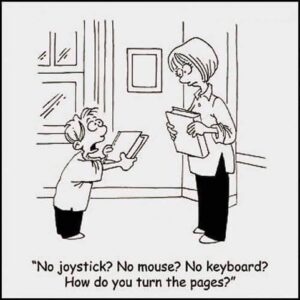
The answer is not to shame students every time they say “like.” Shame rarely improves speech; it usually produces less speech. The answer is practice and awareness. Ask students to outline before answering. Have them rehearse aloud before presenting. Let them record themselves and listen back. Teach them to replace fillers with deliberate pauses. Show them the difference between casual conversation and formal communication. Even a playful “like jar,” borrowed from the old office swear jar, could make the habit visible: each unnecessary “like” costs a dollar, a token, or a tally mark – not as punishment, but as a reminder that words have weight. These are not cosmetic skills. They are thinking skills made audible.
 Restoration does not mean indoctrination. It means rebuilding the habits that make free thought possible. People are not renewed by slogans against slogans or by swapping one approved script for another. Those habits return through practice: pausing before answering, defining terms, identifying the claim, testing evidence, listening long enough to understand an objection, and speaking without hiding behind filler, rage, or repetition. A culture does not become less polarized because everyone is told to be nicer. It becomes less polarized when people regain the discipline to think before they repeat, argue before they accuse, and speak before they shout.
The cultural impact of that kind of restoration would be greater than better classroom answers or cleaner presentations. Families would argue with more patience because people would know how to name the real issue rather than circling it with accusation. Workplaces would waste less time on buzzwords because employees would have more practice saying what they mean, asking better questions, and challenging weak ideas without turning meetings into status contests. Public life would become less theatrical because citizens would have practiced distinguishing conviction from performance. Even online conversation would change if more people had learned to pause before repeating, define before attacking, and answer the strongest version of an opposing argument.
This would not create a society without conflict. That is neither possible nor desirable. Free people will argue, disagree, revise, and collide. The point is not to make everyone sound polite while thinking the same approved thoughts. It is to recover the habits that keep disagreement human: patience, clarity, evidence, proportion, humility, and the courage to be corrected. A culture that regains those habits does not become less passionate; it becomes less easily manipulated by noise.
These practical remedies matter only because they point back to education’s broader purpose. Education is not merely the transfer of information, the completion of assignments, or the production of measurable outcomes. At its best, it cultivates the habits that make a person free: attending carefully, remembering honestly, reasoning soundly, speaking clearly, listening charitably, and judging wisely. A person who can do those things is harder to manipulate, harder to intimidate, and harder to reduce to a slogan.
What is education for: forming leaders or producing compliance? A civilization does not survive by teaching its children what to repeat; it survives by teaching them how to reason. A society that forgets this will not merely produce weaker students; it will produce louder citizens, thinner arguments, and communities less able to reason together. Education is where a people learn to inherit freedom without wasting it. When schools cultivate memory without judgment, speech without order, and opinion without responsibility, the public square fills with noise. But when they teach people to think clearly, speak truthfully, and listen courageously, they give society something far more valuable than information: not merely knowledge, but wisdom.
That is the work of education: not the manufacture of answers, but the formation of minds capable of wisdom.
Two older voices state plainly what modern education must remember.
“Education is not the filling of a pail, but the lighting of a fire.” — William Butler Yeats (debated attribution)
“The general principles of any study you may learn by books at home; but the detail, the color, the tone, the air, the life which makes it live in us, you must catch all these from those in whom it lives already.” — John Henry Newman
For the Amalgamated Heavy
‘The devil you say…‘

September 7, 2026
~ the Author ~
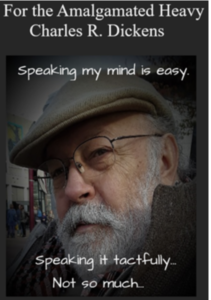 Charles R. Dickens Was Born in 1951, Is a Veteran of the Vietnam War, for Which He Volunteered, and the Great-Great Grandson of the Noted Author, Whose Name He Shares.
He Is a Fiercely Proud American, Who Still Believes This Is the Greatest Country on the Planet, With Which We’ve Lost Control and Certainly Our Direction. He Grew Up in Moderate Financial Surrounding; We’re Not Rich by Any Stretch, but Didn’t Go Hungry – His Incredibly Hard Working Father Saw to That. As Most From That Era, He Learned About Life From His Father, Whose Story Would Take Too Long to Tell, Other Than to Say That, He Is Also a Fiercely Proud American; A WWII and Korean War, Veteran Marine.
Charlie Was Educated in the Parochial System Which, Demanded That You Actually Learn Something, and Have Capability to Retain It Before You Advance. He Attended Several Universities in Pursuit of a Bachelor’s Degree, and Chased the Goose Further to a Master’s, and Has Retained Some Very Definite Ideas About Education in This Country.
in Addition, Charlie Is a Retired Blues Guitar and Vocalist – a Musician. This Was His Therapy Career. Nothing Brings Him as Much Joy as Playing Music, and He Wishes That He Could Make a Living at It… but Alas… Life Goes on!