
The following piece is not one that I would usually publish as it relates more to Public Schools – however – there are lessons included that should still relate to Homeschooling. ~ Editor
 “Ours may become the first civilization destroyed, not by the power of our enemies, but by the ignorance of our teachers and the dangerous nonsense they are teaching our children”. ~ Mr. Thomas Sowell
School used to come with a little more survival built into the walls. Kids learned how to read a long chapter without checking their phones, balance a checkbook without panicking, and cook something beyond noodles.
Write a thank-you note, debate without melting down, and maybe even fix a wobbly chair before declaring it “broken forever.”
Now, many students can navigate five apps before breakfast, but some still leave school unsure how credit card interest works, how local government affects their lives, or how to spot a fake story dressed up like breaking news.
That gap matters. The Nation’s Report Card showed that fourth-grade reading scores in 2024 were lower than in 2022 and 2019, and only 31% of fourth graders scored at or above proficient in reading. Math scores have also not fully returned to pre-pandemic levels.
~ Civics That Teaches Kids How Power Works ~
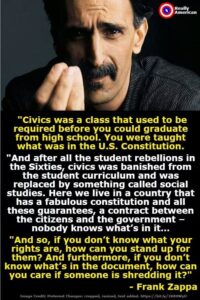 A student can graduate knowing the plot of three novels, the slope formula, and the phases of mitosis, yet still struggle to explain what a city council does. That is a problem because democracy is not a spectator sport.
Kids need to know how laws are made, how school boards shape their daily lives, why local elections matter, and how courts, Congress, governors, mayors, and presidents actually fit together.
The good news is that civic knowledge has improved in some areas. The Annenberg Public Policy Center found in 2025 that 70% of U.S. adults could name all three branches of government, up from 65% in 2024.
The bad news is that only 40% could name three or more First Amendment rights, and 18% could not name any. Kids need civics that feels alive, not dusty.
They need mock elections, public meeting projects, media analysis, and real lessons on how ordinary people challenge bad rules before they become permanent problems.
~ Money Lessons Before the First Bad Credit Card ~
 Too many teenagers learn about money the hard way, through overdraft fees, payday loans, credit card balances, car payments, and student debt documents that look like they were written by a villain with a calculator.
Personal finance should not be treated like a bonus lesson squeezed in after testing season. It should be as normal as algebra because every student will eventually deal with rent, taxes, savings, insurance, wages, debt, and bills.
The Council for Economic Education says its Survey of the States tracks K-12 economic and personal finance education across all 50 states and Washington, D.C.
Its 2026 update notes that personal finance education continues to gain popularity as states expand access and strengthen requirements.
That momentum is encouraging, but kids still need practical, repeated lessons. They should leave school knowing how compound interest can help them build wealth or quietly bury them, why minimum payments are dangerous, and how to read a paycheck without feeling like they need a translator.
~ Media Literacy for a World Full of Traps ~
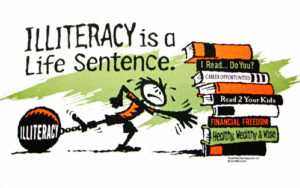
Learn to READ and Do NOT forget how!
The internet is no longer a library. It is a carnival mirror with sponsored posts, deepfakes, rage clips, fake experts, AI-written nonsense, conspiracy bait, and perfectly edited half-truths fighting for attention.
Kids do not just need to “use technology.” They need to question it, challenge it, and understand who profits when they believe the wrong thing.
The National Association for Media Literacy Education reported in its 2024 Snapshot that time and resources remain major barriers to teaching media literacy, even though educators surveyed reported spending an average of 11 hours per week intentionally teaching it.
The National Association of State Boards of Education also argues that media literacy should cover safety, civility, information analysis, and civic voice, especially as generative AI raises the stakes for digital footprints and misinformation.
Students need to know how to check sources, spot manipulation, verify images, and pause before sharing the kind of post that makes everyone angry and nobody smarter.
~ Home Economics That Makes Adulthood Less Terrifying ~
There is something wild about sending a teenager into adulthood after years of school without making sure they can cook a basic meal, compare grocery prices, sew a button, clean safely, plan a weekly budget, or understand nutrition beyond vague talk about “healthy choices.”
Home economics got mocked for years as old-fashioned, but the best version of it was never about nostalgia. It was about competence.
Kids need life skills to live with dignity. They should understand meal planning, food waste, kitchen safety, laundry care, basic childcare, household budgeting, and the difference between cheap and good value.
These lessons matter even more when grocery prices and rent take bigger bites out of young people’s paychecks. A student who can pass a standardized test but cannot feed themselves without burning money on takeout has not been fully prepared for life.
~ Handwriting That Still Has a Place ~
 Cursive became a symbol of old-school education, and for a while, many people acted like keyboards had made it useless. Then reality got awkward. Students still need signatures.
They still encounter handwritten notes, family letters, historical documents, legal records, old recipes, and forms where neat writing matters. Handwriting also teaches patience, control, and attention in a world that keeps trying to rush every thought onto a screen.
Some states have started bringing cursive back. Education Week reported in 2024 that 24 states had some form of requirement for cursive instruction, up from 14 a decade earlier.
This does not mean kids need to write every essay by hand or spend years perfecting loops like tiny calligraphy monks.
It means they should be able to read cursive, sign their name confidently, and write clearly enough that another human being does not need forensic training to understand the sentence.
~ Shop Class and Skilled Trades ~
 For a long time, America pushed the idea that success meant a four-year college path, a laptop job, and a clean office badge.
That message left too many students thinking that hands-on work was second-tier, even as the country continued to need electricians, welders, plumbers, mechanics, builders, dental assistants, medical technicians, machinists, and repair workers.
Kids need to see skilled trades as smart, respected, well-trained career paths, not backup plans.
Career and technical education is gaining attention again. Advance CTE reported that in 2024,40 states enacted 152 CTE-related policies, the highest number recorded since 2019. That shift matters because many students learn best by building, fixing, designing, and doing.
A teenager who struggles in a traditional lecture may thrive in a lab, shop, studio, or apprenticeship pathway. Schools should not treat practical talent like an academic failure. They should treat it like a national asset.
~ Real Conversation and Conflict Skills ~

(NARA & DVIDS Public Domain Archive)
Kids are constantly connected, yet many still struggle to talk through conflict without shutting down, exploding, ghosting, or hiding behind a screen.
Schools cannot replace families, but they can teach students how to listen, disagree, apologize, ask for help, handle rejection, and speak with confidence. Those skills matter in friendships, jobs, marriages, interviews, teams, and civic life.
This is not about turning every class into group therapy. It is about teaching practical communication.
Students need role-play, debate, peer mediation, presentation practice, active listening, and clear lessons on handling tension without turning every disagreement into a personal attack.
The CDC’s 2023 Youth Risk Behavior Survey highlighted ongoing concerns about student mental health, social media, school experiences, and well-being, underscoring the importance of school connection and communication.
A child who can solve an equation but cannot hold a hard conversation still needs support.
~ Conclusion ~

Today’s schools teach only the ugliest parts of US history, turning students off from civic engagement.
American schools do not need to throw out reading, math, science, or history to make room for real-world skills. They need to stop treating practical knowledge like decoration.
Civics, money, media literacy, home economics, handwriting, skilled trades, and communication are not side dishes. They are survival tools.
Kids still need academic strength, but they also need life strength. They need to read carefully, think critically, cook affordably, question what they see online, manage money, understand democracy, respect skilled work, and speak to other people without falling apart.
A strong education should help a student pass the test, yes, but it should also help them walk into adulthood without feeling like everyone forgot to teach them the rules.
Written by Eliud Wataga for Unknown ~ May 9, 2026