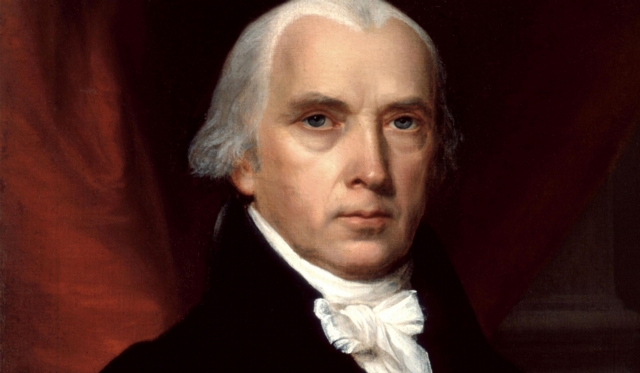
Publisher’s Note: As we reopen Le Metropolis Café we are excited to post the following lengthy dissertation written by John Adams, an American patriot who would some years later serve as the second President of the United States (1797–1801) and the first Vice President (1789–97). He was a lawyer, diplomat, statesman, political theorist, and, as a Founding Father, a leader of the movement for American independence from Great Britain. The following was written by him some years before all of these events transpired. ~ Jeffrey Bennett, Publisher and frustrated Historian. Oct. 5, 2017

John Adams, Patriot
“Ignorance and inconsideration are the two great causes of the ruin of mankind.” This is an observation of Dr. Tillotson, with relation to the interest of his fellow men in a future and immortal state. But it is of equal truth and importance if applied to the happiness of men in society, on this side the grave. In the earliest ages of the world, absolute monarchy seems to have been the universal form of government. Kings, and a few of their great counselors and captains, exercised a cruel tyranny over the people, who held a rank in the scale of intelligence, in those days, but little higher than the camels and elephants that carried them and their engines to war.
By what causes it was brought to pass, that the people in the middle ages became more intelligent in general, would not, perhaps, be possible in these days to discover. But the fact is certain; and wherever a general knowledge and sensibility have prevailed among the people, arbitrary government and every kind of oppression have lessened and disappeared in proportion. Man has certainly an exalted soul; and the same principle in human nature, — that aspiring, noble principle founded in benevolence, and cherished by knowledge; I mean the love of power, which has been so often the cause of slavery, — has, whenever freedom has existed, been the cause of freedom. If it is this principle that has always prompted the princes and nobles of the earth, by every species of fraud and violence to shake off all the limitations of their power, it is the same that has always stimulated the common people to aspire at independency, and to endeavor at confining the power of the great within the limits of equity and reason. Continue reading →

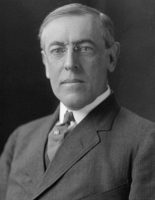 In 1913, Woodrow Wilson was the newly elected president. Wilson and his fellow progressives scorned the Constitution and the Declaration. They moved swiftly to replace the Founders’ republic with a new regime.
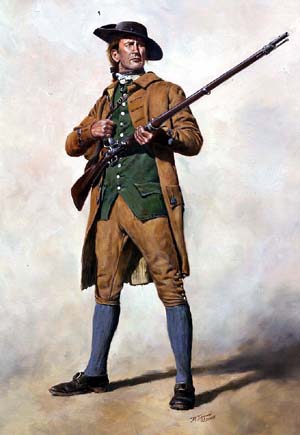
 By April of 1775 the tensions between the Colonies and the Crown had reached a breaking point, and when the Kings men arrived at Lexington and Concord to confiscate the arms stored there they were met with locals who had grabbed whatever guns they had and assembled to prevent the Redcoats from taking their cache of arms. So it was that on that early April morning, just as the sun was rising, that America’s War for Independence began. So it was that on that early April morning a ragtag group of farmers, shopkeepers and merchants faced off against 500 of the most well trained and disciplined fighters on the planet. So it was that on this early April morning, that although these men were technically committing treason, they would go down into history books as patriots and heroes.
 The United States was brand new. Soldiers who had fought for independence from Great Britain found themselves on opposite sides of a skirmish. Some were having their rights violated practically before the ink was dry on the Bill of Rights. Other Veterans of the Revolution were doing the oppressing at Alexander Hamilton’s behest.
 Author’s Introduction:
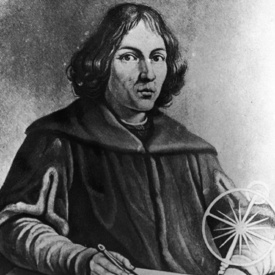 Although there are countless scourges which in general debilitate kingdoms, principalities, and republics, the four most important (in my judgment) are dissension, [abnormal] mortality, barren soil, and debasement of the currency. The first three are so obvious that nobody is unaware of their existence. But the fourth, which concerns money, is taken into account by few persons and only the most perspicacious. For it undermines states, not by a single attack all at once, but gradually and in a certain covert manner.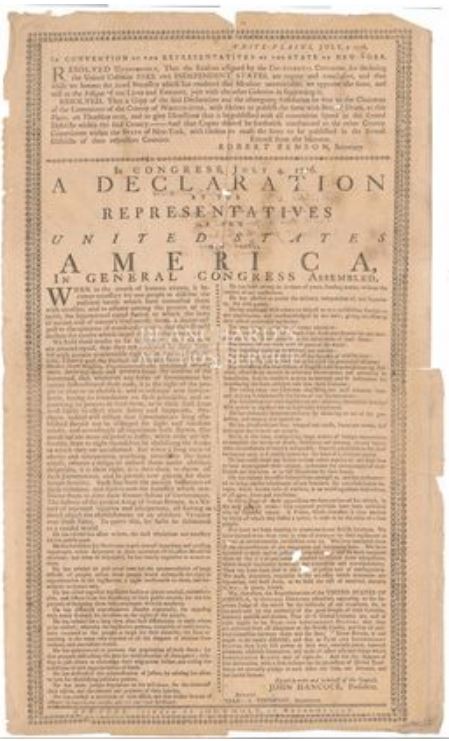
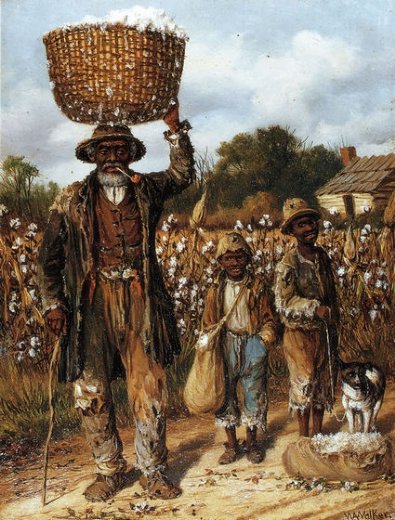 What happened in the unseen labyrinth to which the pneumatic tubes led, he did not know in detail, but he did know in general terms. As soon as all the corrections which happened to be necessary in any particular number of ‘The Times’ had been assembled and collated, that number would be reprinted, the original copy destroyed, and the corrected copy placed on the files in its stead. This process of continuous alteration was applied not only to newspapers, but to books, periodicals, pamphlets, posters, leaflets, films, sound-tracks, cartoons, photographs — to every kind of literature or documentation which might conceivably hold any political or ideological significance. Day by day and almost minute by minute the past was brought up to date. In this way every prediction made by the Party could be shown by documentary evidence to have been correct, nor was any item of news, or any expression of opinion, which conflicted with the needs of the moment, ever allowed to remain on record. All history was a palimpsest, scraped clean and reinscribed exactly as often as was necessary.
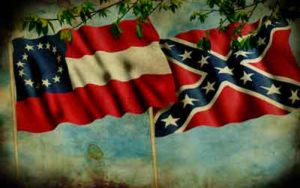
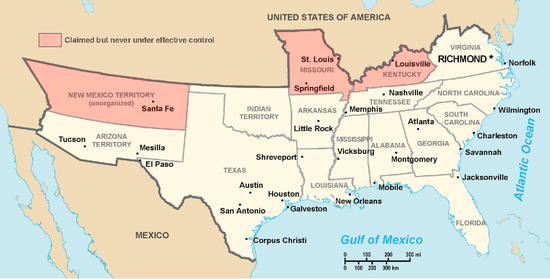 Historians have long debated the causes of the war and the Southern perspective differs greatly from the Northern perspective. Based upon the study of original documents of the War Between The States (Civil War) era and facts and information published by Confederate Veterans, Confederate Chaplains, Southern writers and Southern Historians before, during, and after the war, I present the facts, opinions, and conclusions stated in the following article.
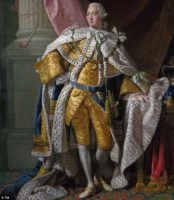 A draft letter of abdication written by King George III is to go on display for the first time.
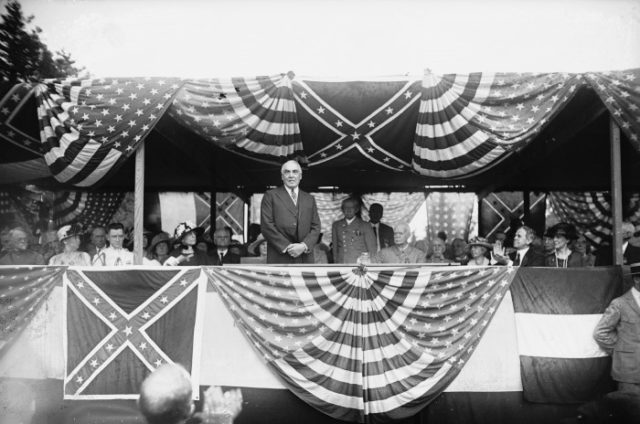 Many Americans will pause today to honor the men and women who have given their lives in the United States armed forces. What most probably don’t know is that this holiday originated in the South after the War for Southern Independence. It was originally called “Decoration Day.”
 Publisher’s NOTE:
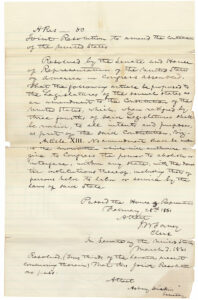 In December of 1860, many Republicans were beginning to take the secession movement seriously and felt that a compromise needed to be reached in order to keep the Upper South, including states like North Carolina and Tennessee, from seceding. For this reason, two committees were convened by Congress for the express purpose of dealing with proposals aimed at averting the secession crisis. The House of Representative’s “Committee of Thirty-Three” was formed on 4 December, 1860, the day after the second session of the thirty-sixth Congress convened. This committee took its name from the thirty-three Representatives, one from each state, that were appointed to its seats. The committee, chaired by Thomas Corwin of Ohio, met for the first time on 11 December. The Senate’s “Committee of Thirteen” was created on 18 December, and like the Committee of Thirty-Three, took its name from the number of seats assigned to it. On 20 December, Vice-President John C. Breckinridge appointed thirteen Senators to the committee, and they met for the first time that very day.
  On May 22, 1856, South Carolina Representatives Preston Brooks and Laurence Keitt, along with Virginia Representative Henry Edmundson, made a visit to the Senate chamber. When they arrived, the balcony above the chamber still contained some straggling observers, mostly wives of senators. Since Brooks and Keitt were southern gentlemen, they respectfully waited for the ladies to leave.
 By July of 1862, the Union was not faring so well against the Confederacy in its War of Aggression. Although they had won half again as many battles the Southerners, winning thirty-nine battles to the South’s twenty-six, the Southerners had fought them to a stand-still nineteen times, despite being outnumbered by two to one. Many in the North were beginning to grumble about the war, and morale, along with support for the war, was beginning to wane, and sympathy for the Southern cause was building in Western Europe.