
Alabama political news children books
I was finally heading toward the exit after several hours in the library when I spied a cart with a bunch of books and a “free” sign on it. My internal brakes screeched as I quickly pulled up to it and began to peruse the titles that were for the taking. I left without adding another work to my collection, reminding myself of my already over-laden bookshelves at home; nevertheless, my immediate reaction to “free books” was another sign that reading is one of my true loves.
That same day, I attended a lecture by Nadya Williams – a Princeton-trained classicist, author of “Christians Reading Classics,” and homeschool mother – on how to turn your children into bibliophiles. I couldn’t really tell you how or why I came to love books, but I have a hunch it was partially due to the fact that my parents did some of the 10 things Williams suggested in her lecture. Here are my favorite tips that Williams offered.
1. Cultivate Your Own Love of Reading First

“Reading by the Sea” (1910), by Vittorio Matteo Corcos
Our loves will naturally be passed along to our children or students, Williams says, and because of this, we must regularly water our own interest in books to keep it alive and growing. Williams suggests just tackling a little bit of reading every day, consciously picking up a book in our spare time rather than reaching for the phone for a mindless scroll. “Whatever you do, read,” she says. “Read for joy.”
2. Hold Book-Related Conversations
 Williams notes that many of us are quick to talk about the weather or movies in our attempts at small talk, but she suggests that we begin incorporating snippets of what we’ve been reading into these conversations instead of such standard fare. Doing so creates “deeper conversations,” Williams says, allowing us to puzzle out the concepts we read about and bounce them off others in order to better apply them to our own lives. “We tend to talk about the things we love the most,” she notes, so why not use our conversations to get others interested in books and the ideas they contain?
3. Read Aloud Regularly
 Most of us only read aloud to children until they’ve learned to make out letters and words themselves. But Williams suggests that reading aloud to children should continue even into high school. Doing so helps recreate the oral culture, which was so prominent in the past, which incidentally helped people remember more material. Williams also notes that the more we read out loud, the better readers we become.
4. Learn to Recognize Quality Literature
 “Being shaped by ‘Captain Underpants’” is not really worth it for our children, Williams notes. She goes on to suggest that perhaps the reason why many of our children don’t like reading is that we’ve given them drivel, which they recognize as such and are therefore uninterested. We need to figure out what kind of reading material is high-quality and worth our time, and then pass that along to our children.
5. Read a Wide Variety of Literature
 Children should be introduced to both poetry and prose, fiction and nonfiction, Williams says. “Poetry trains the ear,” Williams notes, going on to explain that a person’s “love of reading will grow with a greater variety of books.” Just as we want to introduce our children to a wide variety of foods at a young age to help them avoid becoming picky eaters, so we must “develop their palate” when it comes to literature, giving them a “greater range of material” from which to learn and grow.
This last point is particularly interesting, as public education in recent years has been so insistent that children read “informational texts.” And having observed some of what children are offered as regular fare makes me realize that I, too, would have turned my back on reading had I been bored to death by such material.
But why should we follow these five tips and even try to turn our children into lovers of books? In a digital age, when information and entertainment can be found in a few seconds, or when AI can help them write or think, why should they even need to spend time with books?
C. S. Lewis gives us an answer in his book, “An Experiment in Criticism.”
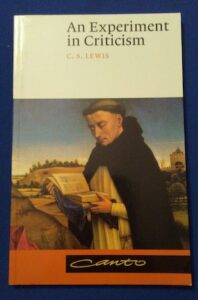 Those of us who have been true readers all our life seldom fully realise the enormous extension of our being which we owe to authors. We realise it best when we talk with an unliterary friend. He may be full of goodness and good sense but he inhabits a tiny world. In it, we should be suffocated. The man who is contented to be only himself, and therefore less a self, is in prison.
Put differently, it is through reading many good and true books that we develop solid, well-rounded personhood.
So don’t delay! Grab a book yourself, put some good ones in the hands of your children, and begin reading side by side. And as the days and years march along, you’ll find that your whole family is growing in wisdom, knowledge, and maturity because of it.
Written by Annie Holmquist for Annie’s Attic ~ October 9, 2026
~ The Author ~
 Annie was a longtime contributor to Intellectual Takeout.
Annie received a B.A. in Biblical Studies from the University of Northwestern-St. Paul. She also brings 20+ years of experience as a music educator and a volunteer teacher – particularly with inner city children – to the table in her research and writing and is a cultural commentator hailing from America’s heartland who loves classic books, architecture, music, and values.
Annie Holmquist is the culture and opinion editor for 1819 News. Her writing may be found at The Epoch Times, American Essence Magazine, and her Substack, Annie’s Attic.
In her spare time Annie enjoys the outdoors, gardening, reading, and events with family and friends.