
This Civil War nurse devoted her life to taking care of injured soldiers, disaster victims, and those left behind in tragedy.
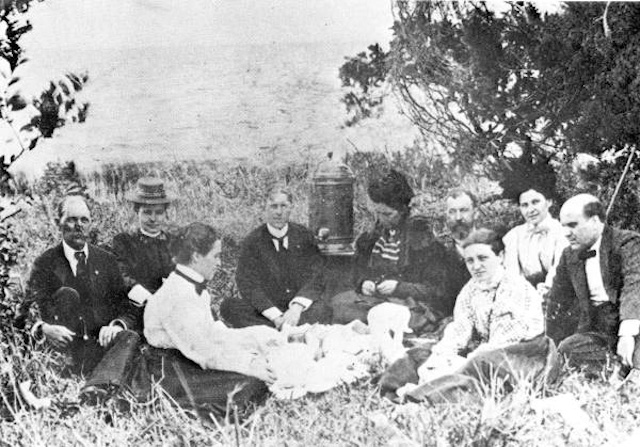
Clara Barton and her Red Cross colleagues have a picnic in 1898 in Tampa, Fla.
The office was quiet except for the scratch of a pen and the shuffle of paper. On Washington’s 7th Street, the Civil War was long over, but Clara Barton still lived in its shadow.
The North recorded about 360,000 deaths during the war, but only 315,000 burials. Of these, just 172,000 names were identified.
In early 1865, Barton wrote President Lincoln seeking permission to “act temporarily as general correspondent” in searching for missing soldiers. He agreed, and she opened the “Office of Correspondence with the Friends of the Missing Men of the United States Army” – or the Missing Soldiers Office, for short. For nearly four years, Barton and her staff answered more than 63,000 letters from families desperate for word of a father, son, brother, or husband lost in the chaos of war.
Barton compiled rosters, matched scraps of information, and discovered the identities of more than 22,000 fallen soldiers. Though her office usually delivered bad news, she provided answers where there had been none.
Her tireless sympathy exacted a price. In late 1868, when Barton rose to address a crowd in Portland, Maine, she found she couldn’t speak. Suffering from “nervous prostration” – what we would call a stress-induced breakdown – she lay incapacitated through the winter and was instructed to rest.
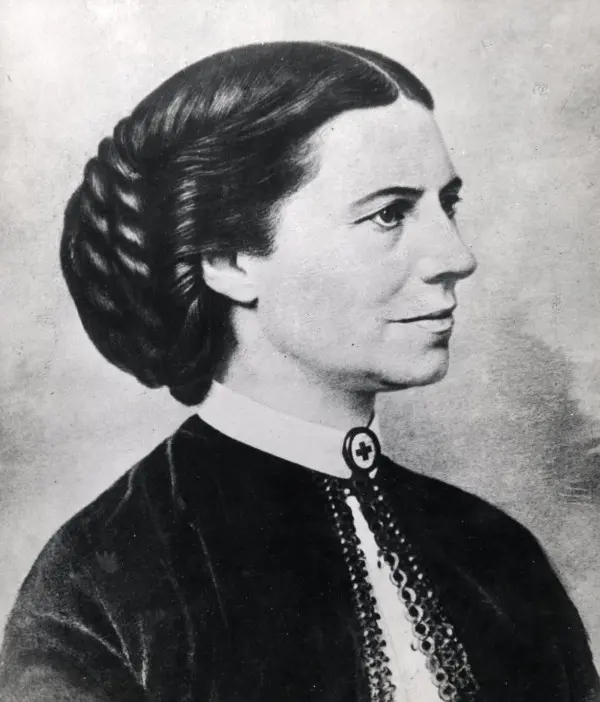
An 1865 photograph of Clara Barton, published in the 1867 book “Woman’s Work in the Civil War: A Record of Heroism, Patriotism, and Patience,” by L.P. Brockett.
Angel of the Battlefield
During the Civil War, Barton worked through gunfire and mud to bind wounds, bring water, and comfort the dying. At Antietam, while kneeling to give a soldier a drink, a bullet pierced her sleeve and killed him.
After the Battle of Cedar Mountain in Aug. 1862, Barton arrived at an overcrowded field hospital with a wagonload of supplies just as bandages and food were about to run out. One army surgeon, overwhelmed by the relief her arrival brought, later recalled: “I thought that night, if heaven ever sent out a holy angel, she must be one – her assistance was so timely.”
This was how Barton earned her nickname: “The Angel of the Battlefield.”
When the guns fell silent, though, the questions began: Where were the missing? Who lay in those nameless graves?
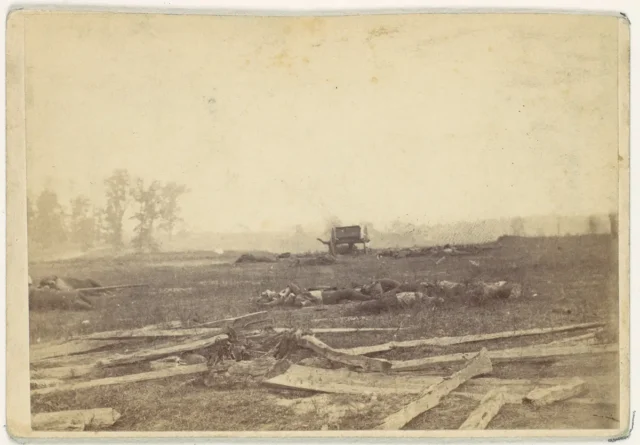
View on the Battlefield of Antietam, September 1862, by Alexander Gardner. The Metropolitan Museum of Art, New York City.
Desperate Letters
“My darling boy, my only son, was reported killed in the Battle of the Wilderness … his body was not found,” wrote Mrs. T.B. Hurlbut to Barton in Sept. 1865. After giving his history and physical description, she added that if his resting place “of my darling one” were found, “you would confer such a favor as none less desolate than myself can appreciate.”
Though the fate of Wilbur Hurlbut was never discovered, other families were more fortunate. Frances Sherwood had been searching for news about her husband, Jones Ebenezer Sherwood, ever since receiving hearsay from a friend in Dec. 1864 of his likely death. A year and a half later, she received a letter from Barton providing details of his final resting place: “J.E. Sherwood Co ‘G’ 76 N.Y. died August 4, 1864 of diarrhea chronic at Andersonville GA, the no of his grave is 4676.”
Some missing persons were still living, and not everyone wanted to be found. When Eugenica Hitchens of Lockport, New York, inquired after the fate of her brother, Joseph H. Hitchins, Barton put out a search. Six months later, Hitchins wrote to Barton after seeing his name published in a list of missing men. He was angry to have had his “name blazoned all over the country,” adding that those who wished to know his whereabouts could “wait until I see fit to write them.”
Barton wrote a furious reply letter, upbraiding Hitchins for his selfishness: “It seems to have been the misfortune of your family to think more of you than you did of them, and probably more than you deserve from the manner in which you treat them.”
Hitchens was an outlier, though. Most were immensely grateful to Barton, and the public celebrated her efforts. The spring following her nervous breakdown, she closed the Missing Soldiers Office, stored its contents in an attic, and traveled to Europe to recuperate.
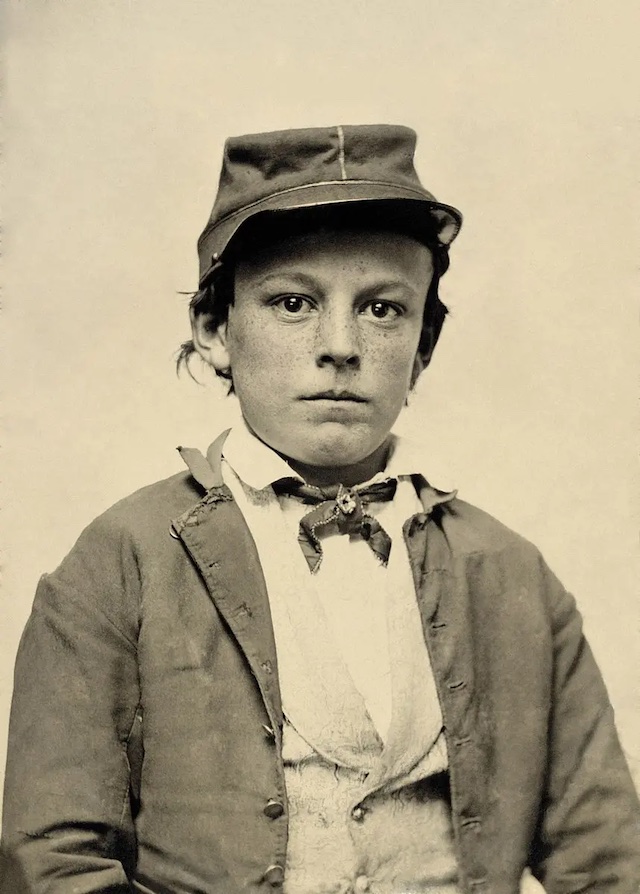
This unidentified young soldier wears a Confederate infantry uniform. He and other teenage boys joined, fought, and suffered in the Civil War.
Founding the American Red Cross
Barton recovered, but she didn’t rest. In Switzerland, she joined the relief efforts of the International Red Cross during the Franco-Prussian War, caring for the wounded on both sides. After returning home, she successfully lobbied to establish in 1881 the American Red Cross, becoming its first president.
Without any major wars to fight, she steered the organization towards disaster relief. When the Johnstown Flood of 1889 destroyed an entire Pennsylvania town, Barton arrived five days later with a team of doctors and nurses, staying for five months. Eleven years later, at nearly 80, she led relief after the Galveston Hurricane, distributing aid to thousands.
When she died in 1912, she left no children behind. She never married.
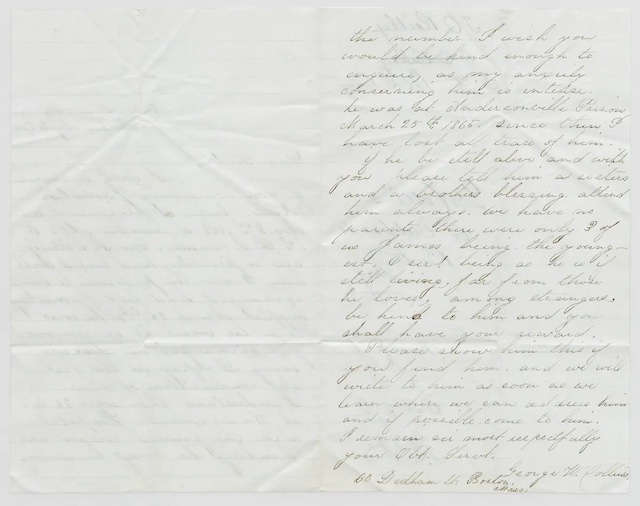
On May 26, 1865, George W. Collins wrote to the Missing Soldiers Office about the whereabouts of James H. Collins, who had been with Company A, 1st Rhode Island Cavalry Regiment.
A Ghost Story
In 1996, a government employee named Richard Lyons was inspecting an old building on Washington’s 7th Street that was scheduled to be demolished. Exploring the premises, he thought he heard a woman crying and went to the third floor, then felt a tap on his shoulder. He turned to see a letter hanging from the ceiling slats. Climbing a ladder, he discovered an attic with more than a thousand objects, and a sign that read “Missing Soldiers Office.”
Thanks to Lyons’s discovery, Barton’s old building was saved from destruction. Today it’s the Missing Soldiers Office Museum, honoring the Angel of the Battlefield and her selfless sacrifice.
Written by Andrew Benson Brown and published by The Economic Times ~ November 26, 2025